How to Add a Late Vendor to a Wedding Without Losing Track of Everyone Already Booked
17 September 2026 · 6 min read
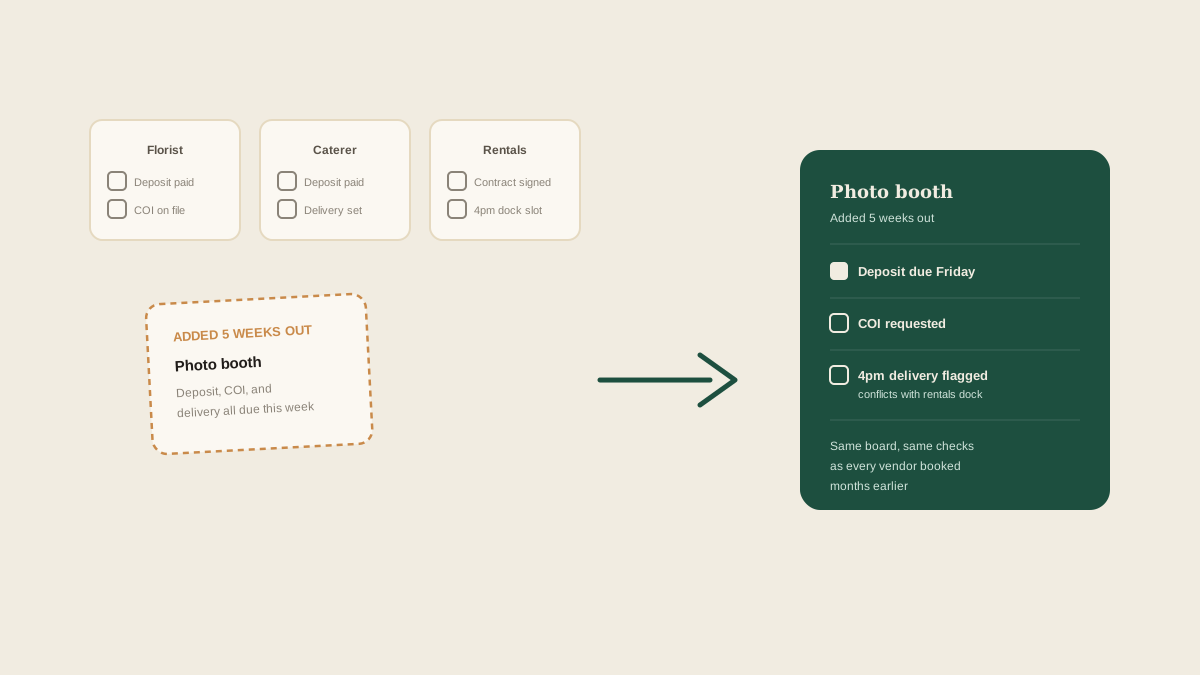
Five or six weeks before a wedding, a client decides to add something that was not in the original plan: a photo booth, a second shooter, a calligrapher for the welcome sign, an upgraded florals package that comes with its own delivery. The rest of the vendor roster was booked six to twelve months out, with deposits, contracts, and delivery windows spread comfortably across that runway. This new vendor gets none of that runway. It has to hit the same set of milestones everyone else did, deposit, contract, insurance certificate, delivery window, in a fraction of the time, and it usually gets treated as an afterthought precisely because it showed up after the rest of the planning was already settled.
Why a late add moves differently than the rest of the roster
A vendor booked at the start of planning has its deadlines naturally staggered: the deposit is due soon, the headcount is due in six months, the delivery window gets confirmed closer to the date. A vendor added five weeks out does not get that spacing. The deposit, the signed contract, the certificate of insurance, and the delivery window can all land inside the same two or three weeks, sometimes the same week. Nothing about that vendor is more urgent to a studio's attention than the rest of the board, it is just more compressed, and compressed deadlines are the ones that get missed first when they are not flagged as different from the deadlines that still have months of runway left.
The real risk: it does not inherit the studio's existing checks
Every vendor already on the board went through some version of an intake, whether formal or not: someone tracked the deposit, someone requested the insurance certificate, someone checked the delivery window against everyone else's. A late add usually skips straight past that, because it often arrives as a text from the client or a quick email from a vendor the client found on their own, not through the studio's normal booking flow. If it gets noted as a name on a sidebar list instead of run through the same steps as everyone else, it quietly skips every check that exists specifically to catch the kind of problem a rushed booking is most likely to create.
Where this actually shows up
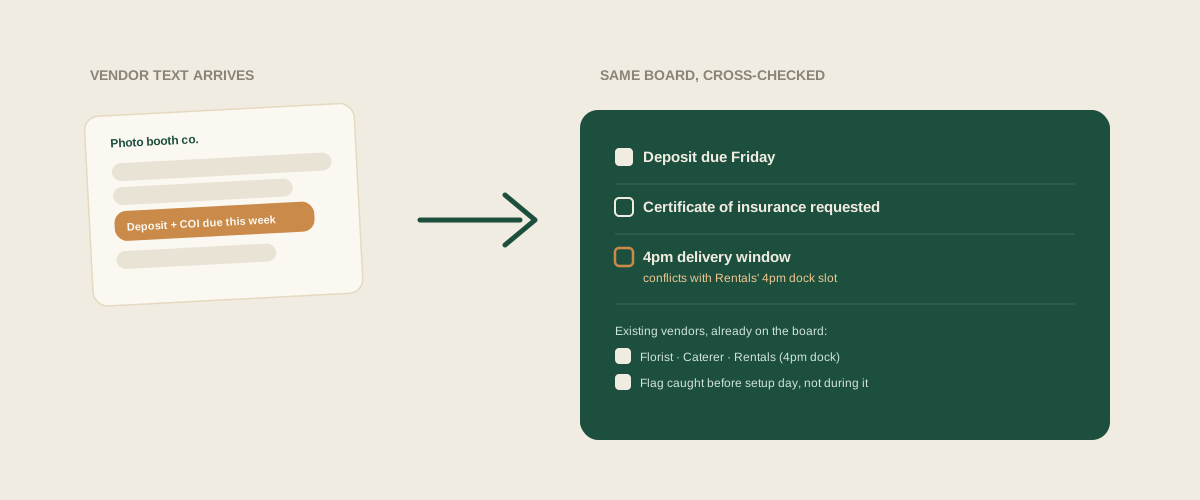
A photo booth vendor's delivery window gets set for 4pm without anyone checking it against the furniture rental company's 4pm slot at the same loading dock, a conflict that would have been caught automatically for a vendor booked through the normal process. A late-added videographer's certificate of insurance never gets requested, because the new-vendor checklist only runs for vendors that come in through the usual booking channel, and this one did not. A final payment due date that sits ten days before the wedding, closer than any other vendor's balance, gets treated as less urgent than a florist's deadline that is still three weeks out, simply because three weeks feels farther away even though the florist's task was created first.
What a late add actually needs
Treating a late-added vendor well does not mean a special process, it means the same process everyone else got, started the moment the vendor is confirmed rather than whenever someone gets around to it. That means the deposit, the contract, the insurance certificate, and the delivery window all become tracked tasks on the shared board immediately, the same way a florist's contract does when it arrives in month one. It also means the delivery or setup window gets checked against every other vendor's already-locked-in time slot before it is treated as settled, since a late add is exactly the kind of booking that has not been cross-referenced against anyone else's schedule yet.
A worked example
Five weeks before a wedding, a couple decides to add a photo booth. The vendor sends a contract that needs a signature and a deposit within a week, names a delivery window during cocktail hour, and asks for a certificate of insurance. Forwarded to the shared board the way any vendor message would be, that becomes three separate tasks on the same day it arrives: sign and pay the deposit by Friday, request the certificate of insurance, and confirm the delivery window against the loading dock schedule, where it turns out to overlap with the furniture rental company's slot already locked in for that afternoon. Caught five weeks out, that is a two-minute phone call to stagger the two arrivals. Caught on the wedding day, it is two trucks trying to use the same dock at the same time while a coordinator improvises.
Common mistakes
Assuming a late add needs less oversight because it is just one more vendor on an already-long list, when it actually needs more, since it has not been checked against anyone else's schedule yet. Letting the vendor with the shortest runway get the least attention, because every other deadline on the board has been sitting there for months and feels more established by comparison. Treating the client's text or email about the new vendor as the coordination itself, instead of the trigger to run the same intake every other vendor went through.
Where to start
The fix is not a separate checklist for late additions, it is making sure a late addition gets run through the exact same one everyone else did, starting the day it is confirmed instead of whenever there is a spare moment to deal with it. Forwarding the new vendor's contract or confirmation text the moment it arrives, the same way any other vendor message gets forwarded, puts the deposit, the certificate, and the delivery window on the shared board immediately, with enough time left to catch a scheduling conflict while it is still a phone call instead of a wedding-day scramble.
Frequently asked questions
Does a vendor added late in planning really need the exact same process as one booked from the start?
Yes, the steps are the same, deposit, contract, insurance certificate, delivery window, only the timeline is compressed. Skipping steps because the vendor arrived late is exactly what turns a tight timeline into a missed one.
How do you check a late vendor's delivery window against vendors that were already locked in months earlier?
The new delivery or setup window needs to be compared against every other vendor's confirmed time slot for that day before it is treated as settled, not assumed to be fine because nothing came up. This is easiest when every vendor's window lives on one shared board instead of scattered across separate email threads and texts.
Who should be responsible for making sure a late add gets the same insurance and contract checks as everyone else?
Whoever owns vendor intake for the studio should own it for a late add too, not whoever happened to be copied on the client's text about it. Routing the new vendor's contract through the same shared board the rest of the roster uses is what makes sure it gets the same checks automatically instead of depending on one person remembering to run them.
Is it ever worth telling a client no to a late addition if the timeline is too tight?
Sometimes, particularly if the vendor's category has a hard lead time the calendar cannot absorb, like custom printed goods or a specialty rental with a long fabrication window. For most service vendors, a compressed timeline is workable as long as the deposit, insurance, and delivery window get tracked with the same urgency as everything else on the board, just sooner.
Get your studio address, free
Get your studio address