How to Stop Carrying an Entire Season of Vendor Deadlines in Your Head
20 August 2026 · 6 min read

Nothing dramatic has to happen for the mental load of vendor coordination to wear someone down. No deadline gets missed, no vendor shows up on the wrong day, the wedding goes off without a hitch. And the one person holding every deposit, every headcount, and every delivery window in their head still ends most weeks feeling like they never fully put it down. That's a different problem than what happens when a lead planner is out sick for a day. It's what happens every single week they're not, and it's worth naming on its own, separately from any single day something might go wrong.
The weight of holding it all in your head
Ask a lead planner what they're tracking right now and the honest answer is usually a moving list that lives nowhere but their own memory: a deposit due Thursday for one wedding, a headcount that still needs confirming for another, a florist who mentioned a delivery change three days ago that hasn't made it onto anything written down yet. None of these individually feels heavy. Together, across four or five concurrent events, they add up to a low, constant hum of things that might be forgotten, and that hum doesn't go away just because nothing has actually gone wrong yet.
Why a clean week doesn't prove the load is light
A week where nothing gets missed looks, from the outside, like proof the system is working. From the inside it often means the opposite: the planner spent that week re-checking, double-guessing, and mentally reviewing the same list of open items over and over, because the only thing standing between a clean week and a missed deposit was their own attention staying sharp for seven straight days. The system isn't holding the information. The person is, and a person holding information under constant low-level vigilance is doing real work even when it never shows up as a mistake.
What the load actually looks like day to day
It shows up in small, specific moments rather than one big crisis: waking up at 2am and suddenly remembering a rental contract that needed a signature back by Friday, re-reading an old email during a client call because a detail about a florist's delivery window doesn't feel certain anymore, feeling a flicker of dread every time a new message notification appears because it might be one more thing to hold onto. None of these are dramatic on their own. Strung together across a full wedding season, they're the actual shape of the mental load, and none of it shows up on a vendor tracker, because there's nothing to write down. It's just weight.

It doesn't stay contained to one person either
The load has a way of spreading even when the studio thinks it's contained. A coordinator who needs an answer about a vendor has to go ask the one planner holding the details, which means that planner is now interrupted mid-task to retrieve something from memory, verify it's still accurate, and relay it out loud. Multiply that by every teammate who occasionally needs a status check, and the planner isn't just carrying the information anymore, they're also fielding a steady stream of requests to retrieve it on demand, which is its own kind of tax on top of the original weight.
Why "just be more organized" doesn't fix it
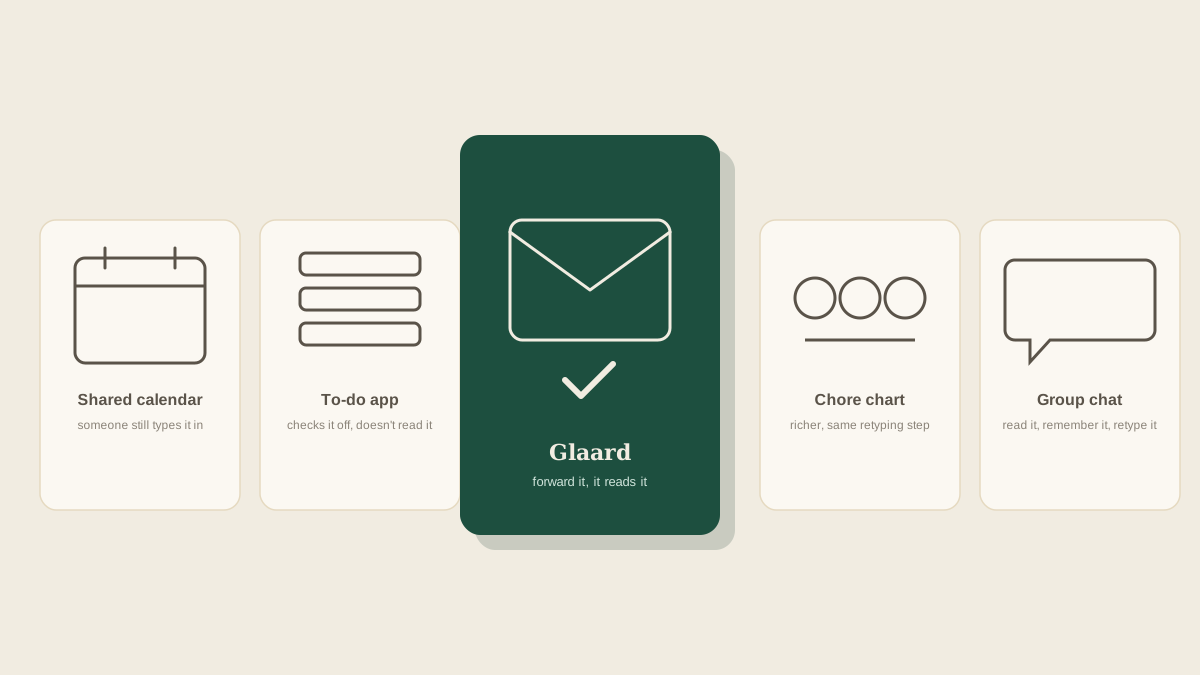
The usual advice is to get more organized: a better spreadsheet, a stricter daily review, a more disciplined habit of writing things down the moment they arrive. All of that helps at the margins, but it doesn't touch the actual source of the load, which is that one person is still the single place all of this information has to pass through before it becomes trustworthy. A more organized version of one person holding everything is still one person holding everything. It just looks tidier while it does it.
What actually gets the load out of one person's head
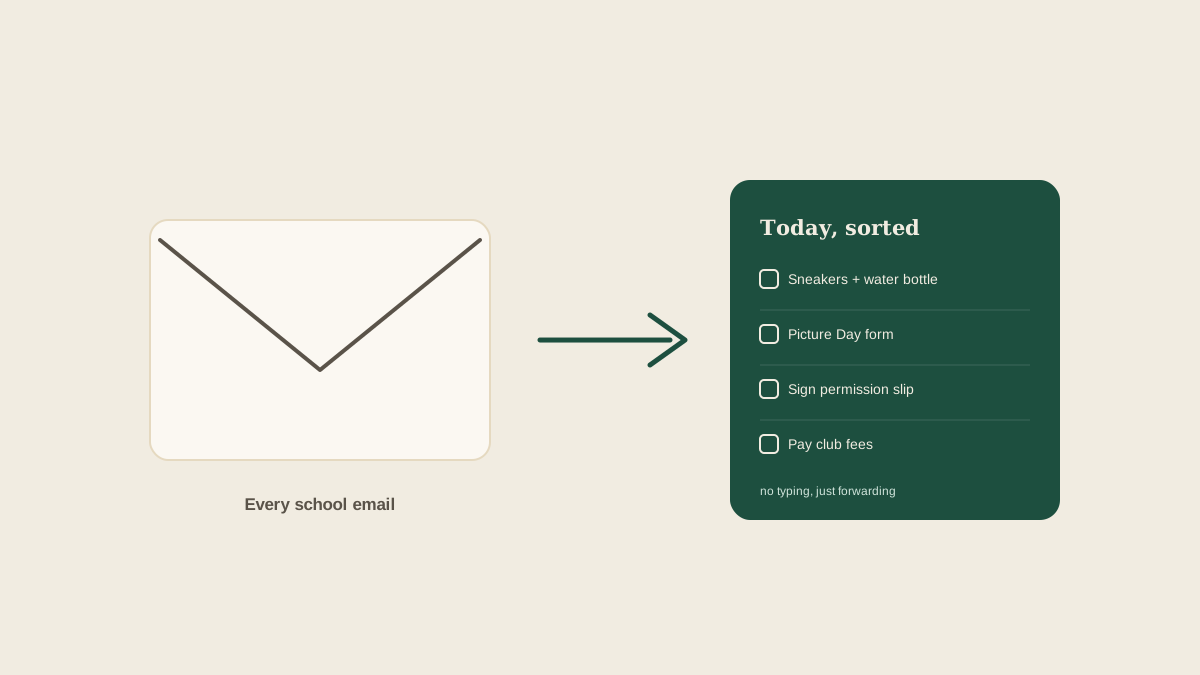
The load doesn't come from having too many deadlines. It comes from being the only place those deadlines can be trusted to live. The moment a vendor email, a contract, or a text gets forwarded and turned into a task on a shared board the instant it arrives, the planner stops needing to hold it in memory as a backup in case it gets missed elsewhere. The board becomes the thing doing the remembering, not the planner's own vigilance, and that's a genuinely different kind of relief than a better filing system, because a forgotten detail becomes recoverable by looking, not by hoping it resurfaces in someone's head at the right moment.
What relief actually feels like
The difference is noticeable almost immediately once information stops depending on one person's memory. A planner who used to lie awake running through a mental list of open items can instead check a board and know, within a minute, exactly what's outstanding and what isn't. It's not that the work disappears, the deposits and headcounts and delivery windows still all need handling. What changes is that none of it requires being held in reserve just in case, which is the part that was actually exhausting, not the handling itself.
Where to start
You can't fix a mental load by trying harder to carry it well. The fix is making sure information doesn't depend on one person's memory to stay real in the first place, forwarding a vendor message the moment it arrives so it lands on a shared board instead of in a mental list that has to be reviewed and re-reviewed to stay accurate. The deadlines don't get any lighter. They just stop needing one person's attention to hold them up.
Frequently asked questions
Isn't some mental load just part of running a busy studio?
Some, yes, running events well takes real attention and judgment. But holding every vendor deadline in memory as a backup system isn't the same as the judgment calls that actually need a planner's expertise, and it's worth separating the two: one is the job, the other is a gap a shared board can close.
How do I know if this is actually affecting me, versus just normal stress?
A rough signal is whether you find yourself mentally re-checking things that are already written down somewhere, or feeling uneasy about a deadline you can't immediately verify without searching your memory first. If the tracker exists but you still don't fully trust it, the load probably hasn't actually moved off of you yet.
Does hiring an assistant fix this on its own?
Not automatically. An assistant helps with the volume of work, but if the assistant still depends on the lead planner to relay what's actually going on, the mental load of holding it all just gets shared verbally instead of removed, which is a real improvement but not the same as the information living somewhere both of you can check independently.
What's the fastest way to tell if a studio's tracker is actually trusted or just technically up to date?
Ask whoever updates it whether they'd feel comfortable being out for two days without checking in. If the honest answer is no, the tracker is being kept current by that person's ongoing attention rather than standing on its own, which is exactly the gap worth closing.
Get your studio address, free
Get your studio address