How to Coordinate a Vendor the Client Booked Themselves, Without Losing Track of Them
3 September 2026 · 6 min read
Not every vendor on an event comes from the studio's own list. A couple's uncle does the photography as a wedding gift. A friend of the family runs a small catering business on the side and gets tapped for a backyard reception. A DJ gets booked directly because the couple already used them for another party. These vendors are just as real a coordination risk as any vendor the studio sourced itself, but the studio isn't party to the original conversation, the contract, or the group chat where the details actually live, which makes them easy to lose track of even while everyone assumes someone is handling it.
Why an outside vendor is harder to track than one you booked
When the studio books a vendor directly, the studio also owns the inbox thread that generated every deadline and detail: the deposit invoice, the delivery-window email, the contract terms. A vendor the client arranged personally generates the exact same kind of information, a delivery time, a final balance, a setup requirement, but none of it lands in the studio's inbox first. It goes to the couple, or to whichever relative made the introduction, and reaches the studio only if and when someone thinks to pass it along. The vendor is fully real and fully on the timeline. The paper trail behind them just doesn't start where the studio can see it.
The assumption that quietly causes the gap
The gap rarely comes from anyone being careless. It comes from a reasonable-sounding assumption: the couple found this vendor, so the couple is naturally handling the coordination for it. That assumption holds for the initial booking and often falls apart for everything after. As the wedding gets close, the couple is busy with a hundred other things and isn't necessarily forwarding the caterer's text about an earlier delivery time, mostly because they don't realize it's the studio's job to know that detail too, not just theirs.
What still has to happen on your end
A client-sourced vendor still needs a load-in time coordinated with every other vendor on-site, a final headcount if they're providing food, a point of contact for the day of, and a place in the timeline just like any vendor the studio found itself. None of that changes just because the studio didn't do the original outreach. The studio is still the one running the day, which means the studio still needs the same details it would have collected directly, they just have to be actively pulled in rather than arriving on their own.
A worked example
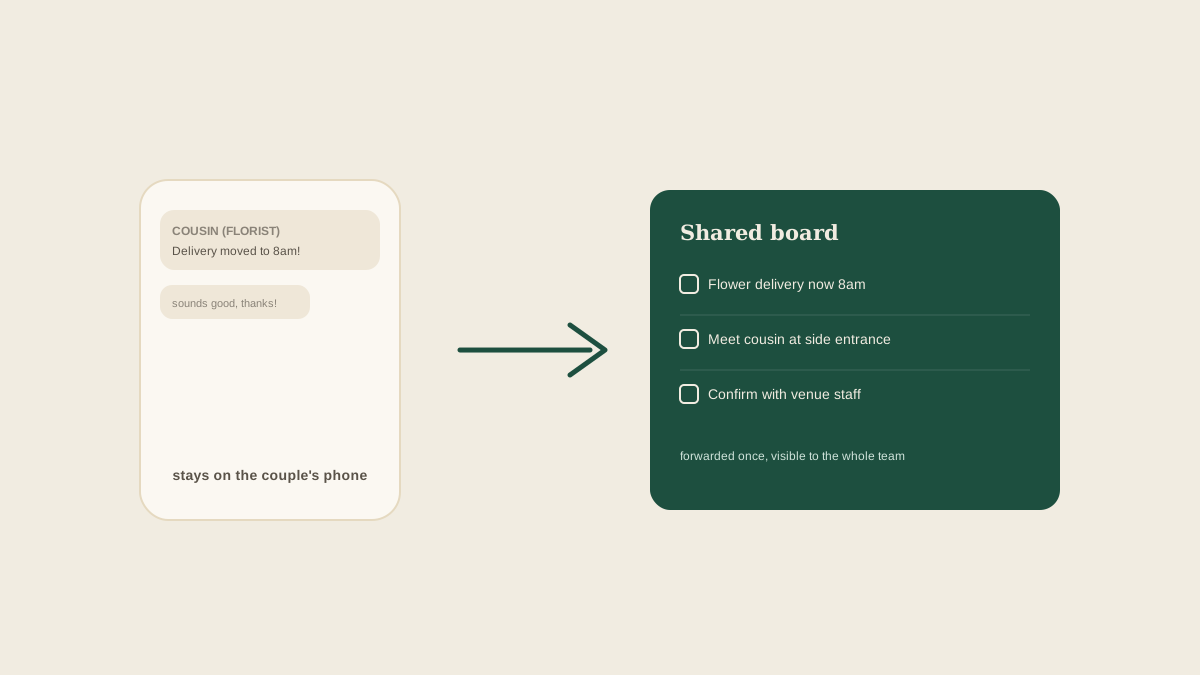
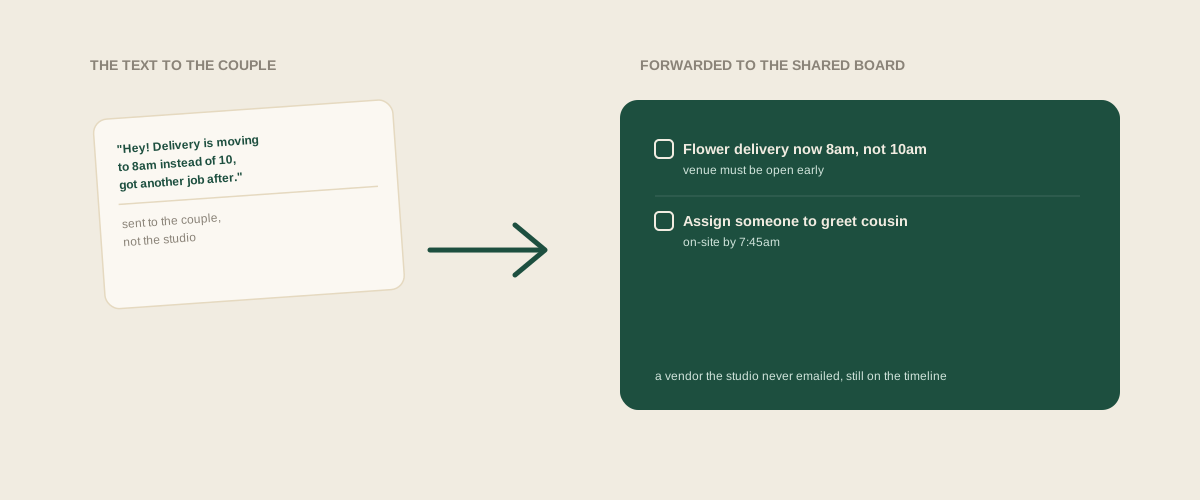
Say a couple's cousin is providing the flowers as a gift and has been coordinating delivery directly with the couple over text. Two weeks out, the cousin texts that delivery is moving to 8am instead of 10am because of another job that morning. If that message stays in the couple's phone, the studio finds out on the day itself when nobody is at the venue to meet a florist who showed up two hours earlier than expected. If the couple is asked early on to simply forward anything a vendor sends them, that same text becomes a task on the shared board the moment it arrives: flower delivery now 8am, visible to whoever is opening the venue that morning, no different from a change the studio's own vendor contact might have sent directly.
Common mistakes
Assuming a vendor the couple sourced doesn't need a spot on the studio's timeline because it feels like the couple's responsibility, not the studio's. Only asking the couple for outside vendor contact info once, at the start, rather than asking them to keep forwarding anything that comes up later. Treating a friend-of-the-family vendor as lower stakes because there's no formal contract behind them, when a missed delivery time causes exactly the same disruption on the day regardless of how the vendor got booked.
Where to start
The fix isn't chasing the couple for updates every week, it's making it just as easy for them to forward a client-sourced vendor's message as it is for the studio to forward one of its own. Ask early for the name and contact of anyone the couple has booked themselves, and ask them to forward anything that vendor sends, a text, an email, a changed time, exactly as it arrives. It becomes a task on the same shared board as everything else, and a vendor the studio never spoke to directly still ends up fully accounted for on the day.
Frequently asked questions
Should client-sourced vendors go on the same board as vendors the studio booked?
Yes. Splitting them into a separate list just recreates the same problem in a smaller form, a second place someone has to remember to check. One shared board, with a note on who found the vendor, keeps the full picture of the day in one place.
What if the couple forgets to forward something important from an outside vendor?
It helps to ask more than once, at the initial planning conversation and again during a final check-in closer to the date, rather than assuming a single early request covers everything that vendor might send later. Even with a reminder built in, this is a real limitation of not being party to the original conversation.
How do you get a load-in time from a vendor you've never actually spoken with?
Usually through the couple, at least at first. Once that vendor's message has been forwarded once, it can be treated the same as any other vendor communication, including reaching out directly if a detail needs clarifying, rather than routing every follow-up back through the couple.
Does this apply to vendors a friend or family member is providing for free, not just paid ones?
Yes, the coordination risk is identical either way. A gifted photography session or a favor-based catering setup still needs a delivery time and a spot in the timeline, and a missed detail causes the same disruption on the day regardless of whether money changed hands.
Get your studio address, free
Get your studio address