How to Hand Off Vendor Coordination to a Day-Of Coordinator Without Losing Details
6 August 2026 · 6 min read

Bringing in a day-of coordinator changes what staying on top of vendor logistics actually means. It is not just one planner keeping one inbox organized anymore, it is two people, sometimes two separate inboxes, and a wedding whose actual vendor details now have to travel between both of them accurately, on time, before the event, whether that is a delivery window, a final payment, or a contract term that is easy to miss.
Why a shared calendar helps less than it did solo
Working alone, a lead planner mostly keeps everything straight because they are the only one who needs to know it. Bringing in a day-of coordinator removes that shortcut. If a message about a delivery-time change arrives a week before the wedding, there is no guarantee the coordinator ever sees it unless it made it onto whatever the two of them are sharing, and only if whoever read the message actually put it there.
The information gap at handoff
The real risk when a day-of coordinator comes on board is not a missed calendar entry, it is an information gap nobody notices until it matters. A vendor contract sits in the lead planner's inbox from months earlier. A florist texts a delivery change to whichever number happens to be listed as the point of contact. A caterer's final headcount email might only be checked by the person who originally set up that vendor relationship. None of this is anyone acting in bad faith, it is just that the low-effort ways information used to live in one person's head do not automatically cross to a second person brought on later. The gap only becomes visible on the day it costs something: a vendor shows up expecting the wrong contact, or a detail that was agreed months ago never made it into the coordinator's briefing.
What actually has to travel with a handoff
A good briefing to a day-of coordinator covers the obvious things: the timeline, the vendor list, key contacts. What it does not reliably cover is the paper trail behind those things, the actual email or contract that generated a term or a deadline in the first place. A verbal note that the florist arrives at 9am is useful. It does not include the delivery-window change that was agreed by text three weeks earlier, or a question about setup access buried three replies deep in the original vendor thread, because that context usually never left the planner who originally read it.
A worked example
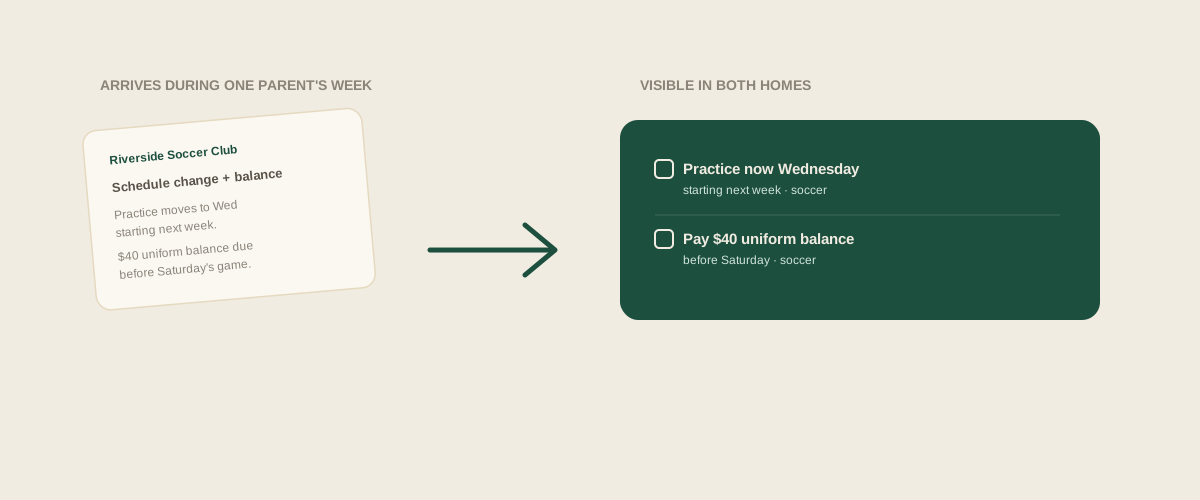
Say a venue emails a schedule change: load-in moves from 10am to 9am starting next month, and a final walkthrough needs to be scheduled before the event. If that email lands in the lead planner's inbox and the day-of coordinator only gets a verbal summary a week before the wedding, the walkthrough is exactly the kind of detail that gets left out of a quick conversation. Forwarded to a shared board the moment it arrives instead, both people see the same two tasks: load-in now 9am, schedule the walkthrough, regardless of who originally read the email.
It does not require rebuilding how the studio works
A shared vendor board is not the same thing as changing how the lead planner and coordinator work together, and it does not need to be. Even in a fast-moving handoff, forwarding a vendor email or a text to a shared board is a much lower bar than a full verbal walkthrough of every detail. It does not require either person to interpret the other's notes, reconstruct context from memory, or sit down for a long briefing call. The information sits neutrally on a board, visible to both, without requiring the planner to personally relay everything they know.
Common mistakes
Relying on a single shared inbox or login that only the lead planner actually checks, so the coordinator depends on being told rather than being able to look for themselves. Treating the pre-wedding briefing call as the only channel for information, when it realistically only has time to cover the short list of things top of mind that day, not everything that arrived over the prior months. Keeping two separate trackers, one per person, which solves nothing since a change one person enters still has to be manually copied into the other's version before it is actually shared. Assuming the coordinator will simply ask if something is unclear, which puts them in the position of not knowing what they don't know.
Where to start
The fix is not a longer handoff call, it is making sure whichever person reads a vendor message first, lead planner or day-of coordinator, can get it onto a board they both can see without waiting for a briefing to relay it. Forwarding the original vendor email, contract, or text the moment it arrives means the information does not have to survive a verbal handoff to reach the other person, it is already there.
Frequently asked questions
Does this work if the coordinator uses a completely different tool than the lead planner?
Yes, since forwarding a message to build a shared board is separate from whatever tool each person prefers day to day. The shared board becomes the one place both can check, regardless of which app either of them personally uses otherwise.
What if the day-of coordinator is only brought on close to the wedding?
A shared board built from forwarded messages does not depend on either person retyping months of history, only on whichever coordinator reads the original vendor message from that point forward forwarding it. It removes the need for a full retroactive briefing, which is often the actual sticking point when a coordinator joins late.
Should contract and legal details go on the same shared board as day-to-day vendor tasks?
Usually not the same one, since a signed contract is a legal document and a task board is a working tool for day to day logistics. Keeping them separate avoids confusing what needs doing this week with what the contract itself says, which is a different kind of document with different stakes.
Can a shared board help if the lead planner and coordinator rarely talk outside of logistics?
Yes, that is close to the ideal use case. A shared task board built from forwarded messages does not require a long conversation between the two people at all, just each one forwarding what lands in their own inbox, which keeps the exchange focused on the vendor details themselves.
Get your studio address, free
Get your studio address