How to Confirm Every Vendor Actually Shows Up on the Wedding Day (Without a 6 AM Group Text)
14 September 2026 · 6 min read
The weeks before a wedding are about getting every vendor to agree on a plan. The morning of is about finding out whether that plan is actually happening. A florist who confirmed a 9 AM delivery three weeks ago can still be running late, stuck in traffic, or waiting on a part of the order that didn't come together, and none of that shows up anywhere until someone checks. Most studios handle this the same way they handle everything else the night before an event: one message, sent to everyone at once, hoping it counts as confirmation.
Why the morning of is a different problem
A signed contract and a confirmed delivery window answer the question of what's supposed to happen. They don't answer whether it's happening right now. Vendors run into the same last-minute problems everyone else does: a staff member calls out, a previous event runs long, a van won't start. None of that breaks the contract, but all of it can mean a vendor who was fully confirmed two weeks ago is now running an hour behind on the one morning it matters most. The plan was solid. What's missing is a way to see, in real time, who's on track and who's gone quiet.
What a group text actually confirms
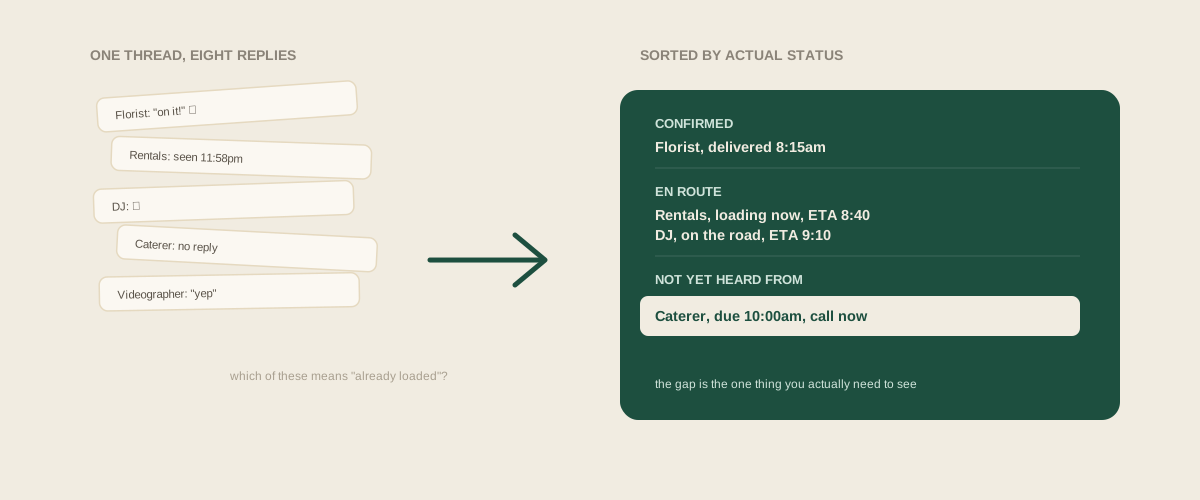
"See you all at 10!" sent to eight vendors the night before feels like it closes the loop, but it only confirms that a message went out. A thumbs-up reaction from the caterer isn't the same information as a thumbs-up from the florist: one might mean "loaded and driving," the other might mean "saw this, haven't checked timing yet." And the vendors who don't respond at all are the ones you actually need to hear from, but a silent thread gives you nothing to act on until someone notices the silence and starts making calls.
The gap between seen and confirmed
"Seen" and "confirmed" get treated as the same thing because they arrive looking similar: a read receipt, a checkmark, a short reply. But a vendor who read the reminder at midnight and a vendor who just left their warehouse with the order loaded are in completely different states, and a group text can't tell them apart. The studios that get burned on the morning of usually aren't the ones with an unreliable vendor, they're the ones who couldn't tell the difference between a vendor running on schedule and a vendor who'd gone quiet until it was too late to send someone to check.
What a confirmation check actually needs to capture
A real day-of check needs three states, not one. Confirmed and on schedule: the vendor has replied with a specific status, not just an acknowledgment. En route with a time: the vendor is moving, and there's an actual estimate attached, not just "almost there." Not yet heard from: the vendor hasn't responded, and enough time has passed that it's worth a direct call instead of waiting for a reply to the group thread. Sorted this way, at a glance, the coordinator running the morning knows exactly who needs a follow-up call and who doesn't, instead of scrolling a thread trying to remember who already replied.
A worked example
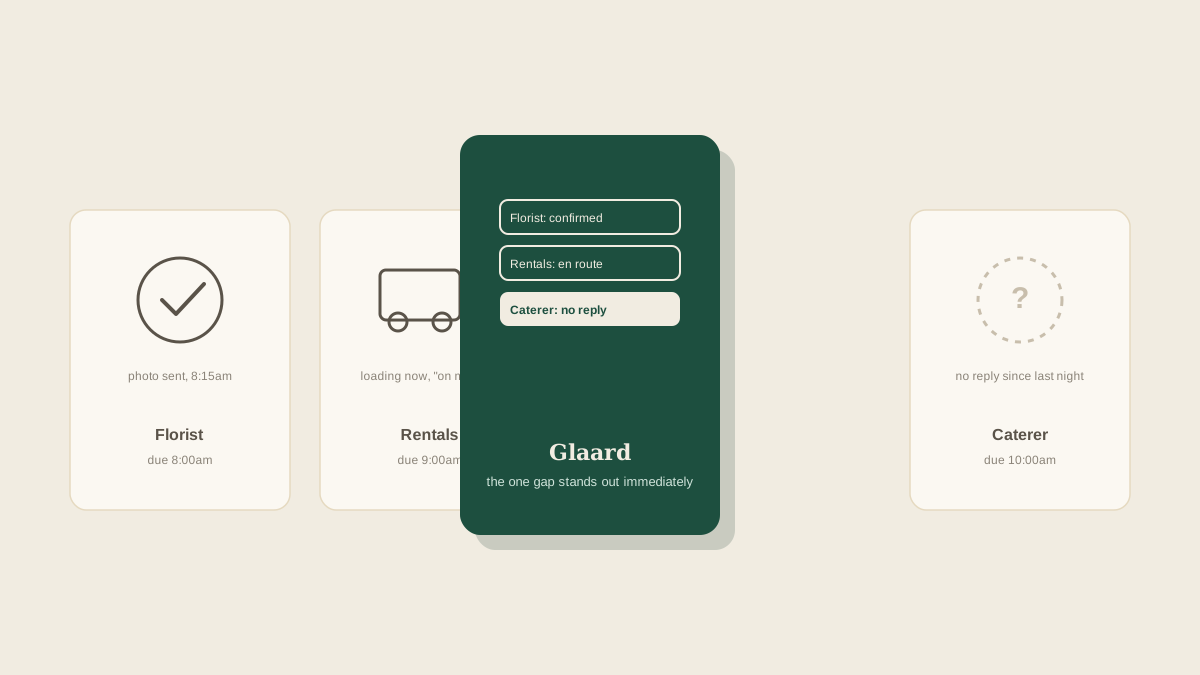
Say a wedding has a florist due at 8, a rental delivery at 9, and a caterer at 10. By 8:15 the florist has texted a photo of the delivered arrangements, so that's confirmed and done. The rental company replied at 7:45 saying they're loading the truck now, which is en route with an estimate, worth a check-in around 8:45 if nothing further comes in. The caterer hasn't responded to the morning check at all, and it's now 8:30, an hour and a half before their window. That's the one call the coordinator makes immediately, rather than the one they'd normally only notice was missing once 10 o'clock came and went with no truck in the lot.
Common mistakes
Treating a reaction emoji or a "sounds good" from the night before as the morning-of confirmation, when it only confirms the vendor saw the plan, not that they're currently executing it. Sending one mass text and assuming silence means everything's fine, when silence is exactly the state that needs the closest attention. Relying on one coordinator to hold the whole vendor list in their head on the morning of the event, the one morning when they're also fielding client questions and last-minute changes and have the least bandwidth to track eight separate threads at once.
Where to start
The fix isn't a stricter reminder text the night before, vendors already read that one. It's having somewhere the morning-of status of every vendor is visible at a glance, sorted by confirmed, en route, or not yet heard from, so the one vendor who's gone quiet stands out immediately instead of blending into a thread full of thumbs-up reactions. That's a smaller ask than it sounds like: it just means the studio needs a place that turns a vendor's own reply, forwarded exactly as it came in, into a status on a shared board instead of one more message sitting in someone's phone.
Frequently asked questions
How early should a morning-of confirmation check start?
Usually with enough buffer that a non-response still leaves time to act, which for most weddings means checking in against the earliest arrival window, not the ceremony time. If your first vendor is due at 8, checking status at 7:30 gives you a window to call before it becomes a real problem. Checking at 7:58 doesn't.
What counts as 'not yet heard from' versus just being slow to reply?
A reasonable cutoff is tied to how far out the vendor's arrival window is, not a fixed number of minutes. A vendor due in three hours who hasn't replied in twenty minutes isn't urgent yet. A vendor due in thirty minutes who hasn't replied in ten is worth a call immediately.
Does every vendor need this level of tracking, even small ones like a favors delivery?
Not equally. The vendors worth tracking closely are the ones whose lateness would actually disrupt the timeline, typically florist, catering, and rentals. A small delivery with no downstream dependency can usually wait for a routine check rather than a dedicated confirmation slot.
Who should own the morning-of confirmation check if the lead planner isn't on site yet?
Whoever arrives first, usually the day-of coordinator, should own it, and it should be written down as their task ahead of time rather than assumed. Confirmation checks are exactly the kind of task that quietly falls through when everyone assumes someone else already sent the message.
Get your studio address, free
Get your studio address