4 Ways Studios Coordinate Vendors for a Destination Wedding (And Where Each One Breaks)
21 September 2026 · 7 min read
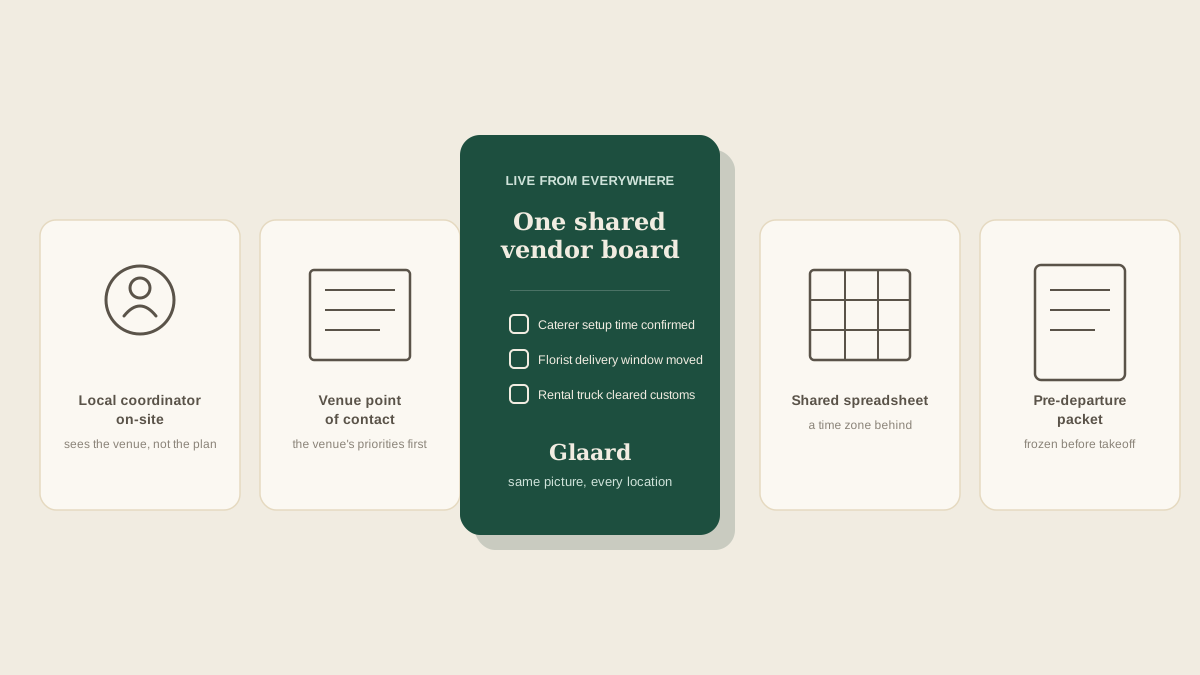
A destination wedding usually means a caterer, florist, and rental company who have never worked with each other before, in a venue the studio might visit once before the wedding day itself, sometimes not at all before the actual week. None of the normal advantages of local vendor coordination apply: no relationships built over past events, no easy same-day site visit if something needs confirming in person, and often a time zone gap on top of the logistics gap. Here is what four common ways studios handle that distance actually catch, and where each one still breaks.
Hiring a local day-of coordinator to manage vendors on-site
Bringing in someone who lives near the venue to handle vendor logistics in person solves the biggest problem: someone is actually there to meet a delivery truck or answer a florist's question about parking. What it does not solve is the studio's own visibility into what is happening. The local coordinator becomes the only person holding the full picture of which vendor confirmed what, and if that information stays in their head or their own separate notes, the studio back home is coordinating a wedding it cannot actually see.
Running everything through one point of contact at the venue
Many venues offer an on-site coordinator or venue manager who is willing to liaise with outside vendors, which feels efficient since that person already knows the space and its quirks. The gap shows up when that contact's priorities are the venue's, not the couple's or the studio's, and a vendor issue that matters enormously to the couple might just not get relayed with the urgency the studio would give it. A venue contact is a helpful extra set of eyes, not a substitute for the studio's own record of what every vendor has confirmed.
A shared spreadsheet updated across time zones
A shared spreadsheet feels like the obvious fix for a team spread across locations, since everyone can theoretically see the same file. In practice, a vendor confirmation that comes in by local phone call at 6pm their time might not get logged until the next morning somewhere else, and a studio checking the sheet in between sees a false sense of completeness. The spreadsheet is only ever as current as whoever last had a moment to update it, and a distance-heavy destination wedding has more of those update-lag windows than a local one does.
Front-loading everything into one detailed vendor packet before departure
Some studios try to solve the distance problem in advance, building one exhaustive document with every vendor's contact details, arrival times, and instructions, distributed before anyone leaves for the venue. This genuinely helps reduce surprises, and it is worth doing regardless of what else a studio uses. It breaks the moment anything changes after that packet is finalized, a flight delay, a weather shift, a vendor swap, since a static document does not update itself, and by the time everyone is on-site, working off a slightly outdated version of the plan is worse than not having one at all.
Why all four approaches share the same gap
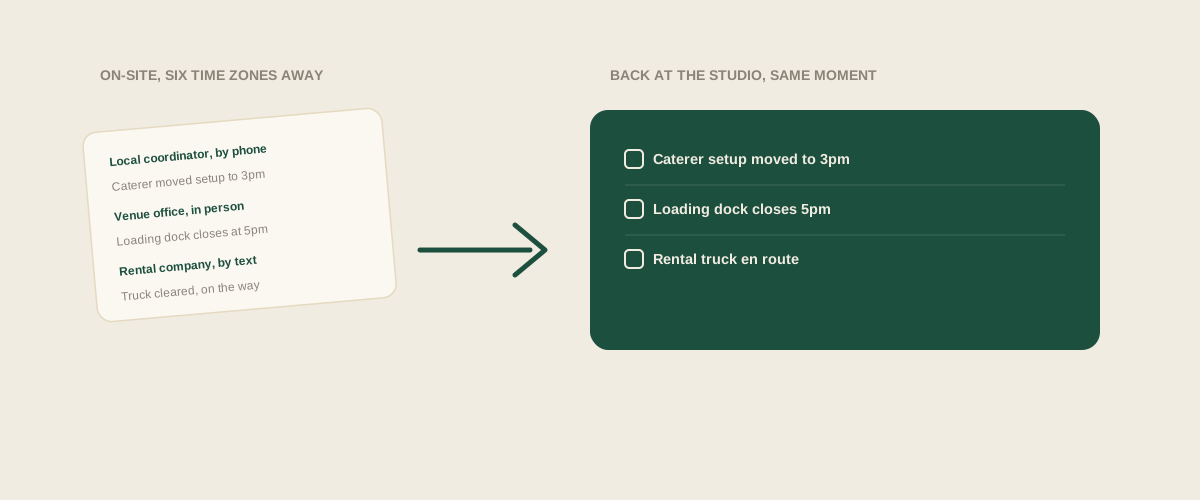
A local coordinator, a venue contact, a shared spreadsheet, a pre-departure packet, each helps with a piece of the distance problem. None of them, on their own, keeps one current, visible record that both the on-site team and the studio back home are looking at the same version of. That is where destination weddings actually break: not because nobody is watching the vendors, but because the people watching are looking at different, unsynced pictures of the same event.
What actually holds up
The fix is not choosing the most disciplined version of remote coordination, it is making sure a vendor confirmation, a schedule change, or a last-minute swap lands on one shared board the moment it happens, wherever it happens, so the local coordinator, the venue contact, and the studio team back home are all looking at the same information instead of reconciling separate notes after the fact.
How to choose
A destination wedding with a small, simple vendor list and a studio team traveling to the venue well ahead of time can get by on a detailed packet and a local coordinator working closely together. The more vendors involved, the more people relaying information across time zones, and the more likely something changes after departure, the more a shared, live board earns its keep, catching a change the moment it happens instead of after someone finally reconciles two different versions of the plan on-site.
Frequently asked questions
Do we still need a local, on-site coordinator if we're using a shared board?
Yes. A shared board solves visibility, not physical presence. Someone still needs to be at the venue to meet a delivery or answer a vendor's question in person, the board just makes sure what that person learns on-site also reaches the studio team back home.
How do we handle vendors who don't respond well over text or email while we're traveling?
Whoever is in contact with them, whether that is the local coordinator or the couple, can log the confirmation on the shared board right after the call, the same way any other update gets captured. The format a vendor prefers to communicate in does not need to match the format the studio tracks in.
Is a detailed pre-departure vendor packet still worth building?
Yes, it is a good foundation and worth doing regardless. The issue is only that it goes stale the moment something changes after it is finalized, so it works best paired with a live, shared record rather than as the only source of truth once everyone is on-site.
What's the biggest difference between coordinating a local wedding and a destination one?
Distance removes the option of walking over to check something in person, and it usually removes the vendor relationships a studio has built over past local events. That combination means information has to travel deliberately, through a shared board, rather than informally through people who already know each other.
Get your studio address, free
Get your studio address