How to Coordinate Vendors for an Elopement or Micro-Wedding Without Overbuilding the Process
21 September 2026 · 6 min read
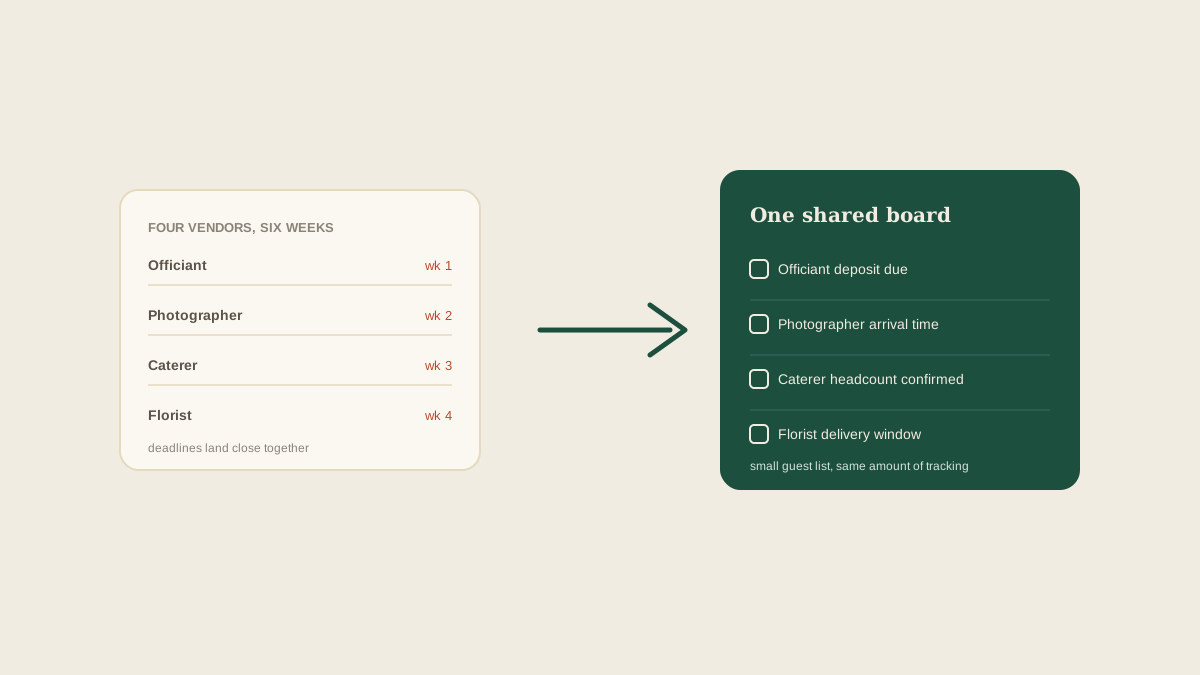
Micro-weddings and elopements get planned differently from the start, sometimes six weeks out instead of a year, sometimes with four vendors instead of fourteen. The temptation is to skip the system a studio uses for full weddings entirely and just wing it, on the theory that a smaller event does not need real coordination. That assumption holds right up until the day-of coordinator does not know the photographer switched their arrival time, or a deposit for the officiant slips past its date because nobody was watching for it the way they would on a bigger booking.
Why a big-wedding system does not just scale down
A full wedding's vendor board usually has enough vendors that a missed message gets caught by someone else noticing the gap. A four-vendor elopement does not have that safety net. If the photographer's contract and the caterer's headcount both come in the same week and only one gets written down, there is no third or fourth vendor conversation happening in parallel to surface the miss. Fewer moving pieces means fewer chances to catch a dropped one by accident, which makes deliberate tracking matter more per vendor, not less.
Fewer vendors, but not less coordination per vendor
A ten-vendor wedding might have a florist, a caterer, a DJ, a photographer, a videographer, a rental company, a baker, an officiant, a hair and makeup artist, and a venue coordinator, each carrying a slice of the total workload. An elopement often has four of those, but each one still has a contract, a deposit deadline, a day-of arrival time, and its own set of quirks about what it needs from the couple. The coordination load per vendor does not shrink just because the guest list did. What shrinks is the total number of vendors, not the amount of attention any single one requires.
The compressed timeline problem
A wedding booked a year out gives a studio time to catch a slow vendor response or a delayed contract before it becomes urgent. A micro-wedding booked six weeks out does not have that cushion. A deposit deadline that would normally sit quietly on a board for months is due in eleven days, and a vendor who takes their usual week to reply to an email has just used almost a fifth of the entire planning window. Short timelines do not remove the need to track deadlines, they make the cost of missing one arrive much faster.
When the couple books some vendors directly
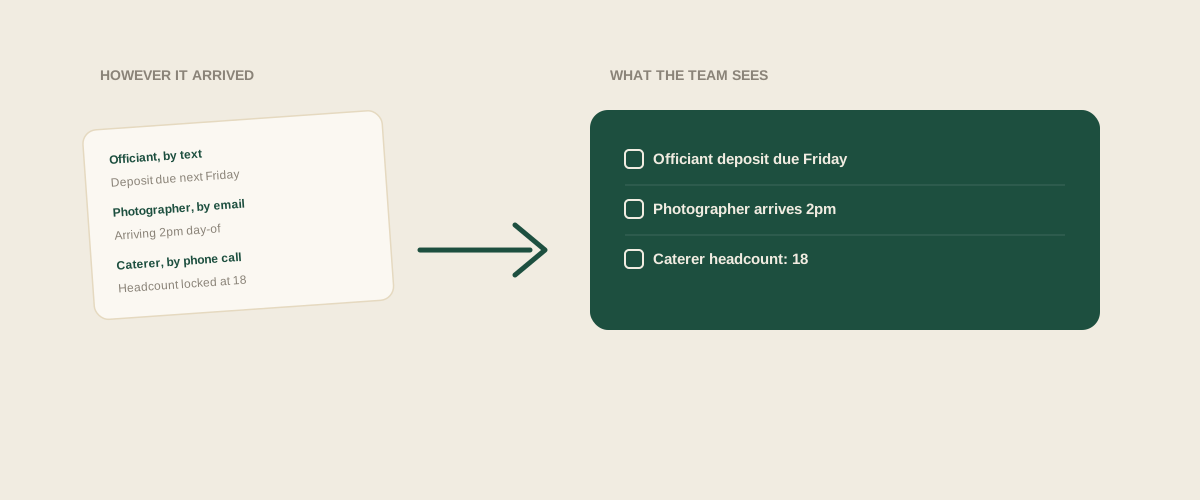
Elopements and micro-weddings are also more likely to involve a vendor the couple found and booked themselves, an officiant they already knew, a photographer recommended by a friend, without the studio in that conversation at all. That vendor still needs to show up at the right place and time and still needs to know about a last-minute venue change, but the studio has none of the context that comes from having negotiated the contract directly. The fix is not turning down that vendor's involvement, it is getting them onto the same shared board as every vendor the studio did book, so a schedule change reaches them the same way it reaches everyone else.
What actually needs tracking, even at this size
Four vendors is still four deposit deadlines, four arrival times, four sets of instructions about parking or setup, and at least one contract per vendor that somebody needs to have actually read. None of that disappears at a smaller scale, it just becomes easy to assume it is small enough to hold in memory for a few weeks. A studio running several elopements in the same month, each with its own short list of vendors and its own compressed timeline, runs into the same mixing-up problem a larger studio has with full weddings, just faster and with less warning.
Common mistakes
Treating a short timeline as a reason to skip writing things down, on the assumption that six weeks is short enough to just remember. Letting a couple's own vendor relationships stay outside the studio's tracking because the studio was not the one who booked them. Assuming that fewer vendors means fewer things that can go wrong, when it usually just means fewer people around to notice if one of those few things does.
Where to start
An elopement or micro-wedding does not need a smaller version of a full wedding's paperwork, it needs the same habit applied to a shorter list: every vendor, whoever booked them, lands on one shared board with their deadline and their day-of details attached the moment they are known. The timeline being short is exactly why that habit matters more here, not less. There is less runway to catch a gap later.
Frequently asked questions
Does a four-vendor elopement really need the same tracking as a full wedding?
Yes, at least per vendor. Each of those four vendors still has a contract, a deadline, and day-of details that need to be visible to whoever is on-site, and a short guest list does not reduce any of that.
What about vendors the couple booked themselves, outside the studio?
They still need to be on the shared board. A studio does not need to have negotiated a vendor's contract to be responsible for making sure that vendor knows about a schedule change, so the goal is getting them into the same tracking as everyone else, not excluding them because the studio was not part of the original booking.
Is it worth setting up a shared board for a single elopement that only takes six weeks to plan?
For a one-off event, a simple shared board still helps, since a compressed timeline gives less time to catch a missed deadline. It matters even more for a studio running several elopements in the same month, where the short timelines start overlapping and memory alone stops being reliable.
How is coordinating a micro-wedding different from coordinating a full wedding with fewer guests?
A full wedding with a smaller guest count usually still books a similar spread of vendors on a normal timeline. A true elopement or micro-wedding usually combines fewer vendors with a much shorter planning window, which is the compressed timeline problem, not just a smaller version of a big event.
Get your studio address, free
Get your studio address