4 Ways Studios Update Vendors After a Guest Count Changes (And Where One Still Gets Missed)
27 August 2026 · 7 min read

A guest count almost never holds steady between the day a contract is signed and the week of the event. It climbs when a couple decides to invite a second round of coworkers, drops when a handful of RSVPs come back no, and shifts again a dozen smaller times in between. None of that is unusual. What's harder is that a single guest count change doesn't touch just one vendor, it touches whichever ones actually build around a headcount, and every studio ends up with some routine for getting the new number to all of them. Here's what four common routines actually cover, and where one vendor still ends up working off the old number anyway.
The mass update to every vendor at once
The most direct approach is firing off the same update to every vendor on the event at once: one email or one round of texts, same new number, sent to the caterer, the venue, the rental company, the florist, whoever's on the list. It's fast and it feels thorough, since everyone technically got the news. The gap is that most vendors don't actually need the same information in the same form. A caterer needs the exact new number to reprice the order. A rental company needs it translated into chairs and place settings. A florist may not need it at all unless centerpiece count scales with tables. A blast treats a headcount change as one message instead of several different ones, and the vendors who needed more than the raw number are left to ask a follow-up question that may or may not get answered before it matters.
Updating vendors one by one, as you think of them
The more common version in practice is updating vendors individually, as each one comes to mind: message the caterer first since they're the obvious one, remember the rental company a day later, and maybe never circle back to the florist at all if centerpieces weren't top of mind. This is more tailored than a blast, since each vendor gets exactly the update that matters to them. The weakness is that it depends on remembering the full list of who a guest count actually touches, and that list is longer than it feels in the moment: catering, rentals, seating chart, sometimes the venue's own capacity limit, sometimes a bar package priced per head. It's easy to update the three vendors who come to mind immediately and quietly forget the fourth.
Letting the client tell vendors directly
Some studios lean on the client for this, since the client is often the one who knows the new number first, right after the last RSVP comes in. It keeps the studio out of the loop on a detail that technically originates with the client anyway. The trouble is a client doesn't necessarily know which vendors need to hear it or how urgently, and a client who mentions the new count to the caterer in passing may never think to mention it to the rental company at all. Worse, if a vendor replies to the client directly to confirm the change, that confirmation can live entirely in the client's inbox, invisible to the studio unless the client happens to forward it along.
Rolling it into the final headcount deadline
A fourth approach is simply waiting: instead of chasing every guest count change as it happens, hold the update until the final headcount is due to the caterer anyway, and update everyone at that point in one pass. This avoids the noise of updating vendors every time the number ticks by one or two, and it lines up with a deadline that's already on the calendar. The problem is that not every vendor works on the caterer's timeline. A rental company ordering extra chairs, a favor vendor producing a fixed quantity, or a venue confirming table counts often needs lead time well before the final headcount deadline, and waiting for that one date means those vendors get the update too late to act on it comfortably, if at all.

Why every approach breaks at the same point
All four routines, the blast, the one-by-one update, the client relaying it, waiting for the deadline, share the same weak point: each one depends on someone correctly holding, in their head, the full list of which vendors a guest count actually touches for this specific event. That list isn't the same every time. A backyard wedding with rented everything has a longer list than a venue with an all-inclusive package. Getting it right means re-deriving that list from memory every time the number moves, and the vendor that gets left off is rarely the obvious one, it's the one whose connection to headcount wasn't top of mind that particular day.
What changes when the update is captured once and routed by vendor
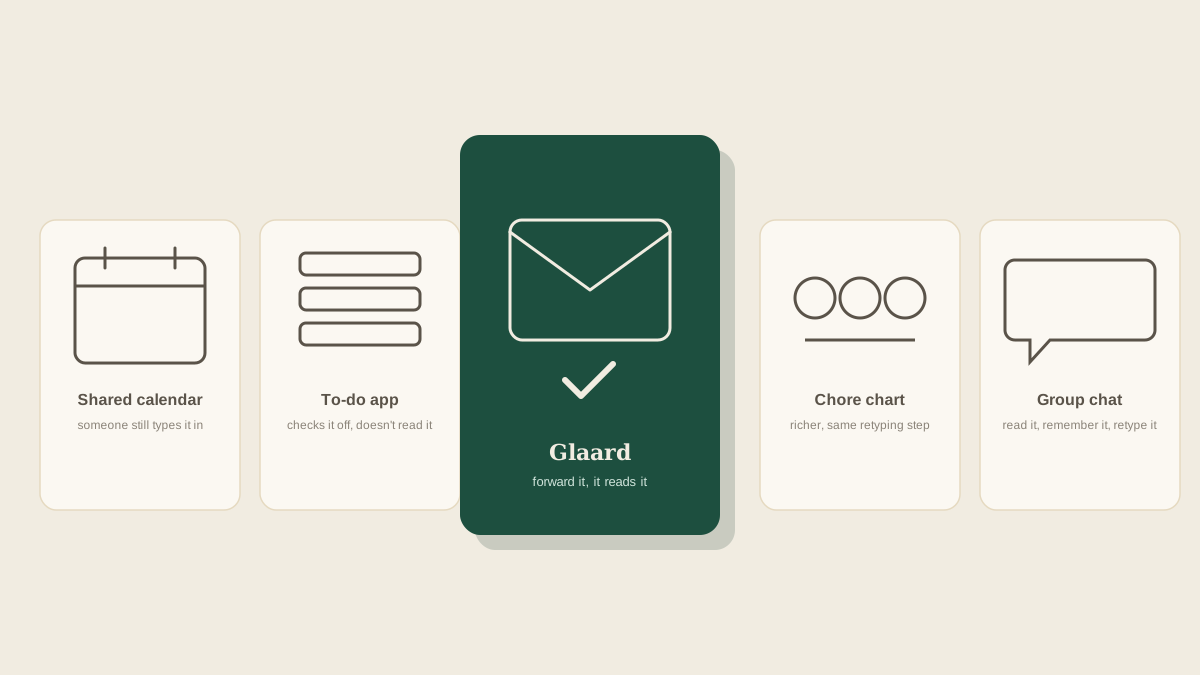
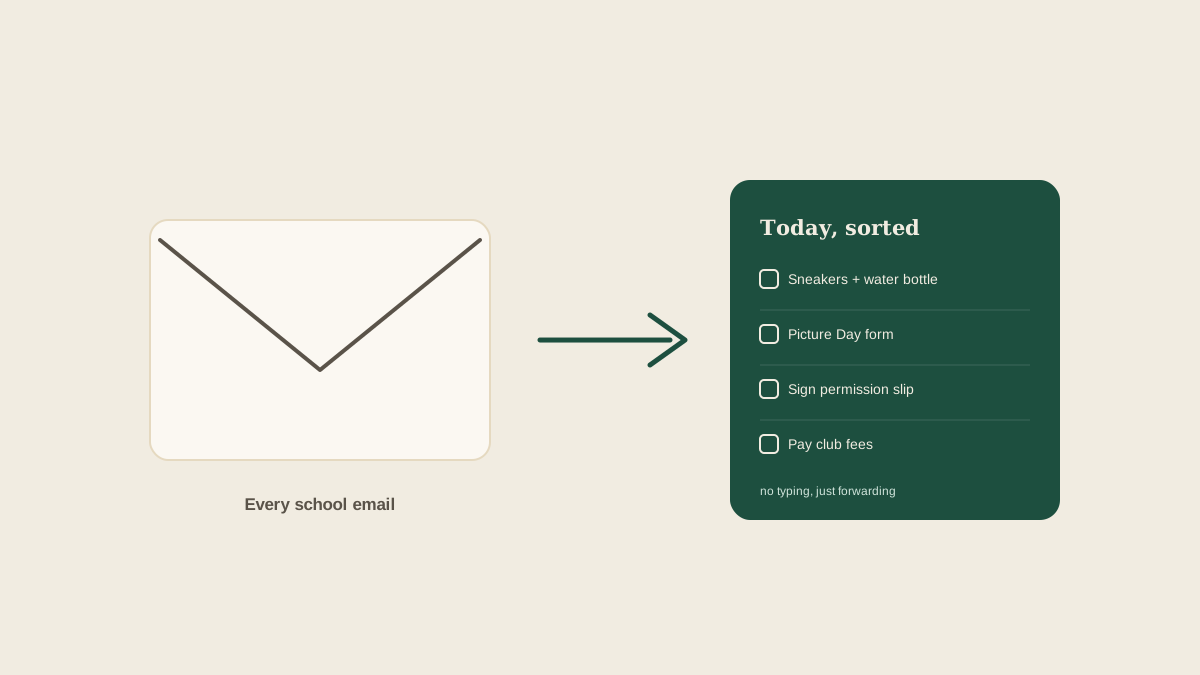
Forwarding the message where the guest count actually changed, an RSVP tracker export, a client's email confirming the final number, a text with the new figure, means the update only has to be written down once. From there, it can be turned into separate tasks tagged to whichever vendors that specific event's guest count actually touches: confirm the new number with catering, update the rental order, check the venue's capacity limit, rather than one blanket message everyone has to individually interpret or a mental list someone has to reconstruct from scratch. Whether a vendor has actually confirmed the new number is also visible on the board, instead of living only in whichever inbox the confirmation happened to land in.
How to choose
For a studio running a small, all-inclusive venue with few outside vendors, a quick mass update or a one-by-one message probably covers it fine, since the list of who's actually affected is short and doesn't change much event to event. It gets riskier with more outside vendors, a backyard or non-traditional venue where nearly everything is rented separately, or a guest count that moves more than once before the final headcount is due. In those cases, the studios that don't end up with a rental order or a favor quantity built around a stale number are usually the ones where a guest count change gets written down once and routed to the vendors it actually touches, not re-remembered from scratch every time the number shifts.
Frequently asked questions
How do I know which vendors are actually affected by a guest count change?
It depends on the event, but the usual list is catering, rentals (chairs, tables, place settings), the venue if capacity is contractually capped, and anything priced or produced per head, like favors or a per-person bar package. Worth building that list once per event early on, rather than trying to recall it fresh every time the number moves.
Does a small change, like two or three guests, really need to go out to every vendor?
Usually not urgently, but it's still worth logging so it's not lost by the time several small changes add up to something that does matter. A caterer might round or absorb a change of one or two, but a rental company ordering a fixed quantity of chairs generally needs the exact number, however small the shift.
What if a vendor needs their own formal change order, not just a note that the count changed?
That's common with rental companies and some catering contracts. The forwarded update is still the trigger, it just means the resulting task is to send or confirm that vendor's specific paperwork, rather than assuming a message alone closes it out.
Does this work the same way when the guest count goes down instead of up?
Yes, and it's arguably easier to miss, since a lower number rarely feels as urgent as a higher one. A vendor still building an order or a quote around the original, higher count can mean overpaying or over-ordering, so a decrease is worth routing to the same vendors just as promptly as an increase.
Get your studio address, free
Get your studio address