How to Keep Clients in the Loop on Vendor Progress Without Becoming Their Personal Status Hotline
17 August 2026 · 6 min read

A couple planning their wedding checks in the same way, over and over: "any updates on the florist?" "did the caterer confirm the headcount?" "where are we on the DJ contract?" It's not that they don't trust the studio, it's that from where they're sitting, silence and progress look identical. Answering those questions individually, over email or a phone call, eats a real chunk of a planner's week, and it's time spent relaying information that already exists somewhere: the same shared board the studio uses to track vendor tasks internally.
Why "any updates?" never really stops
The question doesn't come from impatience so much as a lack of any other option. A client has no window into what's actually happening with their vendors between the kickoff call and the final walkthrough, so checking in by message is the only tool they have. Answer it once and the relief lasts about a week, then the same uncertainty builds back up and the question comes again, usually right as the studio is heading into its busiest stretch with other events.
Forwarding the raw vendor thread
Some planners try to solve this by forwarding the actual vendor email or thread straight to the client, reasoning that the client asked for an update and now they have one. It backfires more often than it helps. A raw thread includes a price negotiation, a vendor's blunt note about a scheduling conflict, or an aside that was never meant for the client's eyes, and now the studio is managing a conversation it didn't intend to start. It also buries the one line the client actually cares about, deposit paid, inside a message written for a different audience.
Going quiet until something is final
The opposite instinct is to say nothing until a decision is locked in, on the theory that a client doesn't need to see a negotiation in progress. This avoids the oversharing problem, but it creates a different one: from the client's side, weeks of real work look exactly like weeks of nothing happening, and the studio only hears from them once the silence has built up enough to prompt a check-in email that now has to be answered anyway. Staying quiet doesn't remove the update requests, it just delays them and makes each one feel more overdue.
What clients actually want to know
Almost every version of "any updates?" is really one of three narrower questions: what's confirmed, what's still pending, and whether there's anything the client needs to do themselves, sign something, pick an option, send a payment. None of that requires the client to see the vendor's actual email. It requires a short, current answer to those three questions, which is close to what a studio's internal task board already tracks, just without the internal notes, the vendor's tone, or the parts of a negotiation the client was never meant to see.

A worked example
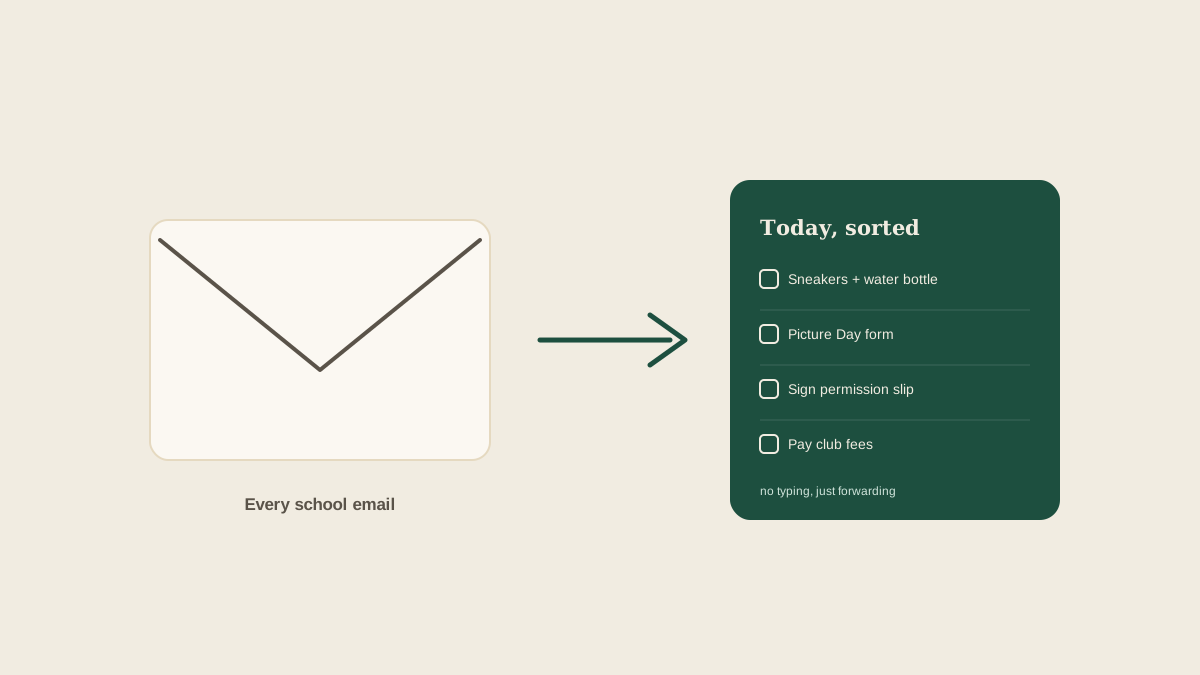
Say a florist confirms delivery timing, a caterer is still waiting on a final headcount from the client, and the DJ contract needs a signature. Relayed individually, that's three separate messages to write, each one pulled from memory or from digging back through the studio's own inbox. Filtered from the same shared board the studio already keeps, it becomes one short update: florist confirmed, caterer needs the final headcount from you by Friday, DJ contract needs your signature. The client gets exactly what they were asking for, and nobody had to write a new message from scratch to produce it.
Common mistakes
Giving every client full access to the internal task board, which shows them vendor notes, internal reminders, and details from other events sharing the same board if the tool doesn't separate by client. Answering each check-in message individually instead of keeping one running, current summary the client can be pointed back to. Waiting for the client to ask before sharing anything, which guarantees the update always arrives a step behind whatever they were already wondering about.
Where to start
The fix isn't a longer or more polished email every time a client checks in. It's keeping one simple, current view of what's confirmed, what's pending, and what needs the client's input, drawn from the same tasks the studio is already tracking internally, so answering "any updates?" stops being a fresh writing task every single time and starts being something the client can just be shown.
Frequently asked questions
Does this mean giving clients direct access to our internal task board?
Not the same board, no. Clients should see a filtered slice, what's confirmed, what's pending, what needs their input, not the internal notes, vendor tone, or tasks belonging to other events sharing the same account. A good tool separates what the studio sees internally from what a client is shown.
What if a vendor issue is genuinely something the client needs to know about, like a schedule conflict?
That's still worth a direct conversation, not a filtered status line. The confirmed and pending view is for routine progress. Anything that changes a client's plans or needs a decision from them deserves an actual message, not just an update on a shared view.
How often should a client-facing update actually change?
As often as something in it actually changes, not on a fixed schedule. If nothing moved since last week, there's nothing new to show, and sending an update anyway just trains clients to expect one whether or not there's real news.
Does this work for clients who prefer a phone call over checking a shared view online?
It still saves time even then, since the planner is reading from the same current confirmed and pending list on the call instead of trying to reconstruct the status from memory or from digging back through vendor emails while the client is on the line.
Get your studio address, free
Get your studio address