How to Keep a Day-Of Coordinator or Assistant in the Loop Without Repeating Everything Yourself
10 August 2026 · 6 min read

A lead planner coordinating vendors is already a lot to keep straight. Add a day-of coordinator running the event itself, or a new assistant covering a walkthrough, and now a third person needs to know what's happening too, without the weeks of context the lead planner has built up just by living it. Most studios solve this the same way every time: a rushed briefing right before the helper arrives, covering whatever's top of mind and hoping nothing important gets left out.
Why extended helpers are always a step behind
A day-of coordinator isn't on the vendor group chat. They don't get the venue's emails. They weren't there when a florist mentioned the delivery window moved this week. Everything they know about that day comes from whatever the lead planner remembers to tell them, usually in the few rushed minutes before handing off the event, which means the version they get is whatever's easiest to remember in that moment, not necessarily what actually matters that day.
The re-explaining problem
The same information often gets explained more than once: once to a day-of coordinator covering the ceremony, again to an assistant covering setup, and again to whichever team member is normally out of the loop on that vendor relationship. Each explanation depends on someone remembering to give it, and each one is a chance for a detail to get dropped, the allergy that matters for the catering, the load-in time that's different this week because of a venue conflict, the fact that the band swapped their setup slot with the DJ.
What a helper actually needs to know
Not everything on a studio's full vendor list is relevant to a single day-of shift or a walkthrough. What actually matters is narrow and specific: what time to be where, anything that changed from the plan, and anything access-related like a gate code or a loading dock restriction. The problem isn't that this information is complicated, it's that it currently only exists in the lead planner's head and has to be manually recreated out loud every single time someone new is covering.

A worked example
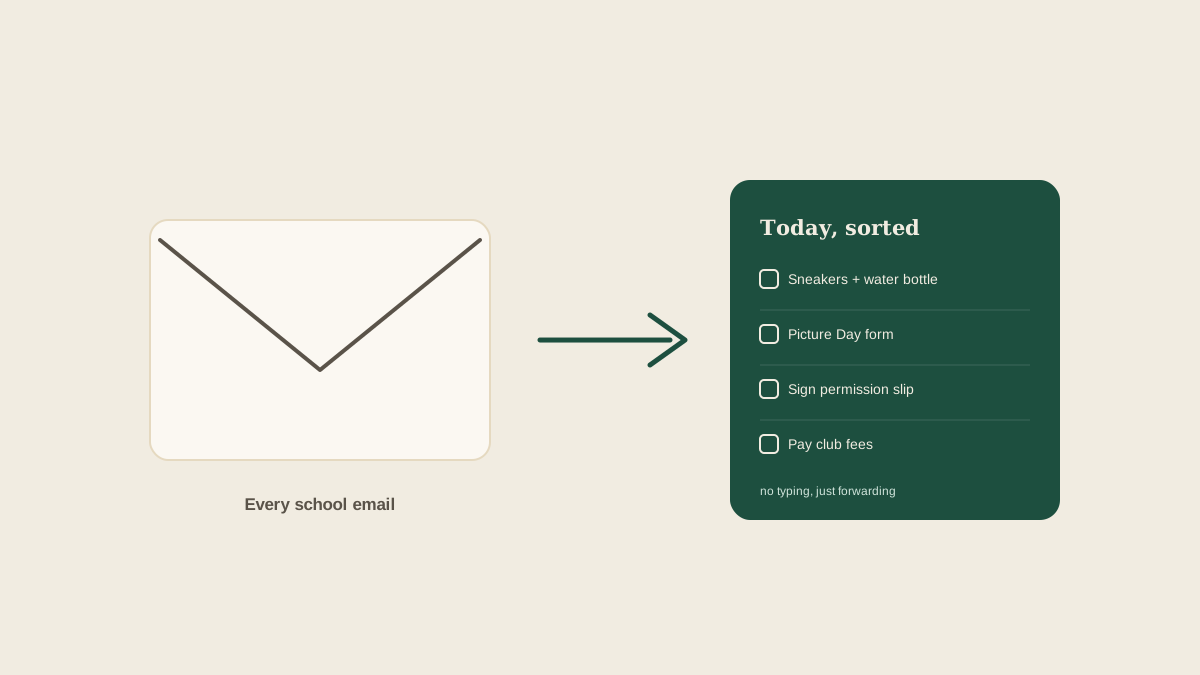
Say load-in moves from the usual entrance to a different one this week, and the florist needs access an hour earlier than planned. A lead planner handing off to a day-of coordinator has to remember both details and say them out loud, and if the handoff happens in a rush the morning of, the florist's earlier access is exactly the kind of detail that gets left out rather than mentioned at all. If both of those had already landed on a shared board the moment they were known, the coordinator could check it themselves before the event starts, without needing the lead planner present to relay it.
What changes when a helper can see the same board
Giving a day-of coordinator or a regular assistant access to the same shared board a studio already uses doesn't mean handing over every piece of vendor history. What it means is that the helper isn't dependent on the lead planner's memory in the two minutes before a handoff. They can look themselves, the same way a second coordinator would, instead of relying on someone else to remember every detail correctly under time pressure right as the event is starting.
Common mistakes
Assuming a verbal handoff covers everything, when it only covers what's top of mind in that specific moment, which is rarely the full list. Sending a wall of unrelated vendor history to a helper who only needs the next few hours, which buries the one detail that matters under everything else that doesn't apply to them. Not updating a helper when a plan changes after the handoff already happened, because the update goes back into the same group chat or contract the helper never had access to in the first place.
Where to start
The fix isn't a longer briefing before a coordinator or assistant arrives, it's giving them a way to see the relevant slice of the shared board themselves, filled in from the same messages the lead planner already gets, rather than depending on someone remembering to repeat it out loud every single time.
Frequently asked questions
Do day-of coordinators and assistants need their own login to see the shared board?
It depends on the tool, but most let you share a narrower view, like a single event or a single vendor, without handing over full access to the whole studio's account and history.
How much of our studio's full vendor list should a day-of coordinator actually see?
Usually just what's relevant to their shift: load-in and access times, anything different from the plan, and any safety or access information. The full history for every vendor across every event isn't necessary and mostly just adds noise for someone covering a single day.
Is this worth setting up if an assistant only covers a single walkthrough occasionally?
Probably not on its own. It matters more for regular helpers, a day-of coordinator who covers most events or an assistant who's on a recurring schedule, where the same information ends up getting re-explained over and over.
Does this replace a written run-of-show for a new coordinator?
No. A run-of-show with the full timeline, contacts, and contingencies is still worth having for a new or occasional coordinator. A shared board handles the vendor logistics that change week to week, which a static document isn't built to track.
Get your studio address, free
Get your studio address