How to Coordinate Vendors Across a Multi-Day Wedding Weekend Without Mixing Up Which Day Needs What
27 August 2026 · 6 min read

A multi-day wedding weekend isn't one event with a few extra activities added on, it's several separate events stacked back to back, each with its own vendors, its own venue, and its own timeline. A welcome dinner Friday night, a ceremony and reception Saturday, a farewell brunch Sunday morning: three distinct vendor lists, three different load-in windows, sometimes three different venues entirely, all inside one weekend a studio ends up tracking as though it were a single wedding with a longer schedule, rather than three weddings' worth of logistics compressed into 48 hours.
Why one wedding weekend is actually several events stacked together
A single-day wedding has one vendor list and one clock: everyone arrives, does their part, and the day ends. A multi-day weekend resets that clock two or three times over, and each reset brings its own version of the same coordination problem. The rehearsal dinner caterer has nothing to do with the ceremony florist. The brunch venue on Sunday morning might not even be the same property as Saturday's reception. Treating the whole weekend as one continuous event, tracked on one continuous list, means a Sunday brunch detail and a Friday dinner detail sit side by side as if they belong to the same day, when in practice nobody needs to think about both of them at once.
The vendor list changes day to day, not just event to event
With a single wedding, a studio typically knows the full vendor roster from early on, venue, caterer, florist, photographer, band, and that list stays mostly fixed until the event happens. A weekend format adds vendors that only matter for one specific day: a welcome dinner caterer with no role on Saturday, a shuttle company running Friday transportation and again for Sunday brunch but not in between, a rental company delivering different linens for a casual Friday dinner than for Saturday's formal reception. A vendor task that doesn't specify which day it belongs to is ambiguous in a way it never would be for a single-day wedding, because there's no single obvious day left to assume.
Why a single timeline document doesn't capture it
Most studios already build a master timeline for a wedding weekend, and it genuinely helps with the big picture, what happens when, across all three or four days. What it doesn't do well is hold the vendor-level detail, a delivery window, a deposit due date, a contract term, because a timeline is built to show sequence, not to hold every open task with a deadline attached. A planner staring at a beautifully laid out weekend timeline still has to remember, separately, that the welcome dinner caterer's final headcount is due Wednesday and the Sunday brunch venue needs a signed contract by Friday, neither of which shows up as a line on the schedule itself.

A worked example
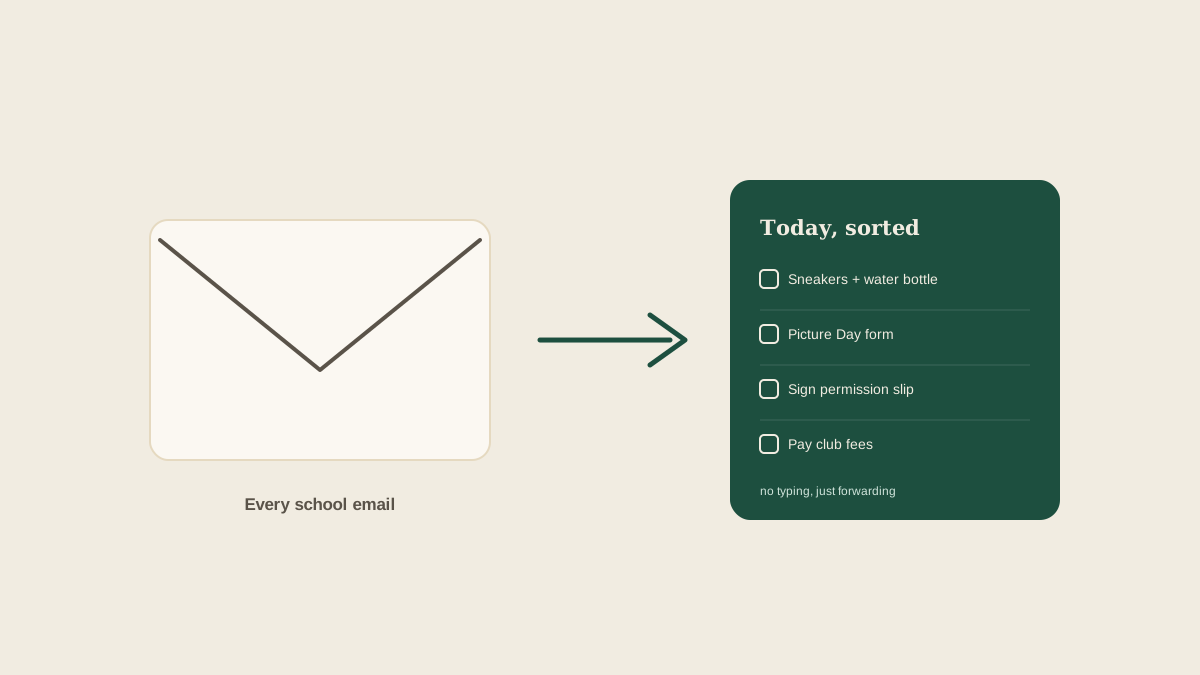
Say a weekend includes a Friday welcome dinner, a Saturday ceremony and reception, and a Sunday farewell brunch, each at a different venue. The welcome dinner caterer emails asking for a final headcount by Wednesday. The Saturday florist texts to confirm a 10am delivery. The Sunday brunch venue sends a contract that needs a signature and a $300 deposit within a week. Tracked on one flat list with no day attached, a coordinator glancing at the board sees three unrelated tasks and has to reopen each one to remember which day, and which venue, it belongs to. Forwarded and tagged to the correct day instead, the same three tasks read clearly: Friday, confirm headcount by Wednesday; Saturday, confirm florist delivery at 10am; Sunday, sign brunch contract and pay deposit within a week. Anyone checking in on a specific day of the weekend sees exactly what that day still needs, without having to filter it out of the other two.
What actually needs day-by-day separation
Not every detail needs a day attached to be useful, a general note about the couple's preferences applies across the whole weekend. What does need separating is anything with its own deadline or its own vendor: load-in times, delivery windows, headcounts, and contracts, since each of those is only relevant to whoever's handling that specific day. A coordinator assigned to run Saturday doesn't need to sort through Friday's dinner logistics to find what's actually theirs, and a coordinator who wasn't even there Friday shouldn't have to ask what happened before they can pick up Saturday cleanly.
Common mistakes
Building one shared timeline for the whole weekend and assuming it also functions as a task tracker, when a timeline shows sequence, not open items with deadlines. Assuming every vendor working the weekend is working all three days, when many are booked for exactly one and have no reason to appear on tasks tagged to the others. Splitting the weekend across coordinators without also splitting the vendor tasks by day, so a coordinator assigned to Sunday still has to comb through Friday and Saturday's messages to find anything relevant to their own day.
Where to start
The fix isn't a longer timeline document, it's making sure every vendor task, however it arrives, gets tagged to the specific day of the weekend it actually belongs to, not just the wedding as a whole. Forward the message as it comes in and let it land on the shared board with its day attached, and each day of a multi-day weekend stays as easy to track as a single wedding would be on its own, instead of three weddings' worth of detail blurring into one long list nobody can fully hold in view at once.
Frequently asked questions
Does each day of a multi-day wedding need its own separate board, or can they all live on one?
One shared board works fine, as long as each task is tagged with the day it belongs to. A separate board per day just recreates the same problem a studio already has across multiple concurrent weddings, several places to check instead of one place with clear labels.
What if the same vendor is working more than one day of the weekend?
That's common, a caterer might handle both the welcome dinner and the wedding reception. Each day still gets its own task, since the headcount, delivery time, and menu can differ day to day even when the vendor is the same.
How do you keep a coordinator assigned to only one day from missing something that affects their day but arrived earlier in the weekend?
Tagging by day helps here too, since a Friday detail that actually affects Saturday setup, a rental delivery running long, for instance, can be tagged to both days, so the Saturday coordinator sees it without having to comb through Friday's full message history.
Is this worth setting up for a two-day weekend, or only longer multi-day events?
It matters as soon as there's more than one distinct event inside the weekend. Even a two-day format with a rehearsal dinner and a wedding day already has two separate vendor lists worth keeping apart, not just a full week-long celebration.
Get your studio address, free
Get your studio address