4 Ways New Planning Studios Set Up Vendor Coordination From Day One (And Where Each One Breaks)
24 September 2026 · 7 min read
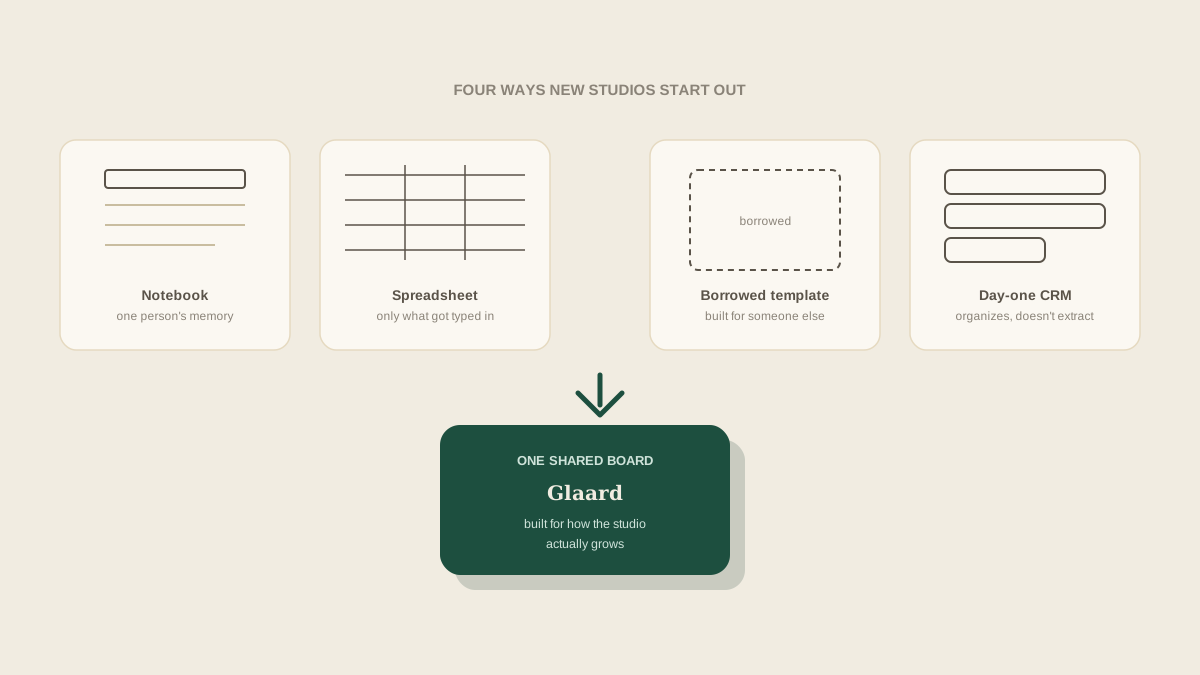
A brand-new planning studio doesn't have a legacy system to fix, it has a blank page and a first client to book vendors for. That's an advantage in theory, since there's no bad habit to undo, but it also means the studio has to pick something before the first contract even lands, usually without knowing yet which parts of vendor coordination will actually turn into a bottleneck. Here's what new studios commonly reach for first, and where each one starts to strain as the booking calendar fills in.
A single notebook or notes app
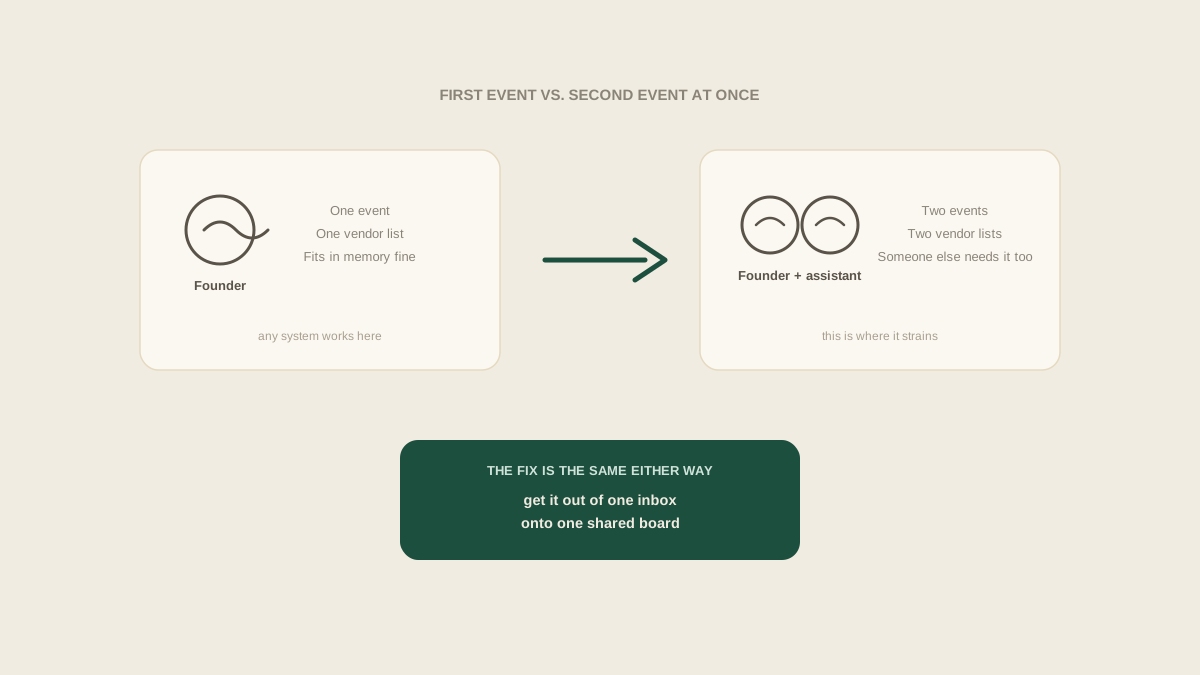
For a studio's very first few events, a notebook or a notes app is genuinely enough. There aren't many vendors yet, the founder is doing most of the calling and emailing personally, and everything fits in one person's head anyway. The limitation isn't that this fails early, it's that it fails invisibly: it keeps working right up until the studio books a second concurrent event, or the founder hires a first assistant, and the entire system turns out to have been one person's memory the whole time, with nothing written down in a form anyone else can pick up.
A spreadsheet built before the first booking
Some new studios do a little more upfront work and build a vendor tracking spreadsheet before they even need one: columns for deposit status, contract signed, contact info. This is a real improvement over a notebook, since at least the structure exists before the pressure does. The gap is the same one every spreadsheet has, whether the studio is new or established: it only holds what someone remembers to type into it. A vendor email with a new delivery window doesn't update the spreadsheet by itself, and a founder juggling sales calls and site visits in the studio's early months is exactly the kind of person who falls behind on data entry first.
Borrowing a mentor or former employer's system
A lot of new planners started out working for another studio, and it's common to borrow whatever system that studio used, a specific spreadsheet template, a particular app, a folder structure, on the theory that it must work since it worked there. Sometimes it genuinely transfers well. Often it doesn't, because that system was built around a different studio's volume, vendor list, and team size, and a new solo planner inherits all the overhead of a bigger operation's process without yet having the team to run it.
Signing up for a CRM on day one
Other new studios go the opposite direction and commit to a full CRM, like HoneyBook or Dubsado, before they've booked a single wedding, reasoning that it's easier to build the habit early than to migrate later. This is often a good call for the client-facing side, proposals, contracts, invoicing all in one place from the start. It doesn't solve vendor coordination specifically, though. A CRM organizes what the studio already knows; it still doesn't help with the raw work of reading an inbound vendor email and deciding what needs to become a task, which is the actual bottleneck once a studio is juggling more than one vendor conversation at a time.
Why the early choice matters more than it seems
None of these four is wrong for a studio's very first event or two. The real risk is that whichever one gets picked first tends to stick around by default, not because anyone evaluated it, but because switching systems feels like unnecessary work while the studio is small. That's precisely the moment switching is cheapest: before years of vendor history are trapped in a notebook or a copied template, and before a second team member has learned to work around a system's gaps instead of around one that actually holds up.
What actually changes as the studio grows
The first real strain rarely shows up as a dramatic failure. It shows up as a founder quietly staying later than they used to, because the vendor emails and calls have grown past what fits comfortably in one evening's worth of memory. A second concurrent event doubles the vendor list without doubling the hours available to track it, and a first hire means someone else now needs to know what a vendor agreed to, not just the founder. Whatever system was picked on day one either scales past that point without anyone noticing the transition, or it becomes the thing everyone quietly works around, forwarding vendor emails to the founder anyway because that's still the only place the full picture actually lives.
Where to start
For a studio just getting going, the right question isn't which app looks the most professional, it's which vendor emails, texts, and calls actually get read and turned into a task without the founder being the only person capable of doing that reading. A notebook or a spreadsheet can carry a studio through its first few events fine. The moment a studio is running more than one event's vendors at a time, or bringing on a first assistant, the gap that mattered from the start, getting information out of an inbox without retyping it by hand, becomes the thing actually worth solving for.
Frequently asked questions
Is a notebook or notes app really a bad way to start tracking vendors?
Not for the first event or two. It only becomes a problem once the studio is juggling more than one event's vendors at once, or once someone other than the founder needs to know what's been agreed with a vendor.
Should a new studio buy a CRM before booking its first wedding?
It can be a reasonable early investment for contracts, proposals, and invoicing, since building that habit early is easier than migrating later. It's worth knowing upfront that a CRM organizes information the studio already has, it doesn't solve the separate problem of reading vendor messages and turning them into tasks.
Is it safe to just copy a system from a mentor's studio or a previous employer?
Parts of it usually transfer, but the whole system was likely built for a different vendor list, volume, and team size. Borrowing the structure is fine as a starting point, just expect to adjust it rather than assume it fits a solo studio's first season unchanged.
When does it actually matter which system a new studio picks?
It matters less in the first few events and more the moment a studio is running concurrent events or adding a first team member, since whatever system got picked first tends to stick around by default. Switching early, before years of vendor history pile up in it, is far cheaper than switching later.
Get your studio address, free
Get your studio address