How to Onboard a New Coordinator Without Losing a Season of Context
20 August 2026 · 6 min read

Bringing on a new coordinator is never perfectly timed. It usually happens because the studio is already busy enough to need the extra hands, which means the new hire's first week overlaps with several weddings already mid-planning, each with its own vendors, its own open deadlines, and its own history that predates their start date by months. The usual fix, a binder of past emails and a few weeks of shadowing, is slow exactly when the studio can least afford slow, and the slowness usually shows up quietly, as a new hire who feels behind for weeks instead of days.
Why onboarding mid-season is harder than onboarding at the start
A coordinator who joins before a single event has been booked gets to build context at the same pace the studio does, learning each vendor relationship as it forms. A coordinator who joins in the middle of a season walks into a dozen relationships already in progress: a florist mid-negotiation on one event, a caterer waiting on a headcount for another, a venue back-and-forth that's been going on for two weeks on a third. None of that context exists anywhere a new person can absorb it quickly. It's split across inboxes, memories, and half-finished conversations that predate them.
The binder-and-shadowing approach
Most studios handle this the same way: a written overview of each active event, a few days shadowing the lead planner, and a promise to ask questions as they come up. It's a reasonable instinct, and it does convey the broad shape of things. What it doesn't convey is the current state, because a binder written on a Monday is already out of date by Wednesday once a vendor sends a change nobody's updated it with, and shadowing only captures whatever happens to come up during the specific hours the new coordinator is standing there.
What a new coordinator actually needs first
A new coordinator doesn't need the full history of how a vendor relationship developed over four months. They need to know what's actually true right now: which tasks are open, which are overdue, which vendor is waiting on a reply. Say a florist emailed three days ago asking to confirm a delivery time change, and nobody's replied yet. A binder written the week before won't mention it, since it happened after the binder was finished. A live shared board that already has that message sitting on it as an open task shows the new coordinator exactly what's outstanding, without anyone having to remember to mention it out loud.

The cost of a slow ramp-up lands on everyone else too
A new coordinator who spends their first three weeks mostly asking clarifying questions isn't just slower to become useful, they're also pulling the lead planner's attention away from actual planning to answer those questions, which is exactly the load the new hire was brought on to relieve in the first place. A studio that hires help during its busiest stretch and then loses weeks of that same lead planner's time to onboarding hasn't actually gained capacity yet, it's spent capacity on ramp-up while hoping to get some back later in the season.
Why past context matters less than current status
It's tempting to think a new coordinator needs the whole backstory before they can be useful, but most of what actually matters day to day is the present state of things, not how it got there. Knowing that a deposit is due Friday matters more than knowing the full negotiation that led to that deposit amount. A shared board that's kept current from the moment each vendor message arrives gives a new coordinator exactly that: not the history, just what's true and what's due, which is usually enough to start being useful within days instead of weeks.
What this looks like once it's working
A new coordinator who can open the same board everyone else checks tends to ask sharper questions faster, not because they're smarter than a coordinator ramped up the old way, but because their questions are about what to do with a task rather than what the task even is. Instead of "can you catch me up on the Chapman wedding," the question becomes "the florist's delivery task looks overdue, should I follow up or is someone already on it," which is the kind of question that moves an event forward instead of just moving the new hire's understanding forward.
Common mistakes
Handing over a written summary and treating it as sufficient, when it's already aging the moment it's finished. Assuming a new coordinator will ask if something's unclear, when they often don't yet know enough to know what to ask about. Waiting until the new hire has "caught up" before giving them real responsibility, which usually means the busiest weeks of their ramp-up are also the ones where they're least trusted with anything that matters, a slow start that's hard to shake even once they're genuinely ready.
Where to start
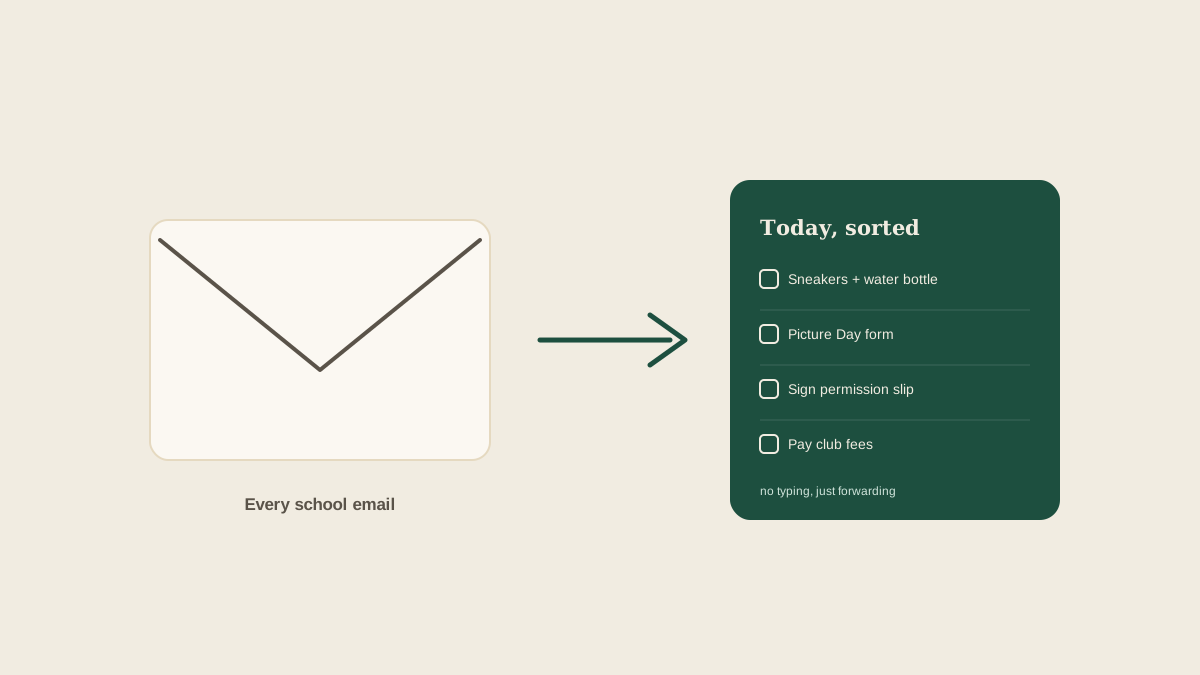
The fastest ramp-up isn't a better written overview, it's giving a new coordinator access to the same shared board the rest of the team already checks, filled in from whatever's been forwarded as it arrived, so they can see the studio's actual current state on day one instead of a summary of where things stood when someone had time to write it up. The history can come later, in conversation, as it's actually relevant. What they need immediately is what's open, what's overdue, and what's waiting on a reply.
Frequently asked questions
How much access should a brand-new coordinator get to the shared board right away?
Full visibility into active events is usually more useful than a restricted view, since the goal is for them to see the studio's actual current state rather than a curated slice. Assigning them tasks can start narrow and expand as they get comfortable, but what they can see is worth opening up from day one.
Does this replace the usual first-week training and introductions?
No. Meeting the team, understanding the studio's style, and learning how decisions get made still matters and still takes real conversation. This is specifically about closing the gap between what a new coordinator is told and what's actually true on the board at that moment, not a replacement for training.
What if the new coordinator is overwhelmed by seeing every open task across every event at once?
That's worth watching for, and it usually helps to point them toward one or two events to focus on first even while they can see everything, so the volume doesn't become its own kind of noise. The board being visible doesn't mean everything on it needs their attention immediately.
Is this worth setting up for a studio that only occasionally hires help?
It matters most when a new hire needs to be productive fast, mid-season, with several events already in motion. A studio that hires calmly between seasons with time for a slower, more traditional ramp-up may not feel the same urgency, but the gap it closes, current status versus a written summary, is useful any time someone new joins.
Get your studio address, free
Get your studio address