4 Ways Planners Try to Keep Track of Signed Vendor Contracts (And Where the Agreement Still Gets Lost)
10 August 2026 · 7 min read

Every studio booking vendors ends up building some system for signed contracts, because the alternative, an agreement nobody can find, has a real cost: a vendor showing up with different terms than what was agreed, a scramble the week of the event confirming what was actually promised, a client asking for a copy nobody can locate. Most studios land on one of a handful of approaches. Here's what each one actually solves, and where the terms still slip through anyway.
The inbox folder
The most common system is also the simplest: a folder in the email client where every signed contract gets filed the moment it comes back. It works well for the one thing it's built for: keeping a copy somewhere findable. It falls apart at the reading step. The folder doesn't tell anyone a deposit is due inside one of those contracts, and it definitely doesn't tell anyone it's due Thursday. Someone still has to open the folder, reopen the contract, reread the terms, and remember the dates buried inside before the deadline actually matters.
The shared drive
Some studios store every signed contract in a shared drive so any coordinator can pull it up. This genuinely helps with access: nobody's waiting on one person's inbox to find a copy. The catch is that access isn't the same as tracking. A drive with twelve contracts in it doesn't tell you at a glance which ones have a deposit due this week versus which ones are fully settled, and there's no way to tell which vendor's terms need a second read without opening each file one at a time.
Photograph or scan it and deal with it later
A common habit at a venue walkthrough or a vendor meeting is snapping a photo of the signed page the moment it's handed over, so at least the terms aren't lost even if the paper copy gets buried in a bag. It's a real improvement over hoping the paper survives. But a photo in a camera roll is just as easy to lose as the paper it replaced, buried between hundreds of other pictures with no reminder attached and no due date pulling it back to the top. Deal with it later usually means dealing with it never, or dealing with it the week before, scrolling back trying to remember which photo was the important one.
The vendor's own e-sign portal
Plenty of vendors now run contracts through DocuSign or a similar e-sign tool, which removes the physical paper problem entirely. This solves the losing-the-copy problem completely, since the agreement lives on a server instead of in a folder. What it doesn't solve is the noticing problem: a portal only helps if someone opens it again, and most planners don't recheck a signed contract the way they check their main inbox. Terms sitting unread in a portal for weeks are exactly as invisible as a contract sitting unread in a drive, it's just invisible in a different location, and most portals send only one notification before a deadline passes quietly.

Why every method breaks at the same point
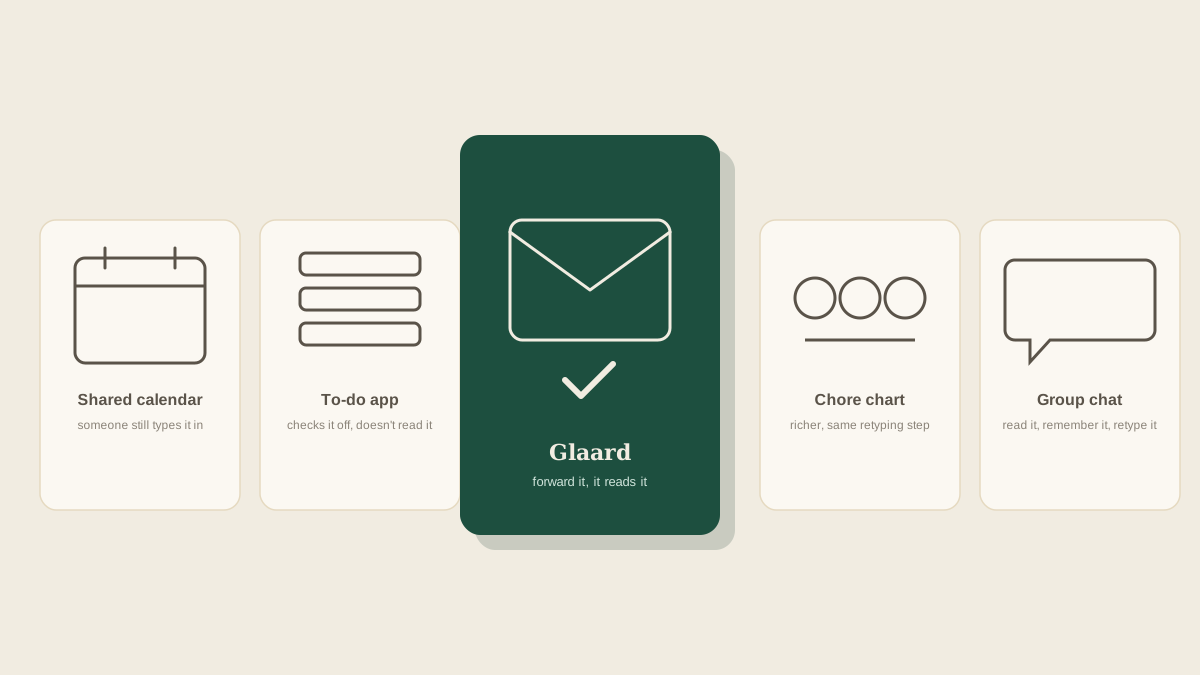
Look at all four and the weak point is the same one every time: each system depends on a planner physically reopening the contract, rereading what it actually says, and remembering the dates buried inside, whether that contract is a PDF in a folder, a file on a shared drive, a photo in a camera roll, or a signed document in a portal nobody reopened. None of these fix the reading step, they just change where the contract sits while it waits to be reread. A better folder or a tidier drive doesn't change that someone still has to go looking for the dates before any of the rest of the system can work.
What changes when the terms get pulled out the moment the contract is signed
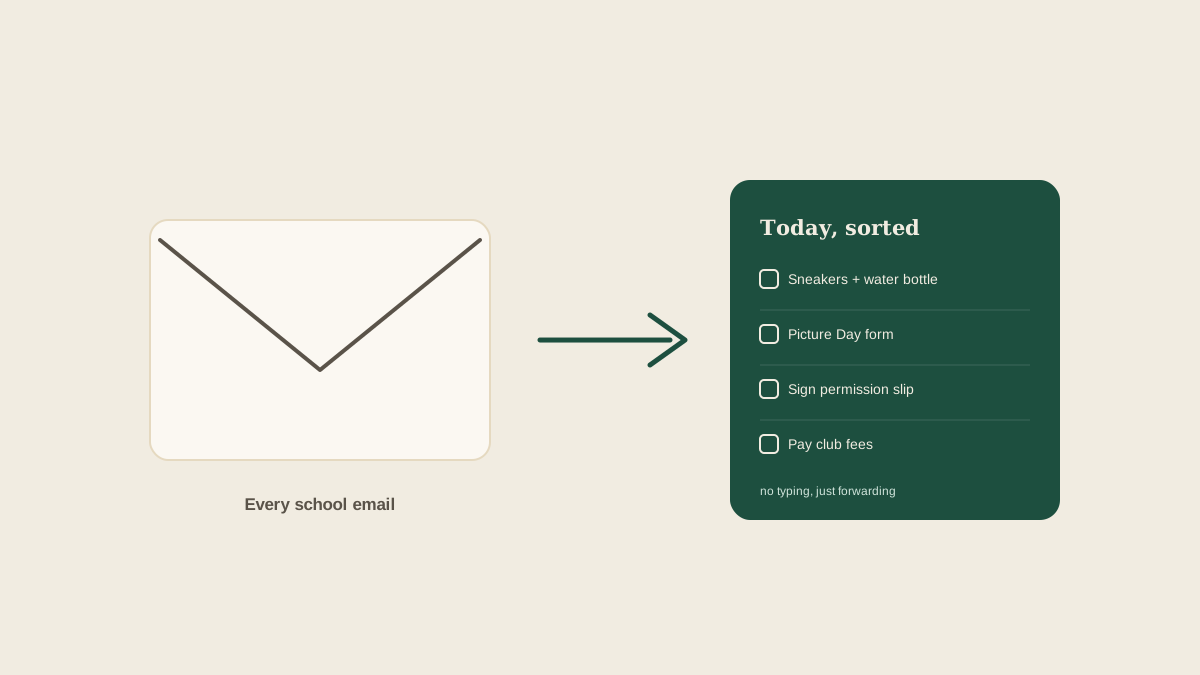
The fix isn't a better place to store the contract, it's removing the step where a planner has to reopen it, reread it, and remember the dates on their own. Forward the signed contract, or a photo of the signed page, exactly as it came back, and let the deposit deadline, the balance due date, and the delivery terms get pulled out and placed on a shared board right away. The agreement still gets filed for the record. The deadlines inside it don't have to wait for someone to reopen the file to matter.
How to choose
If a studio only books a handful of vendors a year, a folder or a shared drive is probably enough; the volume is low enough that rereading a contract now and then isn't the hard part. It gets harder the more concurrent events and vendors are involved, since each contract is its own separate set of dates, and the folder that worked for one event quietly turns into a dozen overlapping agreements once several weddings are running at once. At that point, the fix isn't a better folder, it's making sure the deadlines get out of the document and onto a shared board the moment the contract is signed, not whenever someone happens to reopen it.
Frequently asked questions
Do I need to stop using a shared drive if I forward the signed contract too?
No. Keep the drive as the actual filed record for legal and reference purposes. Forwarding the signed contract, or a photo of the signed page, just means the deposit and delivery dates inside it also land on a shared board right away, instead of waiting to be noticed the next time someone reopens the file.
What about vendors who only send paper contracts, never email?
A photo of the signed page works the same way as forwarding an email: it's the original agreement, unsummarized, and the deadlines can be pulled from a photo the same way they'd be pulled from a PDF. The contract doesn't need to arrive digitally to be tracked digitally.
How do I know which contract terms actually need tracking versus just filing?
Look for anything with a date attached: deposit due, balance due, delivery or setup windows, cancellation deadlines. Those become tasks on the shared board. The rest of the boilerplate language stays in the filed contract, since it doesn't need action by a specific day.
Is this worth setting up for one or two events a year?
Probably not, if a folder or a shared drive has never actually caused a missed deadline before. It becomes more useful once there's enough volume, several concurrent events, many vendors each with their own contract, that rereading every agreement reliably starts to be the actual bottleneck rather than an occasional annoyance.
Get your studio address, free
Get your studio address