4 Ways Studios Keep a List of Preferred Vendors (And Where the Roster Still Goes Stale)
14 September 2026 · 7 min read
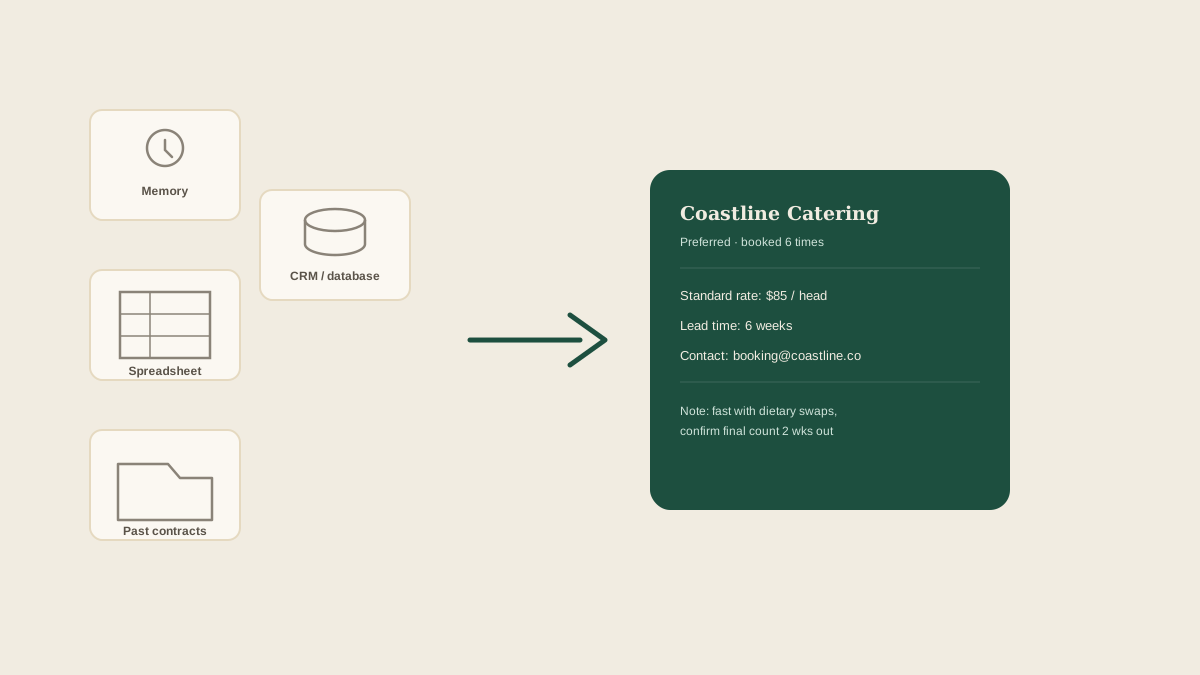
Every studio that's been running events for more than a season or two ends up with a mental list of vendors worth calling again: the florist who delivers early, the caterer who handles dietary restrictions without being asked twice, the DJ who reads a room correctly. The question isn't whether a studio has a preferred vendor list, it's whether that list lives anywhere other than one person's memory, and whether it stays accurate as the roster grows. Most studios land on one of a handful of approaches. Here's what each one actually solves, and where it still goes stale.
Keeping it in memory
The simplest version is also the most common: no list at all, just whoever the lead planner remembers worked out well last time. This works fine while the studio is small and one person is involved in booking every vendor for every event. It stops working the moment a second coordinator starts booking independently, since they have no access to a memory that isn't theirs, and it becomes a real liability the moment the person holding that memory is out sick, on vacation, or leaves the studio entirely, taking years of vendor judgment with them.
A shared spreadsheet
The natural next step is a spreadsheet: vendor name, category, contact info, maybe a rating or a note. This solves the access problem, anyone on the team can open it, and it's fast to set up. It runs into the same issue every manually maintained list runs into: it's only as current as the last time someone remembered to update it. A vendor's pricing changes, a contact leaves and a new one takes over, a once-reliable vendor has a bad season, and none of that reaches the spreadsheet unless someone deliberately stops what they're doing to edit a cell, which is easy to skip when the actual event work is what's demanding attention that week.
A folder of past contracts and threads
Some studios skip a dedicated list entirely and rely on searching past event folders when a vendor category comes up again: find the last wedding that used a good string quartet, dig up the old contract, pull the contact info from there. This has one real advantage, the historical record is completely accurate because it's the actual contract, not a summary someone typed up. It's slow by design, though, since it requires knowing which past event to search in the first place, and it surfaces nothing about vendors that were good but only used once, or vendors the studio decided not to rebook and why, because that judgment never lived anywhere except in whoever made the original call.
A dedicated vendor database
The most structured version is a proper vendor database: standard rates, lead times, past event history, internal notes, all attached to each vendor's profile. Done well, this is the most complete option and the easiest for a new coordinator to get useful information from quickly. It's also the one most likely to be adopted halfway and then abandoned: setting it up requires real upfront effort, and keeping it current requires someone to treat data entry as part of the job every time a vendor's terms change or a new one gets used for the first time, which competes directly with the actual coordination work that has a harder deadline attached to it.
Why all four share the same weak point
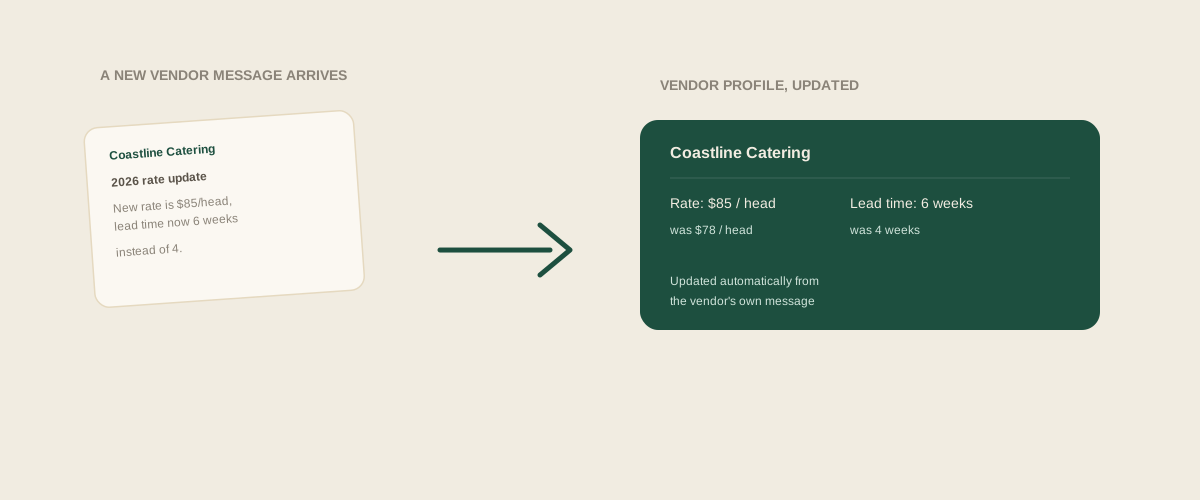
Memory, a spreadsheet, a folder of contracts, a formal database, every one of these gets built with good intentions and every one of them decays the same way: the information is only as current as the last time a human being remembered to sit down and update it as a separate task, disconnected from the actual work of running an event. None of these approaches update themselves from what's already happening in the studio's day to day vendor communication, which means the roster is always slightly behind, accurate for whenever it was last touched, not for right now.
What actually keeps a roster current
The versions that hold up longest aren't the ones with the fanciest format, they're the ones where updating the roster isn't a separate chore competing with real work. If a vendor's new rate shows up in this season's contract, or a coordinator notes that a rental company was an hour late for the third time, that information is already passing through the studio's normal vendor communication. The roster stays accurate when it can pull from that traffic directly, rather than requiring someone to notice the update, remember it happened, and go type it into a separate system later, which is the exact step every one of these four approaches quietly depends on and the exact step that slips first.
How to choose
A very small studio with one person booking every vendor can often get by on memory a little longer than it feels comfortable admitting, though that comfort disappears the day a second person needs to book independently. A spreadsheet or a contract folder is a reasonable middle step once a second coordinator is involved, as long as someone owns keeping it updated as an explicit responsibility, not an assumed one. A studio running enough concurrent events that a coordinator genuinely can't remember which vendor worked which wedding is the one that benefits most from a system that keeps itself current from what's already coming in, rather than one more list someone has to remember to maintain by hand.
Frequently asked questions
How often should a preferred vendor list actually get reviewed?
Reviewing it on a fixed schedule, once a quarter or once a season, catches the worst staleness, but it's a weaker fix than having the list update itself from ongoing vendor communication. A quarterly review only catches what changed since the last review, not what changed the week after.
Should a vendor stay on the preferred list after one bad event?
That depends on whether the issue was a one-off or a pattern, which is exactly the kind of judgment that gets lost if it only lives in one coordinator's memory. Recording the specific issue against that vendor's profile, not just a general do-not-rebook note, makes it possible for the next person to judge for themselves whether it matters for their event.
Is a formal vendor database worth the setup time for a small studio?
For a one or two person studio booking the same handful of vendors repeatedly, a lighter shared list is often enough. The setup cost starts paying off once a studio has enough vendors and enough team members that no single person can reliably answer whether they've used a vendor before, and how it went, from memory alone.
What's the actual risk of an out of date vendor list, beyond an inconvenience?
The real risk is rebooking a vendor whose reliability has quietly changed, or missing a rate increase that throws off a budget, because the list still reflects how things were the last time someone updated it rather than how they are now. It looks like a minor inconvenience until it affects a client's budget or a wedding day.
Get your studio address, free
Get your studio address