How to Coordinate Vendors for the Rehearsal and Rehearsal Dinner Without Three Separate Group Texts
5 October 2026 · 6 min read
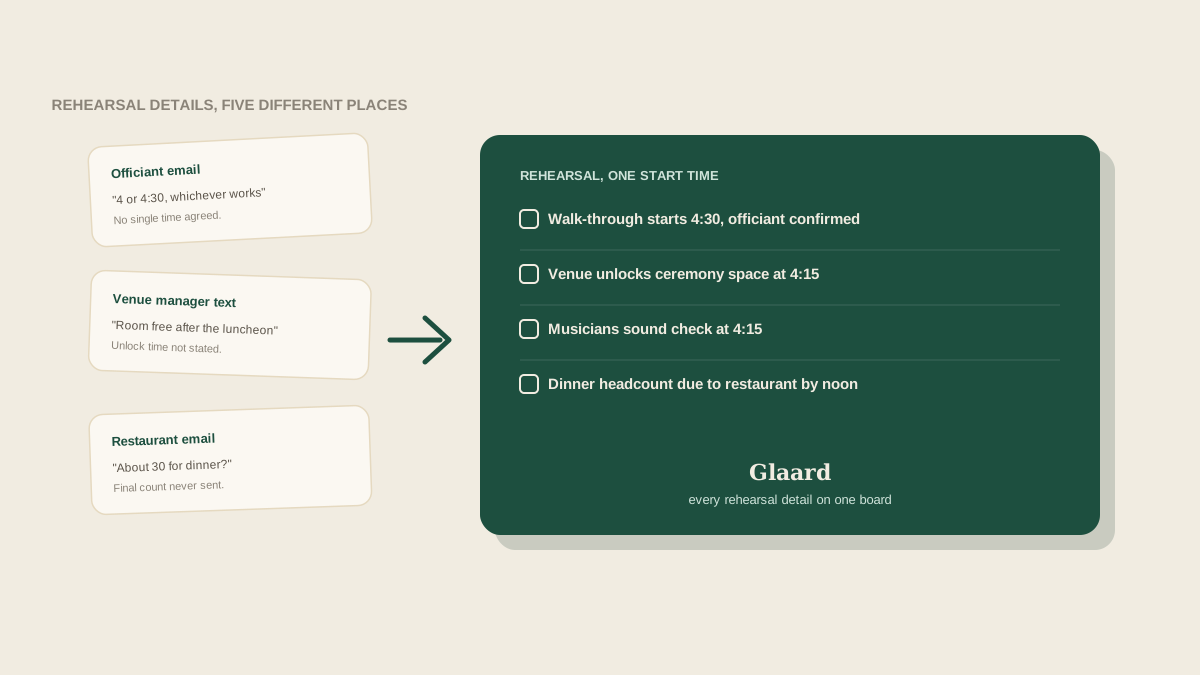
The rehearsal looks like the easy part of a wedding weekend. It is an hour, maybe ninety minutes, with a handful of people walking through the ceremony. Then you count who actually has to be there: the officiant, the venue manager, the string quartet or the DJ if there is a processional cue, the rental company if chairs are still being set, and the caterer or restaurant for the dinner afterward. Each of them confirmed a time in a different email, some of those times were later moved, and the couple's own version of the schedule is in a text from a month ago. By Thursday afternoon the planner is piecing it together from five places.
Why the rehearsal gets less attention than it should
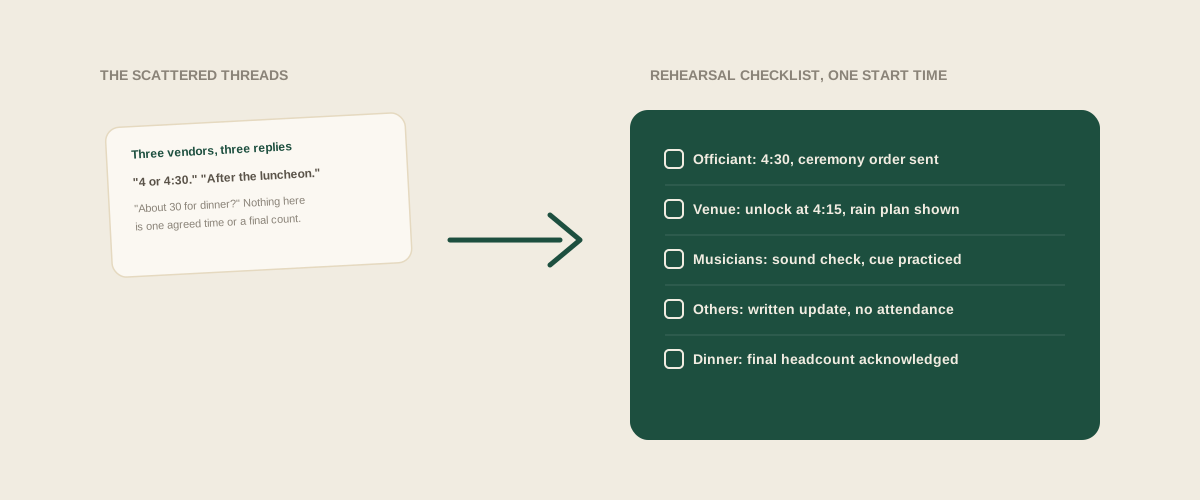
Most of a studio's tracking is built around the wedding day, so the rehearsal inherits whatever is left over. It is also a day when vendors are less formal. The officiant says "I can do 4 or 4:30, whichever works," the venue says the room is free after a luncheon ends, and nobody turns that into a single agreed time. Because nothing is being paid for at the rehearsal itself, it rarely gets a contract line of its own, which means the details sit in conversation threads instead of anywhere a teammate would think to look.
List every vendor who has to be there, and why
Start with a short list of who is needed at the rehearsal and what they are needed for. The officiant is there to walk through the order of the ceremony. The venue manager is there to show the entrance, the sound check spot, and the rain plan. A musician is there if there is a cue to practice. A rental or decor vendor may only need to confirm the layout. Writing the reason next to each name matters, because it tells you who can be told "you do not need to attend" and who cannot, and it stops the rehearsal from quietly growing to include people who have no job to do there.
Pin down one start time, then work back from it
Every other time hangs off the rehearsal start. If the walk-through begins at 4:30, the venue needs to unlock the ceremony space by 4:15, the musicians need to arrive by 4:15 for a sound check, and the dinner reservation at 6:30 needs a rough headcount by that morning. When a vendor reply only gives a window, write down the actual time you chose and send it back to them in writing. A time that exists only in a planner's head is the one that gets moved without anyone telling the vendor.
Separate the rehearsal from the rehearsal dinner
These are two events with two sets of vendors, and they are easy to blur. The rehearsal needs the ceremony team. The dinner needs a restaurant or caterer, a final headcount, dietary notes, and sometimes a separate deposit. Keep them as two groups of tasks, with the dinner headcount treated like any other final-count deadline, because a restaurant that was told "around 30" will plan for 30 and not for the 38 who turn up. If the couple's families are hosting the dinner, note who is paying and who confirms the number.
Get the venue details nobody asks about
A rehearsal is the last time anyone sees the space empty, so it is worth capturing what vendors will need on the day. Where is the nearest power outlet for the DJ? Which door does the caterer use? Who holds the key to the ceremony site, and are they actually on the property at 4:15? Add what you learn to the vendors' own cards so it is waiting for them the next time they open the board, rather than living in a note on the planner's phone.
Put the whole thing where the team can see it
The rehearsal is exactly the kind of event where one person is often out. The lead planner may be at the venue with the couple while a coordinator handles the dinner restaurant. If the vendor emails, texts and screenshots have been forwarded into the shared board as they arrive, each one becomes a task with a time and an owner: officiant confirmed for 4:30, musicians sound check at 4:15, dinner headcount due to the restaurant by noon. Anyone on the team can open it on Thursday morning and see what is settled and what is still waiting on a reply.
Common mistakes
Leaving the rehearsal time as a window, so each vendor picks a different end of it. Forgetting to tell the officiant about a change to the ceremony order. Sending the dinner restaurant a rough number and never a final one. Inviting every vendor to the rehearsal because it feels polite, when most of them only need a written note. And treating the rehearsal as informal enough that nothing about it is written down.
Where to start
For your next wedding weekend, write out the rehearsal and the dinner as two short lists: who has to be there, at what time, and what they need to bring or confirm. Fill in what you already know from the emails and texts in front of you, and mark every gap as a question to send this week. By the time the day before arrives, each person should have a time you have both agreed to in writing, and the dinner should have a headcount the restaurant has acknowledged.
Frequently asked questions
Which vendors actually need to attend the rehearsal?
Usually the officiant, the venue manager, and any musician or DJ with a cue to practice. Rental and decor vendors often only need to confirm the layout, which can be done in writing. Ask what each person needs to do there, and if the answer is nothing, a written update is enough.
How far ahead should vendors be told the rehearsal time?
As soon as it is settled, and in writing, ideally several weeks out. Ask each vendor to confirm the exact time back to you, then repeat it in a short reminder two or three days before so a changed plan does not catch anyone out.
Who is responsible for the rehearsal dinner headcount?
Decide this early. It is often the couple or whichever parents are hosting, with one named person sending the final number to the restaurant by its deadline. The studio's job is to track that deadline and confirm the restaurant has acknowledged the number.
What should we do if a vendor cannot make the rehearsal?
Ask what they would have covered and send it in writing: the order of the ceremony, the cue they need, the entrance route. Then ask them to confirm they have read it. A missed rehearsal is manageable when the vendor has the same information in front of them.
Get your studio address, free
Get your studio address