4 Ways Planners Try to Track Vendor Payments and Deposits (And Where the Balance Still Sneaks Up)
13 August 2026 · 7 min read

Vendor payments rarely arrive as one bill. They show up as a venue deposit due Friday, a catering balance due before the event, a rental company add-on fee, a florist overage charge, a photographer's final payment, each one attached to a different vendor, each one arriving through a different channel, and each one easy to miss precisely because it looks like just another line in a longer message. Most studios rely on one of a handful of habits to keep up. Here's what each one actually catches, and where a charge still slips through anyway.
The vendor portal balance
Some vendors, especially venues, now run some kind of payment portal, and it genuinely solves one problem well: the balance is always there to check, and paying it takes two minutes online instead of mailing a check. The gap is that the portal only knows about what that one vendor routes through it. A florist's add-on fee, a rental company's overage charge, a photographer's final invoice sent by email: none of that shows up on the venue's portal, because it was never that portal's job to track it. A planner who only checks one vendor's system is watching one bill out of many.
Autopay for the known bills
Setting up autopay for a recurring retainer or a predictable monthly cost removes one real source of stress: the predictable bill stops needing to be remembered at all. What autopay can't do is anticipate a charge nobody set up in advance, because most vendor fees aren't recurring. A rental overage, a last-minute floral add-on, a delivery surcharge: these show up once, with their own short deadline, and there's no recurring payment to configure for something that only happens this one time. Autopay handles the bill you already knew about. It has nothing to say about the one you didn't.
Skimming email subject lines for "payment due"
A reasonable habit, and it catches the fees that announce themselves clearly: a subject line that says "Final Balance Due Friday" gets noticed even in a full inbox. It misses the far more common version, where the charge is mentioned in passing inside a longer message about something else entirely: a vendor update with six unrelated notes, and buried in paragraph four, a line that a rental overage of two hundred dollars is due before delivery. Nothing about the subject line hints that a payment is hiding inside, so skimming for the obvious cases quietly trains a planner to miss the ones that matter just as much.
Relying on the client or a vendor's casual mention
For studios working closely with a client, this feels like it should work: a vendor mentions something to the client directly, the client passes it along. In practice it depends on the client remembering a detail that wasn't especially important to them at the time, days after it was said, often compressed into something like "they mentioned an extra charge" with no amount and no date attached. It's not a bad instinct, clients do sometimes catch what a planner's inbox missed, but it's not a system you can actually rely on for a hard deadline, especially with a busy client or a casual mention at a tasting.

Why every method breaks at the same point
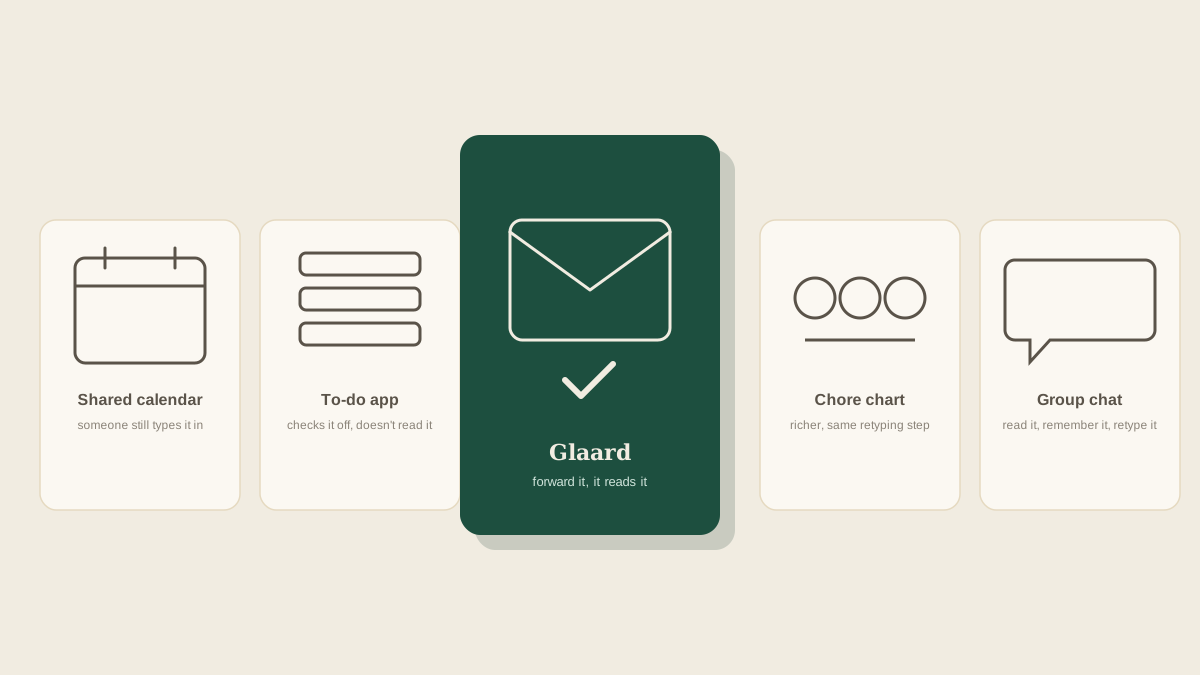
Each of these covers a different slice of the problem, the portal handles what one vendor routes through it, autopay handles the recurring bill, subject-line skimming catches the obvious ones, a client's memory occasionally fills a gap, but none of them cover the full set of channels a fee can actually arrive through. A single studio might see charges land in a portal, an email, a text, and a verbal mention at a walkthrough, all in the same week across several vendors, and no single habit watches all four places at once. The fee that gets missed is rarely the big one everyone's already watching for. It's the small one that arrived through whichever channel that particular planner doesn't check closely.
What changes when the fee gets pulled out the moment it arrives
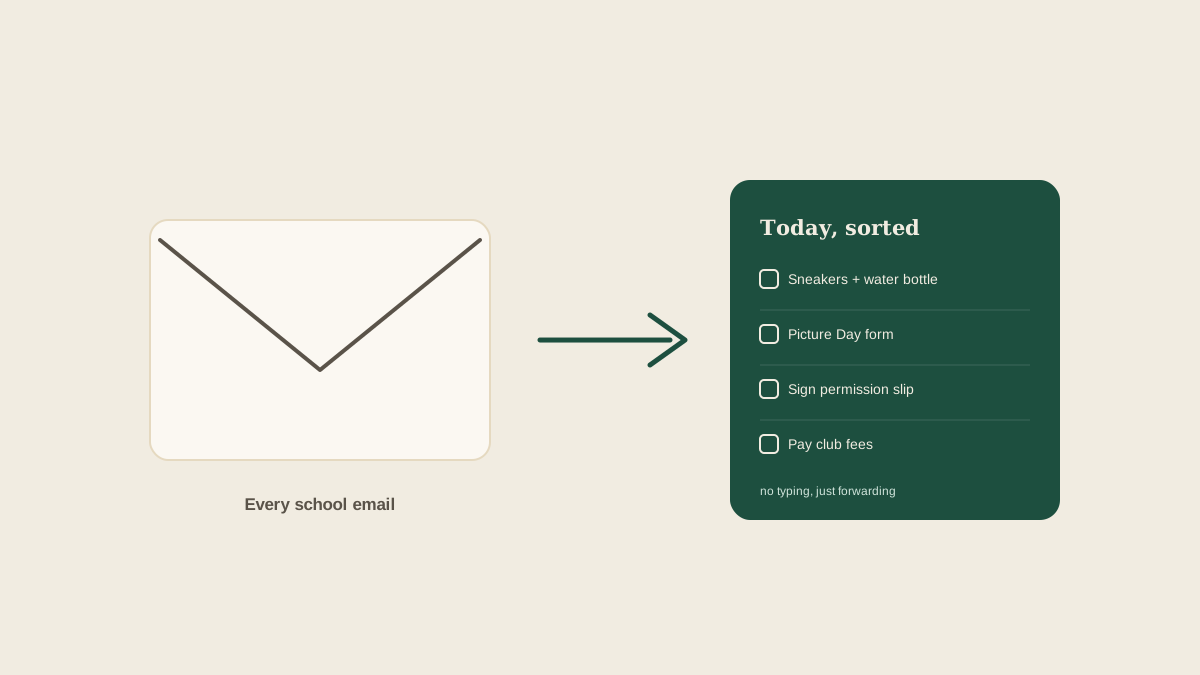
The fix isn't checking one portal more often or training yourself to read vendor emails more carefully line by line. It's forwarding whatever arrives, the email, the photo of the invoice, the contract update, exactly as it came in, and letting the amount, the deadline, and what it's for get pulled out and placed on a shared board right away. It doesn't matter anymore which channel a fee happened to use. A two hundred dollar overage buried in paragraph four of an update gets caught the same way a clearly labeled invoice does, because the whole message gets read, not just the parts that look like a bill.
How to choose
If your studio's vendor payments mostly run through one venue portal with a predictable schedule, the portal and autopay together are probably enough. It gets harder the more sources are in play: several concurrent events, a dozen vendors each billing on their own schedule, texts where a vendor mentions a charge in passing. At that point the issue isn't which single method to trust, it's that no one method watches every channel a small fee can arrive through, and the fix is making sure whatever arrives gets read in full and turned into a task, not sorted into caught or missed based on which inbox or app it happened to land in.
Frequently asked questions
Does this replace actually paying through a vendor's portal?
No. It only handles noticing the fee and its deadline. Once it's on the shared board, you still pay it however that vendor actually collects it, through their portal, by check, by transfer, or however that particular fee works. The point is making sure nothing sits unnoticed until it's overdue.
What about vendors who only take a check or a transfer, with no online payment option at all?
Those still get tracked the same way. Forwarding the invoice or the message captures the amount and the due date regardless of how the payment itself has to be made. The tracking and the paying are two separate steps, and only the second one depends on what that vendor accepts.
How do you catch a fee that's only mentioned briefly inside a longer vendor update?
By forwarding the whole message rather than trying to skim it for the parts that look like a bill. A message read in full will surface a line about a two hundred dollar overage the same way it surfaces an obvious invoice, since nothing about it depends on the fee being called out in a subject line.
Is this worth setting up for a studio running just one or two events a month?
Probably not, if a portal and a quick weekly balance check has never actually caused a missed payment. It matters more once there are several concurrent events or a dozen vendors billing on their own schedule, where fees start arriving through enough different channels that no single habit reliably covers all of them.
Get your studio address, free
Get your studio address