4 Ways to Split Vendor Coordination Between a Planner and an Assistant (And Where Each One Breaks)
30 July 2026 · 7 min read

Studios with a lead planner and one or more coordinators rarely start with no system at all. Most land on one of a handful of ways to divide who tracks what, and each one solves a real problem. The trouble is where the split happens: almost every version of it still requires one person to read the incoming vendor messages first, before any dividing can occur. Here's what each approach actually gets you, and where it still breaks.
The default: the lead planner tracks everything
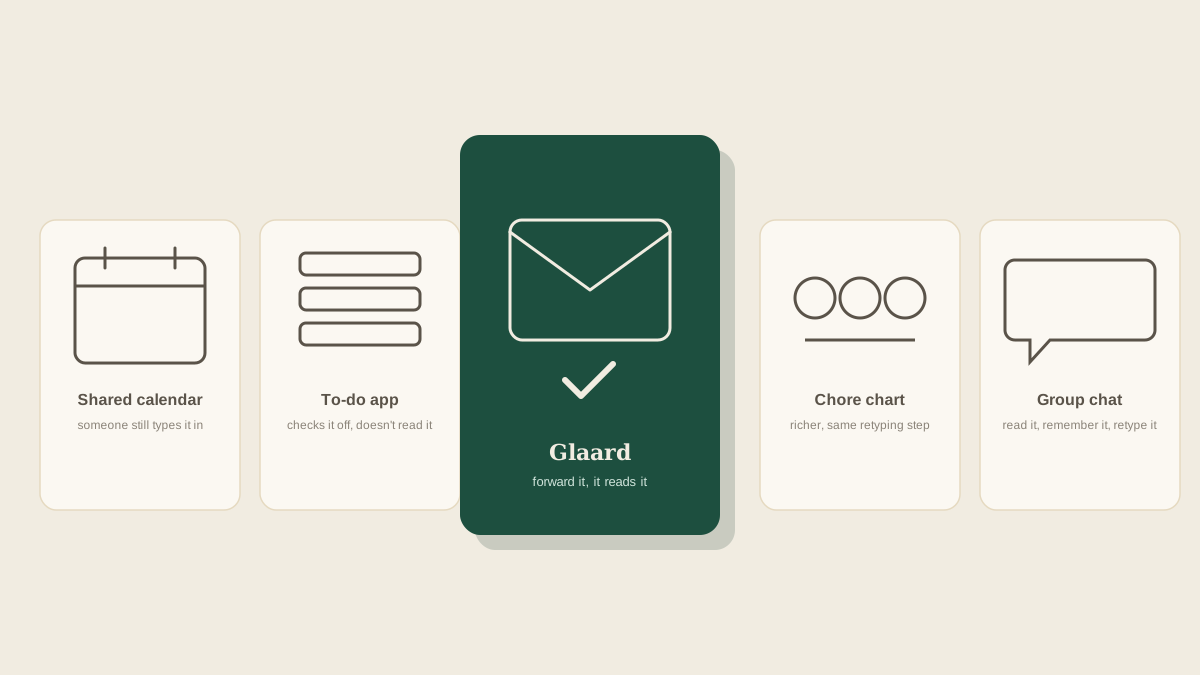
The most common setup isn't really a system, it's a default: the lead planner ends up reading every vendor email and contract, because they own the client relationship, or they're just faster to reply, or it simply happened that way in the studio's first few events and never changed. It's efficient in the sense that nothing gets lost between two inboxes. It's also the version most likely to quietly become an unsustainable bottleneck as the studio takes on more events, and by the time it feels unsustainable, the tracking habits, the logins, and the vendor context are all sitting with one person, which makes it hard to hand off even once the studio wants to.
Turn-taking or "whoever has bandwidth this week"
Some studios rotate: one coordinator handles vendor follow-up this week, another the next, or whoever has the lighter event load picks it up. In theory this spreads the load evenly. In practice it requires a handoff that itself takes effort, a conversation about who's less slammed, and a shared sense of what's already been tracked so nothing falls into the gap between the two weeks. Miss the handoff once, and something drops into the same blind spot a rotation is supposed to prevent: nobody's turn is exactly when nobody's watching.
Splitting by event
With multiple concurrent weddings, some studios split by event instead of by week: one coordinator owns everything for one wedding, another owns the next. This maps cleanly onto daily life when the events barely overlap in timing, and it means each coordinator builds real context on one couple's vendors, preferences, and timeline. It falls apart the moment two events need attention at once, which is often: a shared vendor working both weddings, a scheduling conflict that needs both events' timelines in view at once just to resolve. Splitting by event solves ownership and creates a coordination problem in its place.
Splitting by vendor category
Others split by domain: one coordinator handles catering and venue across every event, another handles florists and photographers, regardless of which wedding it's for. This works well while the categories stay separate, which they usually do at first. It gets messy the moment a single message straddles both: a venue that's also providing catering, a florist who's also the day-of coordinator for a smaller event. Someone still has to decide which category a message belongs to before it can be handed to the right coordinator, and sorting a message into a category is itself a small piece of reading and deciding, the exact step every split is trying to get out from under.
Why every split still breaks at the same point
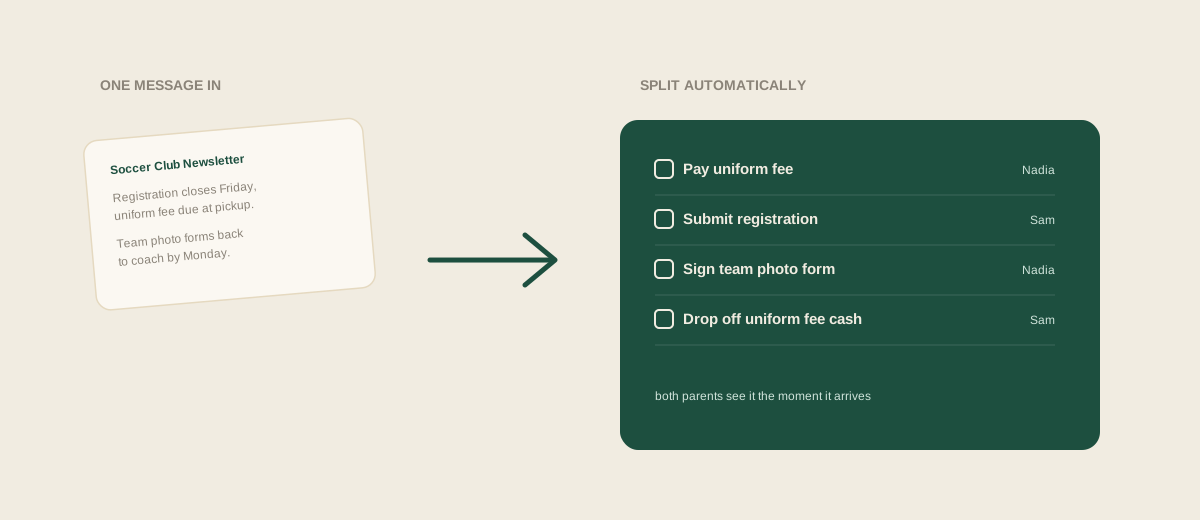
Every one of these approaches, turn-taking, by-event, by-category, solves the assignment problem: once something is identified as a task, who does it. None of them solve the step before that, which is reading the original vendor email, contract, or text, and deciding it's a task in the first place. That step still requires one person's attention, no matter how fairly the tasks get divided afterward. A perfectly fair split of an incomplete list is still an incomplete list, and it's usually the same person doing the reading regardless of which split the studio agreed to on paper.
What changes when the split happens after extraction, not before
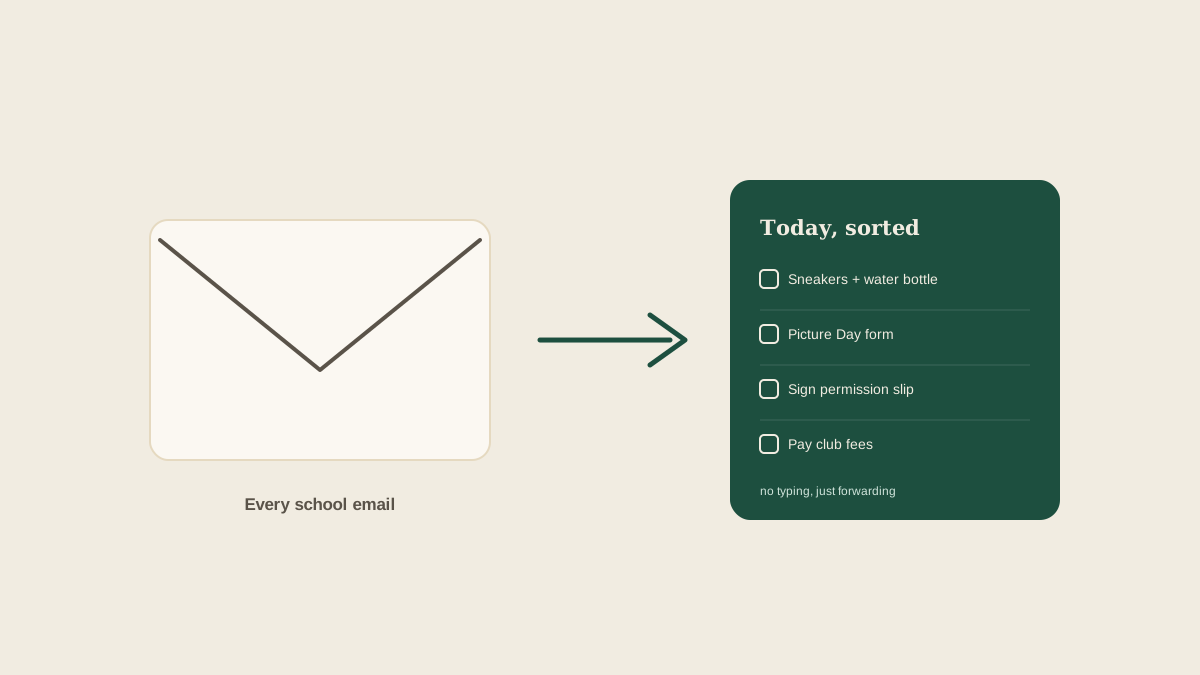
Forwarding the original vendor message and letting something else read it moves the split later in the process. Instead of one planner reading everything and then deciding who owns what, the task gets pulled out and placed on a shared board the moment the message comes in, visible to the whole team at once. Assigning it to whoever's handling that vendor, that event, or that category still happens, but it happens after the reading is already done, not as the reason one planner had to do all the reading in the first place. Any team member can forward what lands in their own inbox, and the others don't have to wait for a handoff to see it.
How to choose
If your studio's actual friction is deciding who does a task once it's already known, turn-taking or splitting by event or category will fix that cleanly. If the real bottleneck sits further upstream, one planner still has to read and interpret everything before any split can happen, the fix isn't a better rule for dividing tasks. It's making sure every team member can get information onto the shared board without any one of them being the sole point of intake.
Frequently asked questions
Which split works best when coordinators have very different schedules?
Category or by-event splits tend to hold up best against uneven schedules, since each coordinator owns a fixed lane rather than needing a weekly handoff. Either way, the schedule mismatch is easier to manage once whoever reads a message first can get it onto the shared board immediately, instead of waiting for a teammate to be free to hand it over.
Does splitting by event actually reduce the total workload, or just move it around?
Mostly the latter. The total amount of reading and deciding stays about the same, it's just distributed by event instead of falling to one person. It can even add work back in, since anything involving shared vendors across events now needs the coordinators to sync across their separate lanes.
What if the lead planner always ends up doing the reading anyway, even after agreeing to split?
That usually happens because whichever planner's inbox or client relationship receives the message becomes the default reader, regardless of what the studio agreed on paper. The fix isn't a firmer rule, it's giving every coordinator a way to forward what lands in their own inbox so reading isn't gated behind one person's login.
Is there a way to split coordination without every team member reading every single message?
Yes, if the task gets extracted before it's assigned rather than after. When a shared board already shows what needs doing and who it's for, each coordinator only needs to look at what's relevant to them, not comb through the raw inbox of every vendor email and contract for every event.
Get your studio address, free
Get your studio address