How to Split Vendor Responsibilities Between a Lead Planner and Coordinators Without Anything Falling Through the Cracks
10 September 2026 · 6 min read
A studio with one planner doesn't have a division-of-labor problem, there's only one person, so every vendor task is automatically theirs. The moment a second coordinator joins, that stops being true, and someone has to decide who owns what. Most studios start with something informal, "you take the florist and the rentals, I'll handle catering and the DJ", said once in a kickoff meeting and never written down anywhere. It works fine for a few events. It stops working the moment a deadline slips and both people assumed the other one had it.
Why the informal split works at first
For a studio running one or two events a month, an informal split is genuinely efficient. There's no overhead, no board to maintain, no extra step between assigning a task and doing it. The lead planner knows the coordinator well enough to trust they'll flag anything that goes wrong, and the coordinator knows enough about the event to make reasonable calls without checking in on every detail. The whole system runs on shared context that both people built together during the kickoff call, and as long as that context stays current, it holds up.
Where it breaks as the studio grows
The shared context is the part that doesn't scale. Add a third coordinator, a second concurrent event, or even just a few weeks of gap between the kickoff call and the actual vendor work, and the informal split starts to blur. A coordinator who was told verbally that they "had the florist" might not remember whether that included the delivery timing conversation that came up two weeks later, or whether a new rental detail the lead planner mentioned in passing was meant to be theirs too. Nobody wrote down where the boundary was, so the boundary drifts, and it drifts differently in each person's head.
The two failure modes
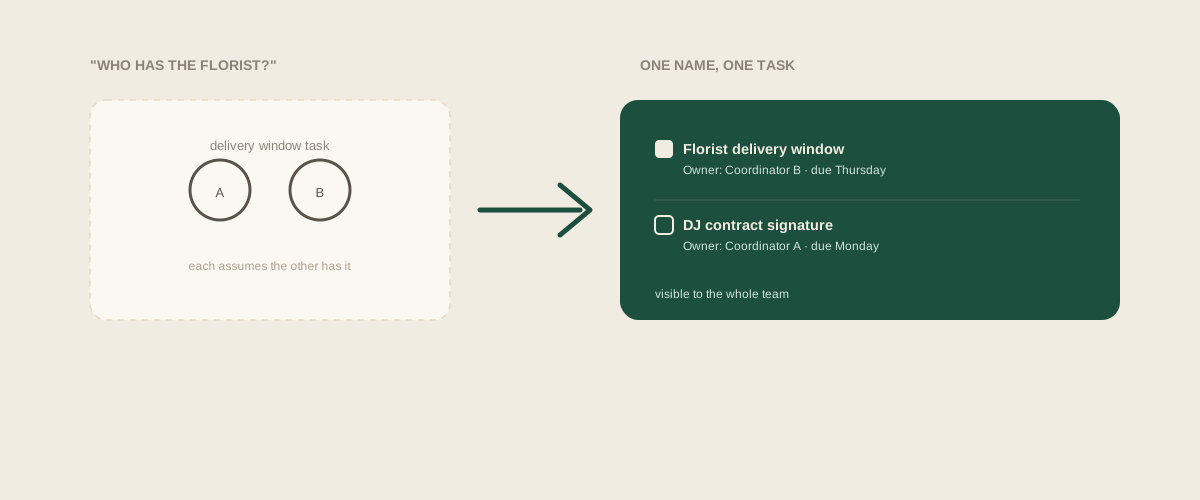
The blur tends to produce one of two outcomes, and both are costly in different ways. The first is a dropped task: a vendor deadline sits in the space between two people's assumed ownership, each one thinking the other has it, until the vendor follows up asking why nobody responded. The second is duplicated work: both the lead planner and a coordinator independently email the same vendor about the same thing, which is less damaging than a dropped task but still confuses the vendor and wastes time that could have gone toward an actual gap in the plan.
What a clearer split actually requires
The fix isn't a more detailed verbal conversation at kickoff, memory is exactly what fails here regardless of how thorough the initial conversation was. What holds up is assigning ownership at the task level, not the vendor category level, on something both people can see at the same time. "Coordinator B owns the florist's delivery window confirmation, due Thursday" is a task with one name attached to it. "Coordinator B has the florist" is a category that can quietly grow new tasks neither person remembers agreeing to.
A worked example
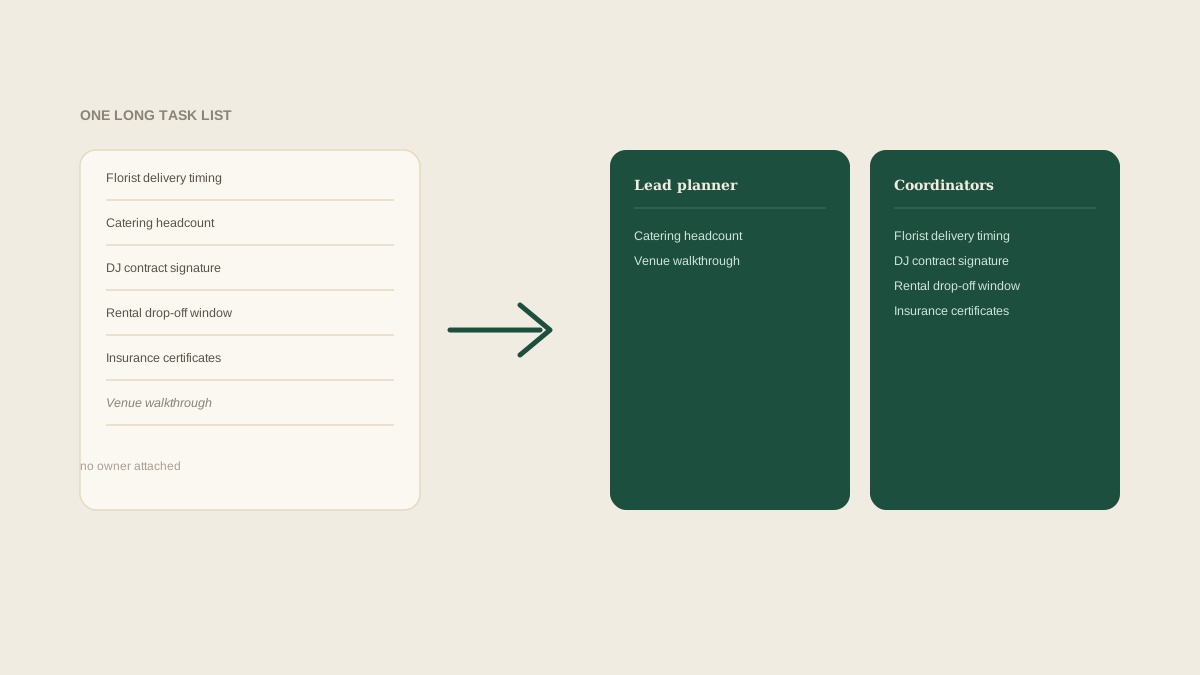
Say a studio is running a fall wedding with a lead planner and two coordinators. The lead planner owns the catering headcount and the venue walkthrough. Coordinator A owns florist delivery timing and the DJ contract signature. Coordinator B owns the rental drop-off window and vendor insurance certificates. Written down this way, on a board any of the three can check, a new task, the caterer asking for a final allergy list, has an obvious home: it's part of the catering headcount the lead planner already owns, not a question anyone has to raise in a meeting to figure out who should answer it.
Common mistakes
Splitting by vendor category instead of by task, which leaves room for new sub-tasks to fall into the gap between two people's assumed scope. Re-explaining the split verbally at the start of every new event instead of keeping one place it's already written down and just updating it. Assuming a coordinator will naturally flag when they're overloaded, when in practice an unclear split makes it hard for anyone, including the coordinator themselves, to see how much they're actually carrying.
Where to start
A verbal split isn't wrong for a one- or two-person studio, it's just fragile past that point. The studios that keep a clean division as they add coordinators are usually the ones that moved ownership onto a shared board early, at the task level rather than the category level, so a deadline slipping through the gap between two people's assumptions stops being a recurring risk and becomes something the board would have caught on its own.
Frequently asked questions
At what point does a studio actually need a formal task split instead of a verbal one?
Usually somewhere around the second coordinator or the second concurrent event, whichever comes first. A single planner working alone doesn't need a split at all, and one experienced coordinator working closely with a lead planner can often run informally for a while. The risk shows up once a third person joins or the team is juggling more than one event's vendors at the same time.
Should the lead planner still be copied on every vendor task, even ones a coordinator owns?
Visibility and ownership are different things. The lead planner can see everything on a shared board without being the one responsible for chasing each task down. The point of assigning ownership isn't to cut the lead planner out, it's to make sure exactly one person is accountable for each task instead of it being implicitly everyone's.
What if a coordinator is out sick and their tasks need to be covered?
This is actually where a task-level split pays off the most. If ownership only exists as a memory of who said they'd handle the florist, covering for someone requires reconstructing what they were doing from scratch. If it's written down as specific tasks with deadlines, anyone can pick up exactly where the absent coordinator left off.
Does splitting by task instead of by vendor category create more admin work?
It adds a small amount of upfront structure, assigning a name to each task as it comes in rather than once per vendor. In exchange, it removes the far more expensive cost of a dropped task or a vendor getting two conflicting emails from the same studio, which is usually a better trade once a studio has more than one coordinator.
Get your studio address, free
Get your studio address