How to Stop Missing Vendor Deposit Deadlines All Year
6 August 2026 · 6 min read

Peak season gets treated like the one paperwork crunch of the year, and it is a real one. But vendor deadlines do not follow a single season. A spring wedding's deposit might come due in the fall while everyone is booking other events. A winter event's final balance might land the week after the holidays, right when a studio is at its most scattered. Every vendor picks its own timing, and a studio running several events a year can end up managing a dozen of these separate deadline cycles at once, none of them lining up with each other.
Why these deadlines are easy to miss
A wedding has one predictable date. A vendor's payment schedule does not follow it directly. A venue deposit might be due the moment the contract is signed, months before anything else. A florist's balance might come due a week before the event, right in the middle of final walkthroughs for two other weddings. There is no single moment when deadline season begins, which means there is no single moment when a planner naturally starts paying closer attention. Each vendor picks its own timing, and it is up to whoever is tracking logistics to notice every one of them, often across several events that have nothing to do with each other's timelines.
The four things every vendor contract actually asks for
Most vendor contracts bundle together the same handful of pieces, even though they rarely say so directly: a deposit deadline, a balance due date, a delivery or setup window, and sometimes a final-details deadline (headcount, song list, floor plan) that closes for good if it is missed. A single contract might mention all four in one document, and missing just one, forgetting the final-details deadline closes a week before the balance is due, for instance, can mean scrambling on setup day even if the deposit itself went fine.
Why a general reminder does not fix it
Setting a reminder works for a date you already know about. It does nothing for the deadline you have not read yet, sitting unopened in an inbox or buried on page three of a contract. The actual bottleneck with vendor deadlines is not remembering a date once it is on the calendar, it is noticing that a message contains a deadline at all, buried in a longer email about a dozen other contract terms.
A worked example
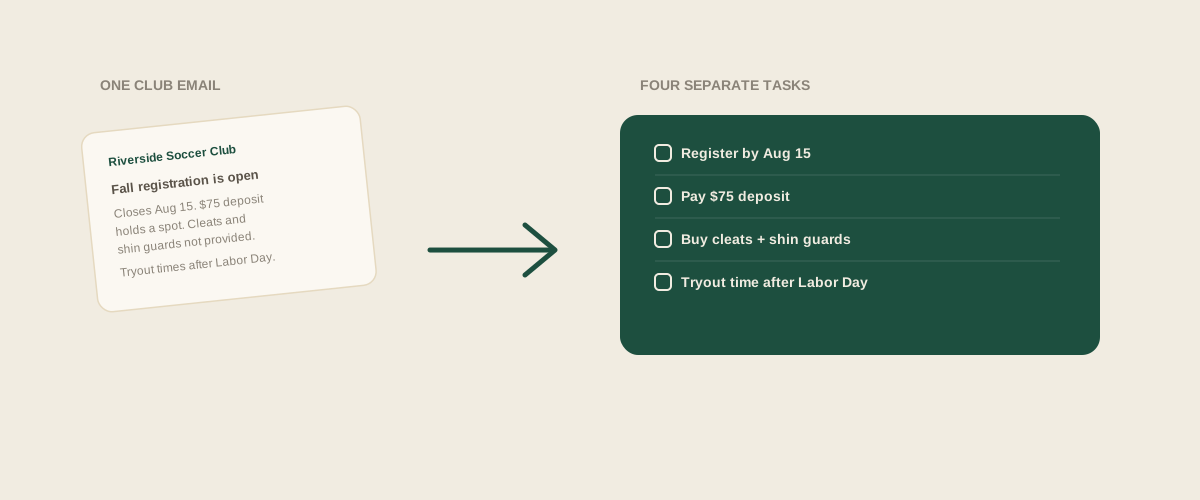
A typical contract email from a venue might read: deposit due within two weeks to hold the date, a $500 balance due 30 days before the event, final floor plan and headcount due two weeks before, and setup access begins at 8am the day of. Read once and set aside, it is easy to remember the deposit date and forget that the floor plan has its own earlier deadline, or that setup access needs to be confirmed with the rest of the team, not assumed. Forwarded to a shared board the moment it arrives, that single contract becomes four separate, dated tasks: pay the deposit, pay the $500 balance, submit the floor plan and headcount, confirm 8am setup access, each one visible on its own instead of buried together in one document.
The deadlines do not stop once the contract is signed
Signing the contract is only the first deadline, not the last. Once a vendor is booked, more show up on the same vendor's own timeline: a tasting or fitting appointment, a mid-planning check-in with its own small confirmation, a final-week logistics call, an invoice adjustment buried in a routine email. None of these get the same attention as the original contract, because by then the studio has already mentally filed that vendor as handled. The deadlines that actually slip are often these later ones, not the big one everyone was already watching for.
Common mistakes
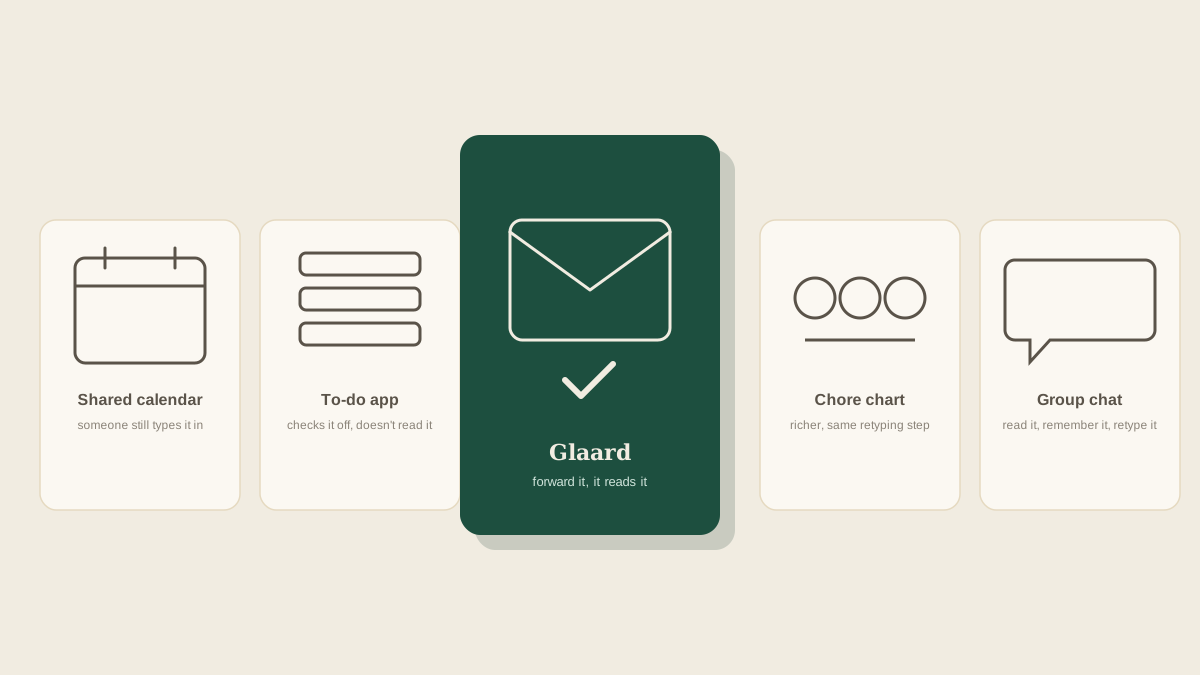
Only paying attention during the obvious peak months, checking closely during the busiest season and relaxing the rest of the year, when off-season bookings arrive with just as little warning. Reading a vendor contract once and assuming the single headline deadline is the only one that matters, when the balance, final-details deadline, and setup window are often quieter deadlines hiding in the same document. Tracking deadlines in a general to-do app that treats them the same as any other errand, with no way to tell at a glance which event or which vendor a given deadline belongs to once a few events overlap. Waiting for a second reminder email that a vendor may never actually send, since plenty of vendors mention a deadline exactly once and expect studios to have caught it the first time.
Where to start
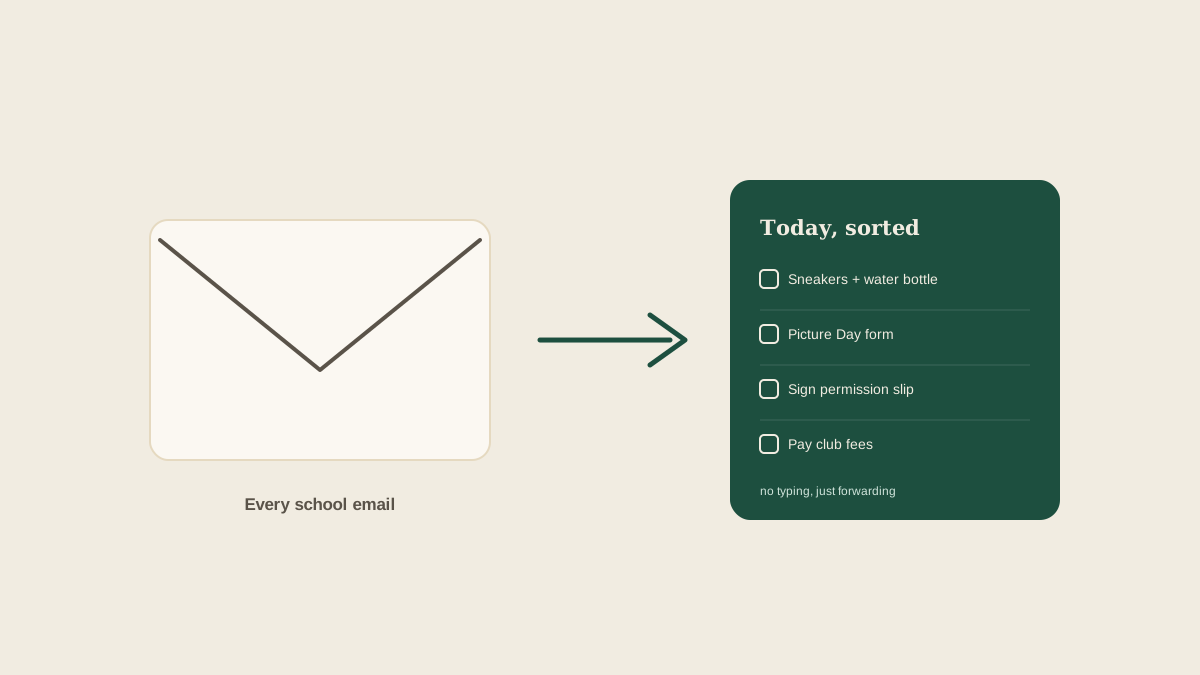
The fix is not checking email more often during specific months, since the deadlines do not respect a season anyone can predict in advance. It is forwarding every vendor contract and message exactly as it arrives, all year, and letting the deposit deadline, the balance, the final-details date, and the setup window get pulled out separately, so nothing sits waiting to be rediscovered inside a longer document months after it mattered.
Frequently asked questions
How early do vendor deposits typically come due?
It varies widely by vendor and by season. Some require a deposit the moment the contract is signed, others build in a longer window. That unpredictability is exactly why relying on remembering roughly when to check does not hold up as well as catching each contract the moment it arrives.
What if a deposit deadline arrives during a busy week and gets missed anyway?
Forwarding it late is still better than not forwarding it at all, since a task with a passed deadline at least shows clearly what was missed and what to follow up on, like confirming the date is still held, rather than the deadline disappearing entirely into an old email thread.
Do final-details deadlines really need their own tracking separate from the deposit?
Often yes. A deposit secures the date, but final details like floor plans, headcounts, and song lists frequently need to be submitted with enough lead time for vendors to plan around, which can be a completely different date than the deposit itself, especially for vendors with custom orders or staffing needs.
Is this worth setting up for a studio running just a few events a year?
Probably only if those events already cause friction, a missed deposit or a forgotten final-details deadline in the past. For low volume, remembering a handful of deadlines is usually manageable without extra structure. The real value shows up once multiple concurrent events and vendors start overlapping.
Get your studio address, free
Get your studio address