4 Ways Studios Track Tentative Vendor Holds Before a Client Books (And Where One Expires Unnoticed)
3 September 2026 · 7 min read
Before a vendor is actually booked, there's often a middle stage nobody talks about much: the tentative hold. A florist agrees to pencil in a Saturday while a couple decides between two venues. A caterer holds a date for 48 hours while a contract gets reviewed by a family member. None of this is a booking yet, no deposit, no signature, but it isn't nothing either. Every soft hold like this comes with its own quiet expiration, and somebody has to actually keep track of it or the date goes back on the market without warning. Here's how studios usually try to manage tentative holds, and where one still slips past unnoticed.
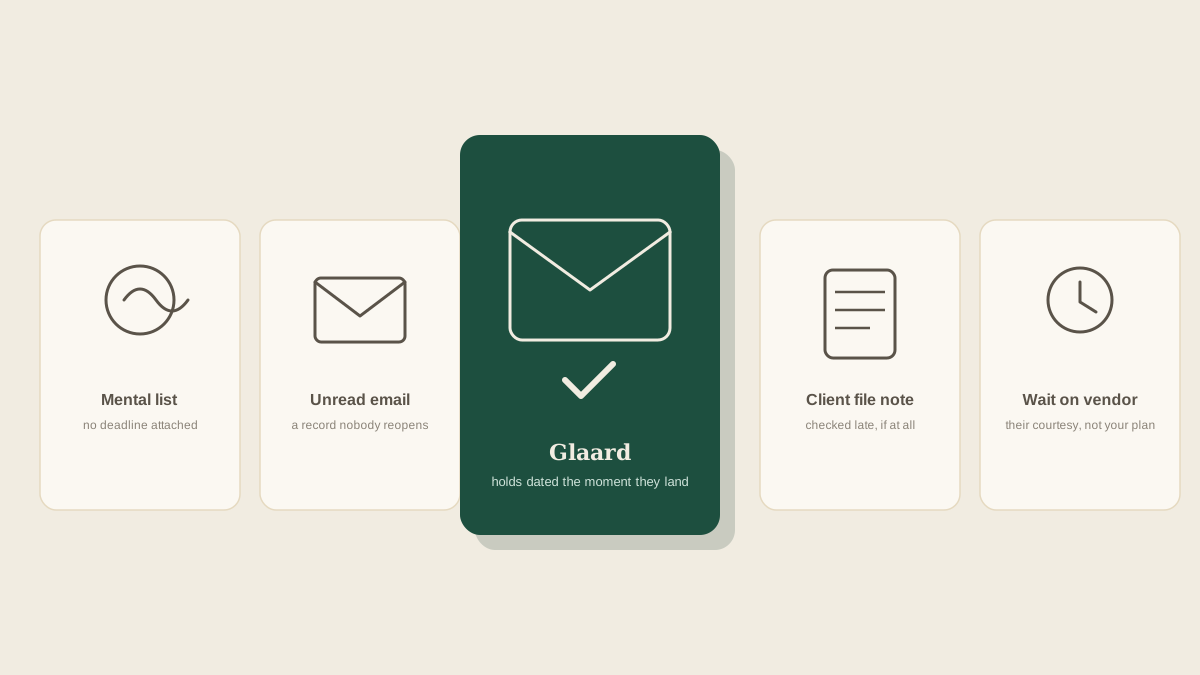
The mental "still pending" list
The most common approach is no system at all: a planner remembers which vendors have a hold out for which client, roughly how long each one is good for, and checks back in when it feels about right. This works fine when there are one or two holds active at a time. It falls apart the moment a busy week stacks three or four holds on top of each other, each with a different vendor's own sense of how long they'll wait, because a mental list has no way to surface the one hold that's about to lapse over the three that still have time. Whatever isn't top of mind that particular morning is the one that quietly expires.
The unread confirmation email
A vendor emails back agreeing to hold the date, sometimes even naming a specific window, "we can hold this through Thursday", and that email becomes the record simply by existing somewhere in an inbox. The problem is that an inbox is a place things arrive, not a place anything resurfaces on its own. Once that confirmation is read once and the planner moves on to the next message, there's nothing pulling it back into view on Wednesday night to say the window closes tomorrow. The record exists. It just doesn't do anything until someone happens to reopen it.
A note added to the client's file
More organized studios log the hold directly in the client's file or CRM entry, a line noting which vendor, which date, and roughly when it needs an answer. This is a real improvement over a mental list because it's written down and attached to the right client. The gap is that a client file is something a planner checks when they're already thinking about that client, not something that proactively reminds anyone a hold is expiring in two days. Without a separate reminder tied to the expiration date itself, the note sits accurately recorded and quietly unread until the client happens to come up again for some other reason.
Waiting for the vendor to follow up before it lapses
Some studios lean on the vendor's own courtesy: most reputable vendors will send a nudge before releasing a hold, "just checking in, still interested in this date?" This genuinely helps and costs the studio nothing to rely on when it works. It also isn't something a studio controls. Vendors vary widely in how consistently they follow up, some send a reminder days ahead, others simply release the date the moment the window closes with no notice at all, and a studio that's structured its whole tracking around vendor courtesy has no fallback for the vendors who don't extend it.
Why every approach breaks at the same point
Look closely at all four and the shared gap is the same one: none of them puts the actual expiration date somewhere that resurfaces on its own before the hold lapses. A mental list depends on memory staying sharp under load. An unread email depends on someone happening to reopen it in time. A client-file note depends on someone checking that file before the deadline rather than after. Waiting on the vendor depends entirely on a courtesy the studio doesn't control. Every version puts the burden on a person noticing in time, and a hold with no deadline surfacing on its own is really just a soft deadline nobody's actually watching.
What actually keeps a hold from expiring unnoticed
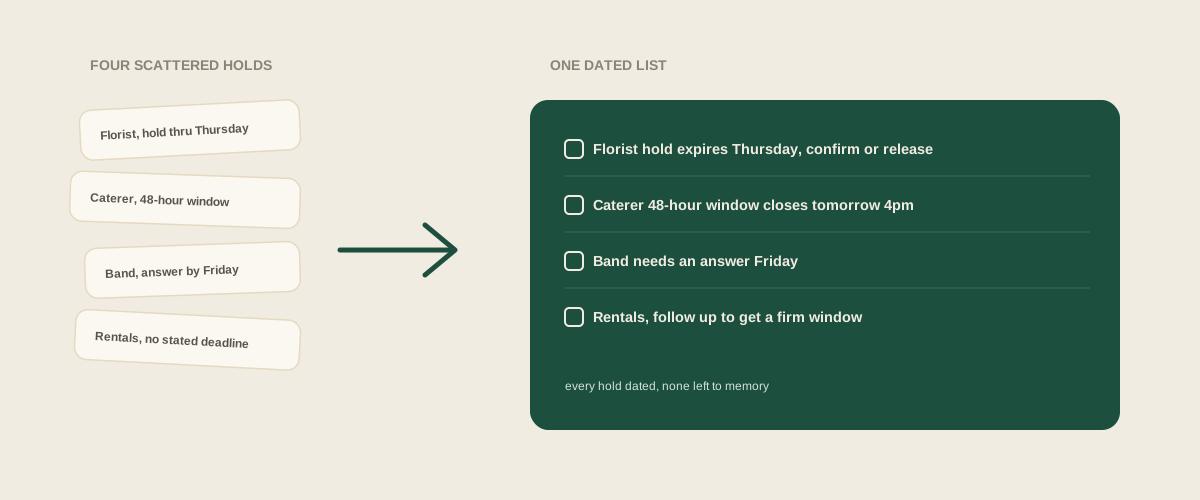
The fix isn't remembering harder or checking the inbox more often, it's getting the expiration date out of wherever it first landed and onto the same shared board the studio already tracks deposits and headcounts on. Forward the vendor's hold confirmation the moment it arrives, whether it names a specific date, a 48-hour window, or just "let us know by end of week", and that expiration becomes a dated task like any other, visible to whoever is actually handling that client relationship, not just whoever happened to read the original email. A hold stops depending on one person's memory of roughly when it's due, and starts showing up the same way a deposit deadline already does.
How to choose
For a studio that rarely places more than one hold at a time, a mental list or a note in the client's file is probably enough; there's little room for one to get buried under the others. It gets riskier fast once several holds are active at once, especially during a busy booking season when two or three clients are each weighing multiple vendors simultaneously. In that stretch, the studios that don't lose a date to a missed window are usually the ones where every hold's deadline is sitting on a shared board the moment it's confirmed, not the ones with the most disciplined habit of checking back.
Frequently asked questions
What actually counts as a "hold" versus a real booking?
A hold is an informal, usually verbal or emailed agreement that a vendor won't book someone else for that date for a limited window, with no deposit or signed contract yet. A booking is the vendor formally reserved, typically backed by a deposit and a contract. Holds are inherently soft and can be released by the vendor if the window closes with no commitment.
How much notice do vendors typically give before a hold expires?
It varies a lot by vendor and by how close the date already is to booking season. Some hold a date for 24 to 48 hours, others for a week or more if there's no competing inquiry. Because there's no standard, the safest approach is to note whatever specific window the vendor actually states rather than assume a default.
What happens if a hold expires and the vendor books someone else?
Usually the vendor simply becomes unavailable for that date without much ceremony, since a hold was never a commitment on their end either. It's worth reaching back out immediately once you notice, sometimes the other inquiry didn't convert and the vendor is still open, but that only works if the studio catches the lapse quickly rather than discovering it weeks later.
Is tracking tentative holds worth setting up if we usually book vendors right away?
Probably not much benefit if holds are rare in your studio's process. It matters most for studios where clients routinely compare two or three vendor options before deciding, or during peak booking months when several prospective clients have holds out with the same in-demand vendors at once.
Get your studio address, free
Get your studio address