4 Ways Studios Track Vendor Budget as Plans Change (And Where the Number Still Drifts)
17 September 2026 · 7 min read
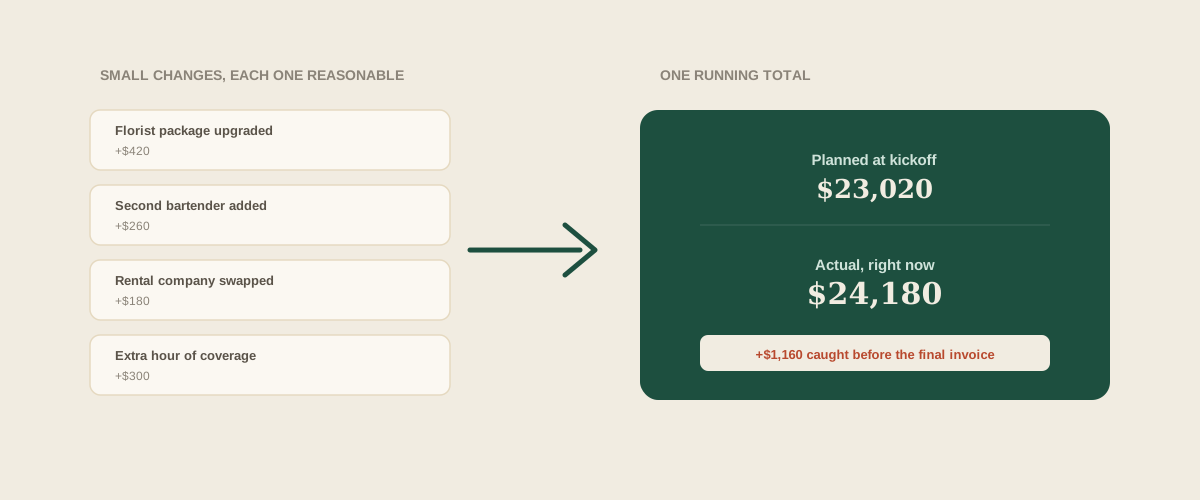
A budget agreed at kickoff rarely survives contact with an actual wedding. The couple upgrades the florist package after seeing a sample arrangement, adds a second bartender once the guest count climbs, or swaps a rental company mid-planning because the first one raised prices. None of that is unusual, and none of it is really a problem on its own. What is a problem is when nobody notices how much all of those small, reasonable changes have added up to until a final invoice lands with a number nobody saw coming. Here is what four common ways of tracking vendor budget actually catch, and where the number still drifts unnoticed.
Setting a number at kickoff and checking back at the end
The simplest approach is agreeing on a budget once, at the very start of planning, and revisiting it only when the last invoices are due. This costs nothing to set up and works fine for a wedding where every vendor is booked early and nothing changes. The gap is obvious the moment anything does change: a budget that is only checked twice, at the beginning and the end, has no way to catch a string of small increases along the way, and by the time anyone looks again, the gap between planned and actual has had months to grow without anyone noticing it happening.
Keeping a running spreadsheet updated by hand
A more disciplined version is a spreadsheet with a row per vendor, updated every time a quote changes or a contract is signed. This genuinely catches more than checking twice, since the current total is visible any time someone opens the file. Its accuracy depends entirely on someone remembering to open it and update it the moment a change happens, not a week later when the details of the conversation have gone a little fuzzy. A spreadsheet only reflects reality as far as the last person who touched it was diligent, and during a busy week that diligence is exactly what slips first.
Relying on vendor invoices as the budget record
Some studios skip a separate tracker entirely and treat the invoices themselves as the running record, reasoning that the paperwork already exists and duplicating it feels like extra work. This is accurate as far as it goes, an invoice reflects what was actually agreed. The problem is timing: an invoice usually arrives well after a verbal upgrade or a change was agreed on a call, which means the budget only updates once the paperwork catches up, and a studio relying on invoices alone is always looking at last month's picture rather than what is actually committed right now.
Splitting the budget by category and trusting each coordinator to flag overages
Larger studios sometimes split the budget by vendor category, florist, catering, rentals, and assign each slice to whichever coordinator owns that vendor relationship, trusting them to speak up if their category is trending over. This distributes the workload sensibly and gives each coordinator ownership over a number they can actually influence. It runs into trouble because a single category running slightly over rarely feels alarming on its own, and nobody is looking at how several categories that are each a little over are adding up across the whole event until the totals are compared side by side, usually much later than anyone would like.
Why all four approaches share the same gap
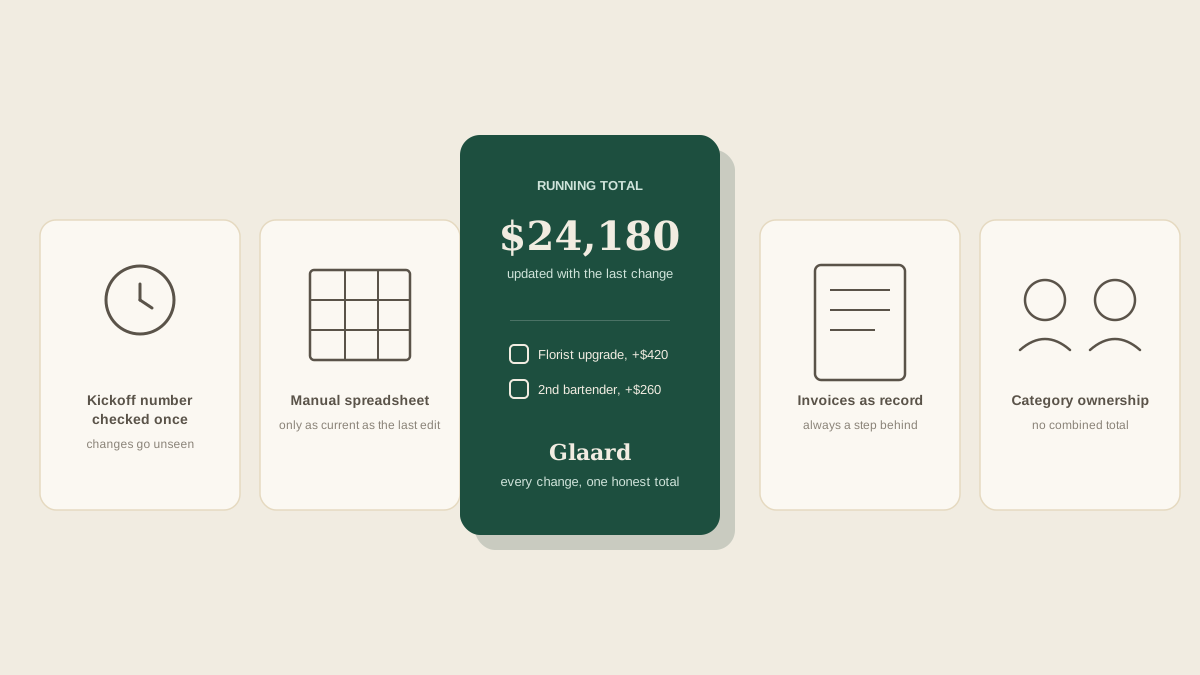
Every one of these methods can work for a while: a fixed check-in, a careful spreadsheet, invoice tracking, category ownership. None of them, on their own, keeps a current, event-wide total sitting somewhere visible the moment a single vendor change happens. That is exactly where the drift lives, not in one dramatic overspend, but in a handful of individually reasonable changes that nobody added up in real time, because nothing was surfacing the running total automatically as each change came in.
What actually holds up
The fix is not picking the most disciplined version of manual tracking and doing it harder. It is having every vendor change, a new quote, an upgraded package, an added service, land on a shared board the moment it is agreed, with the event's running total updating from what actually came in rather than from what someone remembered to type in later. A studio does not need a more careful spreadsheet habit so much as it needs the total to stay honest without depending on anyone's memory to keep it that way.
How to choose
A wedding with a fixed, fully booked vendor list and few expected changes can get by fine on a kickoff number checked again at the end. The moment a studio is dealing with a couple who is still deciding between packages, a guest count that could still move, or more than a couple of vendors likely to change scope along the way, that is when a running, shared total earns its keep, catching the gap between planned and actual while there is still time to have the conversation with the couple, rather than after the final invoice has already gone out.
Frequently asked questions
How often should a studio actually check the running vendor budget?
Ideally it should not require a scheduled check at all, the total should already reflect the latest vendor change any time someone looks. Where that is not possible yet, weekly is a reasonable minimum for an active wedding, since that is close to how often a real change tends to happen once vendors are booked.
Whose job is it to flag a vendor cost that is drifting over budget?
Whoever owns that vendor relationship is best positioned to notice first, but the point of a shared running total is that it does not depend on any one person remembering to raise it. A total that is visible to the whole team surfaces the drift on its own, rather than waiting for the coordinator closest to it to happen to say something.
Is it worth tracking budget this closely for a studio that rarely goes over?
If a studio genuinely never sees vendor costs move after kickoff, the overhead is not worth it. Most studios that feel confident about this have simply not compared the small changes across every vendor side by side recently, since each one alone tends to look minor even when the total does not.
Does this replace a conversation with the couple about their budget?
No, it just makes that conversation happen earlier and with an accurate number. A running total lets a studio flag a likely overage while there is still room to adjust a choice, instead of delivering the news for the first time alongside a final invoice the couple was not expecting.
Get your studio address, free
Get your studio address