4 Ways Studios Try to Know Which Vendors Need a Follow-Up Before a Deadline Slips (And Where Each One Falls Short)
28 September 2026 · 7 min read
Every studio has a version of this moment: a deposit is due Friday, and as of Wednesday, the vendor still hasn't confirmed. Nobody forgot to ask, the studio sent the request two weeks ago and simply never heard back. The gap isn't in the initial ask, it's in noticing that a specific vendor has gone quiet long enough that someone needs to chase them down before the deadline passes, not after. Here is what four common ways studios try to catch that in time actually catch, and where each one still lets someone slip through.
Trusting memory and a general sense of who's gone quiet
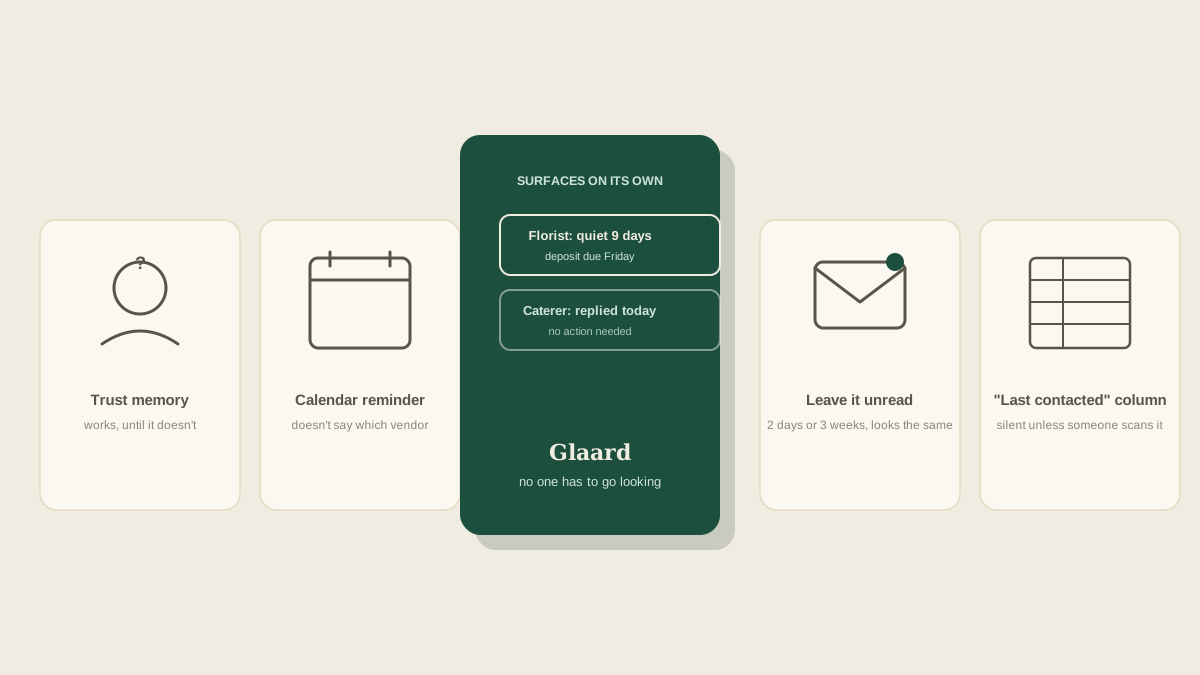
Most studios start here, and for a while it works, because a planner juggling four or five active vendors can genuinely keep a rough sense of who's responsive and who isn't. The moment a studio is running multiple events at once, that mental tally stops being reliable. The vendor who went quiet on Tuesday for one wedding is easy to remember when it's the only event on the studio's plate, and easy to lose track of entirely when three other events each have their own outstanding questions competing for the same attention.
A recurring calendar reminder to check vendor emails
A calendar block that says "review vendor emails" every few days is a reasonable attempt at building a habit, and it does beat relying purely on memory. What it doesn't do is tell a planner which vendor, specifically, needs a nudge that day. The reminder still requires someone to reread every open thread, mentally recalculate how many days it has been since each one, and decide which ones have gone quiet long enough to matter. It's the same manual triage, just done on a schedule instead of randomly.
Marking messages unread until a reply comes in
Leaving a message unread as a visual flag that something's still open is a real technique planners use, and it's cheap and immediate. It breaks down for the same reason most inbox-based systems do: it only tracks messages the studio sent, not the ones a vendor never answered in the first place, and it has no sense of urgency built in. A message that's been unread for two days and one that's been unread for three weeks look identical in an inbox, even though one of them needs a chase message today and the other might not yet.
A spreadsheet column for "last contacted"
Adding a "last contacted" date next to each vendor on a tracking sheet is a more deliberate fix, and it genuinely helps when it's kept current. The catch is that the column is only as accurate as whoever remembers to update it after every single touchpoint, a call, a text, an email, all of it. It's also silent: nothing about the spreadsheet actively tells anyone that fourteen days have passed since a florist last replied, someone still has to open it, scan the dates, and do the comparison themselves.
Why all four still miss the same thing
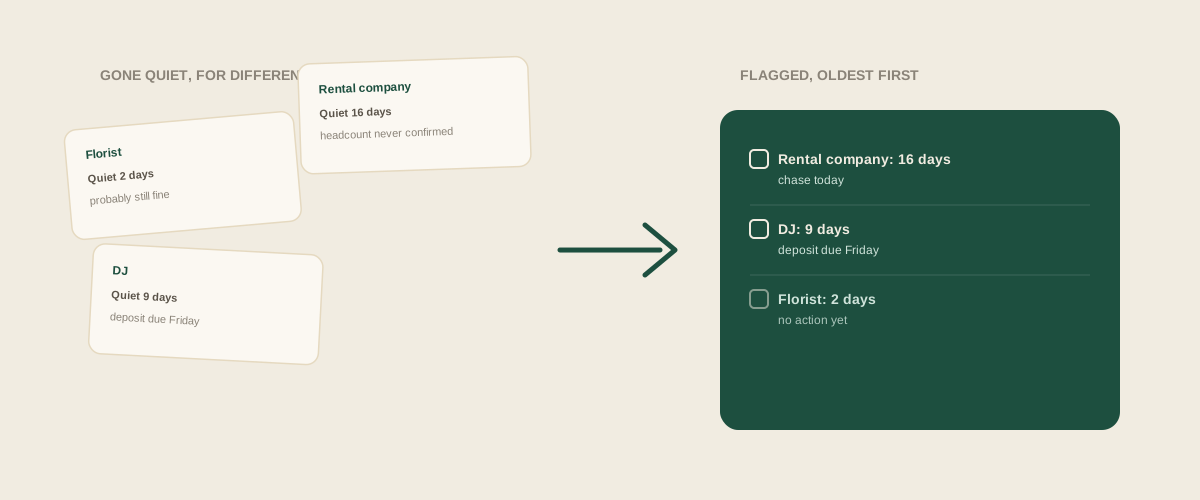
Memory, a recurring reminder, unread flags, a dated spreadsheet column, all four depend on a person actively going looking for the problem before they can catch it. None of them surface a vendor going quiet on their own, and on a busy week, going looking is exactly the step that gets skipped. The deadline doesn't announce itself either, it just passes, and the studio finds out a payment was late or a headcount was never confirmed only once it's already a problem, not while there was still time to send one more message.
What actually holds up
What holds up is a system where a stalled vendor task surfaces on its own instead of requiring someone to remember to check for it: a request sitting open past a certain point flags itself, so the studio isn't relying on anyone's memory, a calendar habit, an unread count, or a spreadsheet scan to notice. The chase message still has to be written by a person, but knowing who needs one stops being a manual search through every open thread.
How to choose
A studio running one or two events with a short, familiar vendor list can probably get by on memory and a recurring reminder, since the volume stays small enough to track by feel. The more concurrent events and vendors involved, the less any manual check holds up, and the more it's worth having stalled requests surface automatically rather than depending on someone remembering to go looking for them in the middle of a busy week.
Frequently asked questions
How long should a studio wait before following up with a vendor?
It depends on how far out the deadline is, but a general rule is to check in if a week has passed with no reply on anything time-sensitive, and sooner than that if the deadline itself is close. The specific number matters less than having some consistent trigger, so it isn't decided fresh, and inconsistently, every time.
Does automatically flagging a stalled vendor replace the need to actually write a follow-up message?
No, it just removes the step of noticing the problem exists. Someone still has to decide what to say and send the message, the same as always. What changes is that the studio finds out a vendor has gone quiet while there's still time to do something about it, instead of discovering it the day the deadline passes.
What if a vendor is just slow to respond as a matter of habit, not actually a problem?
That's still worth knowing, and worth tracking differently than a vendor who is normally responsive but has suddenly gone quiet. A studio that knows a particular vendor always takes a week to reply can plan its own follow-up timing around that pattern instead of being surprised by it every single time.
Is this worth setting up for a studio that only works with the same handful of trusted vendors?
Probably less urgent there, since a small, familiar vendor list is exactly the case where memory and a recurring reminder tend to hold up fine. It matters most once the vendor list grows or the studio is juggling several events at once, when the number of open threads outpaces what anyone can reliably hold in their head.
Get your studio address, free
Get your studio address