How to Track a Vendor Contract Amendment So the Original Terms Don't Quietly Stick Around
14 September 2026 · 6 min read
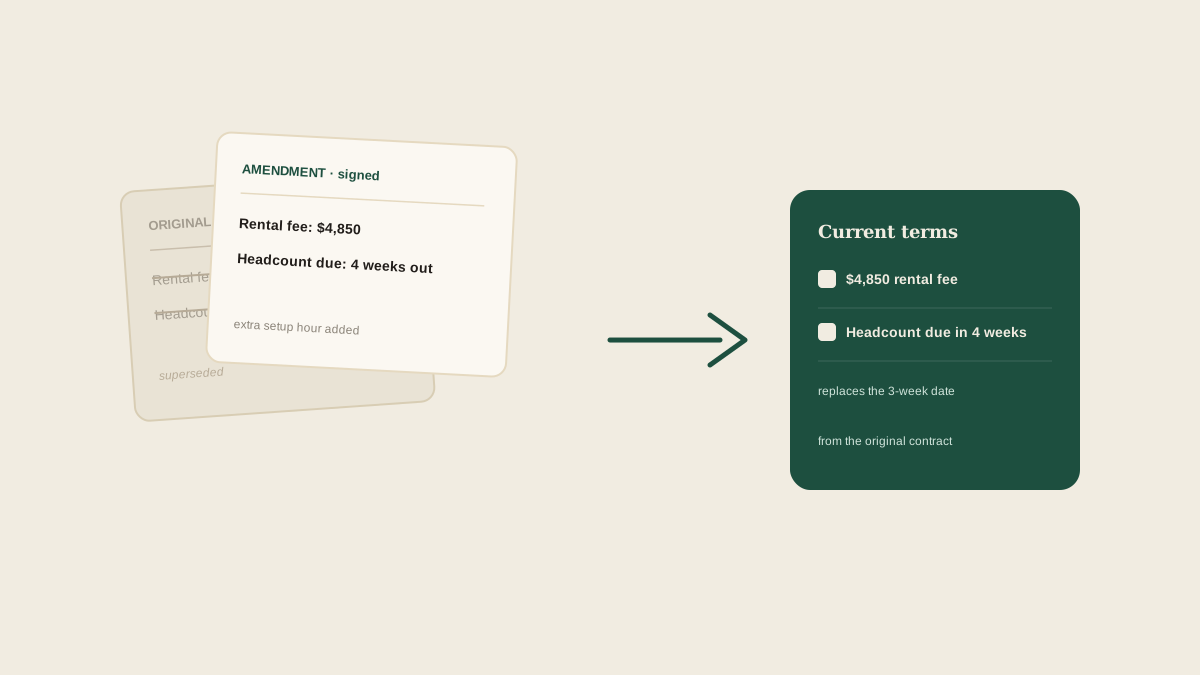
Vendor contracts rarely stay exactly as signed. A guest count moves, a client adds an upgraded package, a service gets swapped for a different one, and the vendor sends back an updated contract or a short addendum reflecting the change. Most studios treat this the way they treat any other incoming document: file it next to the original and move on. The problem is that filing an amendment next to the original doesn't actually replace anything. Both documents still exist, and now two versions of the same vendor's terms are sitting in the same folder, one of them wrong.
Why an amendment isn't just an update
An amendment isn't a correction to the original contract the way fixing a typo would be. It's a new set of terms layered on top of an old one, and usually only part of the original still applies. A caterer's amendment adding a plated dessert course changes the per-head price and maybe the final headcount deadline, but the delivery window, the staffing terms, and the cancellation policy from the original contract are almost always still in force. Someone has to know which parts got replaced and which parts didn't, and that distinction rarely survives being filed as a second document with a similar name to the first.
The quiet risk: old terms don't disappear on their own
A signed contract sitting in a folder doesn't announce that a newer version has superseded part of it. If a coordinator who wasn't in the loop on the change opens the original contract to confirm a price or a deadline, they'll get an accurate answer to the wrong question, accurate for a version of the agreement that no longer fully applies. The wrong number doesn't look wrong. It looks exactly like every other correct number in a contract that used to be current, which is exactly why it gets repeated with confidence instead of double-checked.
Where this actually shows up
It shows up at the worst possible moments to discover it: a final invoice arriving at the pre-amendment price because the vendor's billing team worked from the original contract instead of the updated one, a headcount deadline that was pushed back in the amendment but never made it into anyone's calendar, a coordinator quoting the client an old delivery window on the day of the event because that's the number they saw last. None of these are exactly the vendor's mistake or the studio's mistake. They're what happens when two versions of the truth exist in the same place and nothing marks one of them as current.
What a real amendment record needs
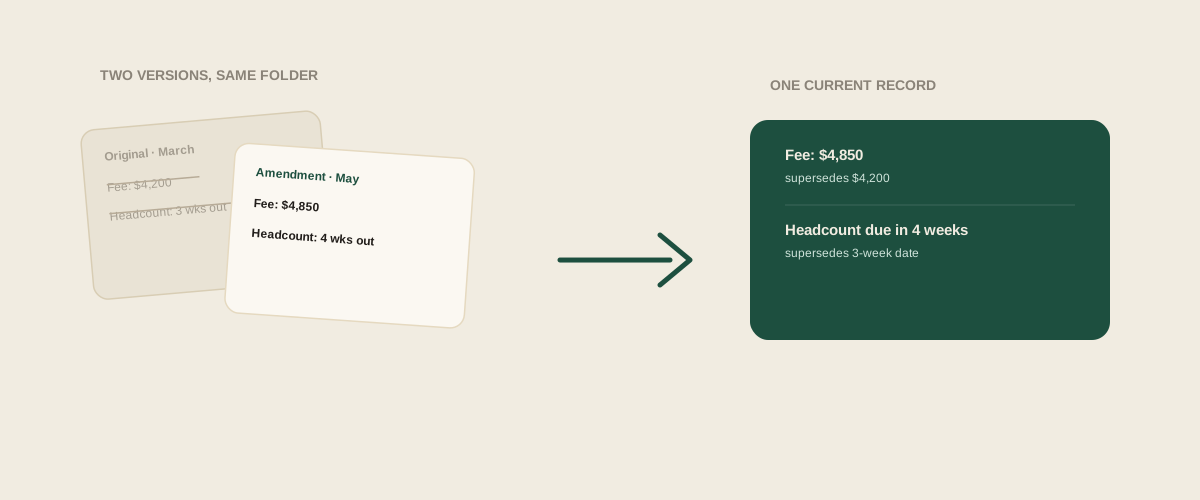
Tracking an amendment well doesn't require a legal system, it requires three things to be visible at a glance: what changed, what stayed the same, and which document is the one to trust right now. That means the amendment needs to be linked to the original contract, not filed as an unrelated document, and whatever changed needs to turn into an updated task, an updated price, an updated deadline, on the shared board the rest of the team is already looking at. The original contract doesn't need to be deleted or hidden. It just needs a clear marker that says a newer version exists and where to find it.
A worked example
A venue's original contract sets a headcount deadline of three weeks out and a base rental fee. Two months later the client upgrades to include an extra hour of access, and the venue sends a one-page addendum with a new fee and a headcount deadline moved up to four weeks out, since the venue needs more lead time for the extended setup. Filed separately, a coordinator checking the original contract sees three weeks and moves on, correct as far as they know. Tracked as a linked amendment, the shared board shows one current deadline, four weeks, with a note that it replaced the original three-week date, and the old figure is marked superseded rather than sitting there looking just as valid as the new one.
Common mistakes
Filing the amendment as a new document with no link back to the original, so anyone who finds the contract first has no way of knowing a newer version exists. Updating the internal calendar or task list from the amendment but leaving the original contract's numbers untouched in whatever the team references day to day, so the two sources disagree. Assuming that because the amendment was emailed to the lead planner, everyone working that event has actually seen it, when in practice only the person who read the email knows anything changed.
Where to start
The fix isn't a stricter filing rule for where amendments get saved, most studios already have a reasonable folder structure. It's making sure that whatever changed in an amendment turns into an update on the same shared task or deadline the team already sees, immediately, rather than sitting as a second document someone has to remember to cross-reference against the first. When forwarding the vendor's amendment works the same way forwarding any other vendor message does, the update reaches the board without anyone having to manually reconcile two versions of the same contract by hand.
Frequently asked questions
Does every small vendor change need a formal amendment, or is an email confirmation enough?
A short email confirming a minor change, like a slightly later delivery time, can be enough as long as it's tracked the same way any other update would be: linked to the relevant task and visible to the team, not just sitting in one person's inbox. A larger change affecting price, headcount, or a hard deadline is worth getting in writing as a proper amendment, since that's the version you'd need if a dispute ever came up later.
What if the vendor amends the contract but never sends a version marked as final?
Treat the most recent written communication that specifies a term as the current one, and note clearly on the shared board when it was received and from whom. If there's any ambiguity about which of two vendor messages is actually current, it's worth a quick confirmation email asking the vendor to state the final terms in one place rather than guessing between two conflicting messages.
Should the original contract be deleted once an amendment supersedes part of it?
No, keep both. The original still matters for the terms the amendment didn't touch, and for a record of what was originally agreed if a question ever comes up. What matters is that the current, active terms are clearly marked as such on whatever the team actually checks day to day, not that the old version disappears.
How do you make sure everyone working the event actually sees an amendment, not just the person who received it?
The amendment needs to change something on the shared board the whole team already looks at, a task, a deadline, a price, not just sit as an email forwarded to one person. If seeing the update requires someone to have been copied on the original message, it isn't really shared yet.
Get your studio address, free
Get your studio address