How to Stop the Same Vendor From Getting Booked Into Two of Your Own Weddings at Once
17 September 2026 · 6 min read

A florist can only physically show up to one wedding on a given Saturday, and it is easy to assume that keeping their calendar straight is entirely their own problem to manage. Sometimes it is not. When more than one person at a studio is allowed to reach out to vendors on a couple's behalf, the studio itself can be the one creating the conflict: two coordinators, two different couples, each independently approaching the same popular vendor for the same date, neither aware the other conversation is even happening.
Why it happens inside one studio
This rarely comes from carelessness. It comes from the ordinary way a growing studio splits up work: one coordinator is handling an October wedding and reaches out to a well liked florist for a hold, while a second coordinator, working a completely separate client with a wedding on that very same Saturday, reaches out to the same florist a week later because that florist is also the obvious first choice for their couple's style. Popular vendors get pulled toward the same busy weekends from multiple directions inside one studio, and nothing about either coordinator's process was wrong. What was missing was a shared place where the first conversation would have been visible to the second person before they started their own.
The moment it usually surfaces
The conflict rarely comes up while both conversations are happening. It surfaces later, and usually in one of two uncomfortable ways. Either the vendor circles back and asks whether the studio actually meant to reach out twice about the same date, which is an awkward call to be on the receiving end of, or it stays hidden until a coordinator mentions the vendor's name in a team meeting weeks later and someone else in the room realizes it is the same photographer, the same Saturday, and two different couples who have each already started picturing that vendor at their wedding.
Why remembering it isn't enough
Even a lead planner who keeps close tabs on their own vendor conversations usually cannot catch this on memory alone, because the conflicting conversation is not theirs. It lives in a coordinator's inbox, a text thread on someone else's phone, a verbal update mentioned once in passing. Nothing about the structure gives anyone a reason to cross-check a new outreach against every other vendor conversation currently happening across the studio, so the conflict sits invisible until the vendor or the calendar forces it into view.
What actually catches it
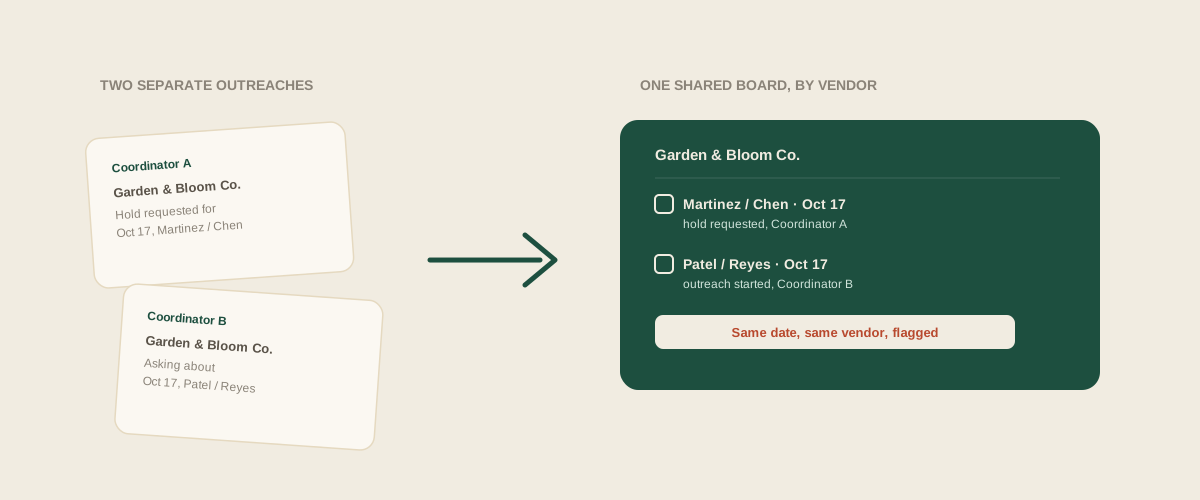
What catches this before a client gets attached to a vendor who is not actually available is a view organized by vendor name across every current event, not just a task list organized by wedding. If every hold, every outreach, and every confirmed booking shows up against the vendor's name on a shared board, a second coordinator reaching out to that same name for an overlapping date sees the existing conversation before they even send their first message, instead of finding out after the couple has already fallen in love with the photos.
A worked example
Say Coordinator A has a soft hold with a well known photographer for an October Saturday, agreed on a call a few days earlier. Coordinator B, working a different couple with a wedding on that same Saturday, starts looking for a photographer and that same name comes up as the obvious fit. On a shared board sorted by vendor, Coordinator B sees the existing hold before reaching out, and can either check with the photographer directly about the specific circumstances or steer couple two toward a strong second choice early, while there is still enough runway to book someone else without anyone feeling like they settled.
Common mistakes
Assuming a single lead planner will naturally remember every vendor conversation happening across every coordinator, when the ones that cause conflicts are usually the ones that never crossed that person's desk in the first place. Treating an outreach or a soft hold as informal enough that it only needs to live in one person's inbox, rather than somewhere the rest of the team can check before making the same call themselves. Waiting for the vendor to flag the overlap instead of building a system that would have caught it first.
Where to start
A studio with one planner booking every vendor does not have this problem, there is only one person's memory to keep straight. It shows up as soon as a second person starts reaching out to vendors independently, and it gets worse with every additional coordinator and every additional concurrent event. The fix is not asking coordinators to check in with each other before every outreach, that adds a step nobody has time for during a busy week. It is keeping every vendor conversation visible by vendor name on one shared board, so the overlap surfaces on its own before a client ever hears a vendor's name.
Frequently asked questions
Isn't tracking vendor availability the vendor's own job, not the studio's?
For a vendor's confirmed bookings outside the studio, yes, that is on them. What is on the studio is the side of the conversation the vendor cannot see: whether a different coordinator at the same studio is already talking to that vendor about an overlapping date. Only a shared, vendor-indexed view inside the studio can catch that half of the picture.
How is this different from tracking tentative vendor holds before booking?
Tracking a tentative hold is about watching one hold's own expiration so it doesn't lapse unnoticed. This is about a second person at the same studio seeing that a hold or an outreach already exists at all, across a different event, before they start a duplicate conversation with the same vendor for an overlapping date.
Does this only matter for popular or in-demand vendors?
It matters most for vendors popular enough to be a first choice for more than one coordinator at once, which in practice is often the same handful of well liked florists, photographers, and caterers a studio returns to again and again. A niche vendor with plenty of open Saturdays rarely creates this kind of conflict.
What should a studio do if two coordinators have already reached out to the same vendor for the same date?
Loop the vendor in honestly rather than letting both conversations run in parallel. Most vendors would rather hear directly that two couples from the same studio are interested in the same date than find out on their own, and a quick, transparent conversation almost always lands better than either coordinator discovering the overlap after a client is already attached.
Get your studio address, free
Get your studio address