How to Track Vendor Meal Counts Without Letting Them Slip Into the Guest Headcount
7 September 2026 · 6 min read
Every caterer eventually asks the same question, usually a couple of weeks out: how many vendor meals do you need. It sounds like a small add-on to the guest headcount, and it's treated that way right up until it isn't, because it's actually a different number, built from a different source, and nobody's job is to naturally keep it current the way an RSVP list is.
Why vendor meals are a separate number from the start
A guest headcount comes from one place: the RSVP list, tracked against invitations that were sent to a known set of people. A vendor meal count has no equivalent starting list. It depends on which vendors are staying through the meal at all (a florist usually isn't, a day-of coordinator usually is), how many crew each one is actually sending that day, and whether any of them have a dietary restriction the kitchen needs to plan for. Nobody RSVPs to this. Someone has to ask every vendor individually and add up whatever comes back.
Where the number actually comes from
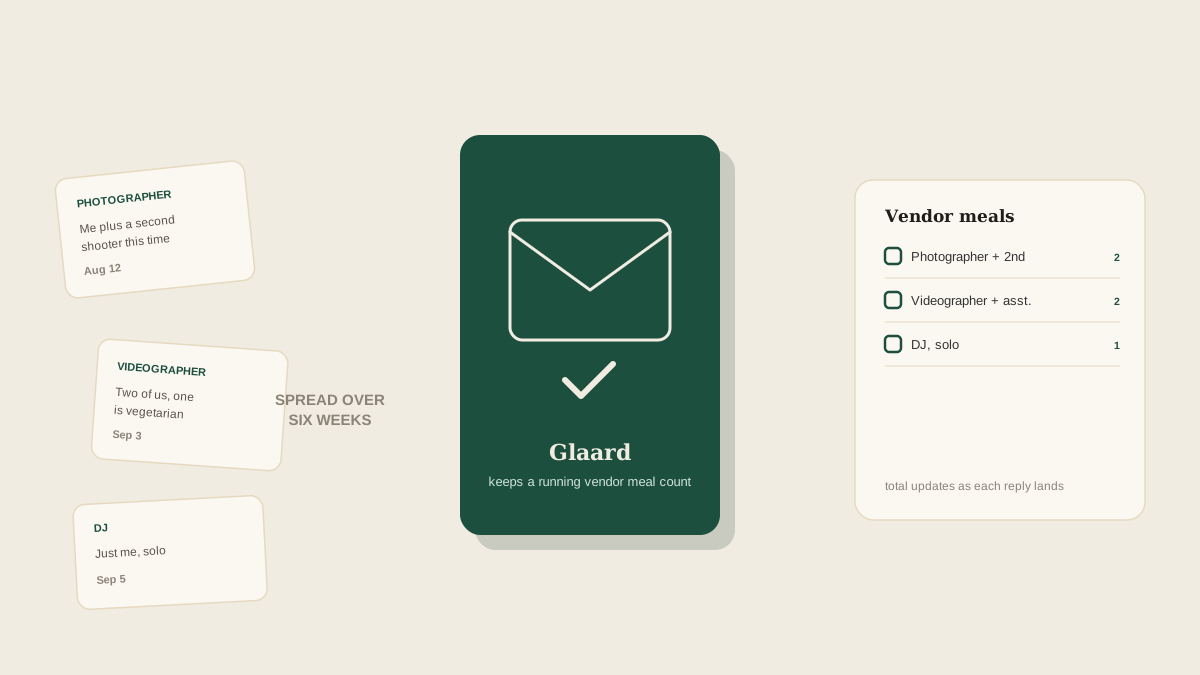
In practice it arrives in pieces, spread out over weeks. The photographer mentions in an email that it'll be them plus a second shooter. The DJ confirms it's just one person. The videographer texts a month later that there are two of them this time, and one is vegetarian. The studio's own day-of assistant needs a meal too, and that one often isn't asked about at all because it feels obvious until it's the one that gets left off. None of these messages are copied to the caterer, and none of them arrive on the same day, so the total lives only in whatever the planner has managed to remember or note down as each reply comes in.
Why it goes wrong
The failure isn't usually a vendor forgetting to answer. It's that the studio never had a single running list to check every reply against, so a photographer's 'just me' from six weeks ago and a videographer's 'two of us' from last week never sit next to each other anywhere. The caterer asks for a final number, the planner adds up whatever they can recall or find in old messages, and it's short by one or two, usually the assistant or the second shooter, the ones that came up in passing rather than as a clear answer to a direct question.
A worked example
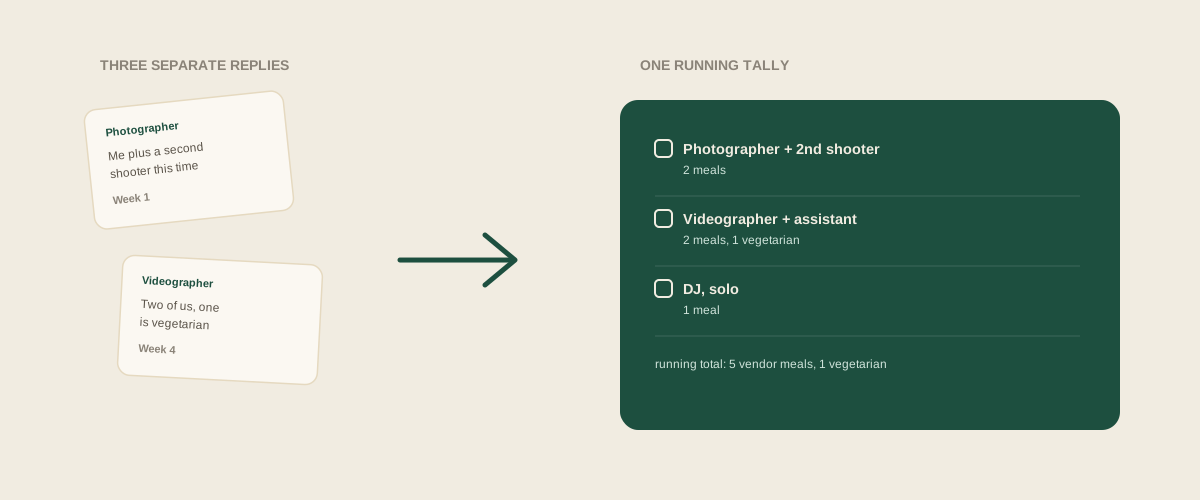
Say a studio is coordinating a wedding with a photographer, a videographer, a DJ, and its own two-person day-of team. Over the course of six weeks: the photographer emails that they and a second shooter will attend, the DJ confirms solo, the videographer replies a month later that they're bringing an assistant this time who eats vegetarian, and the studio's own team is assumed but never actually written down anywhere. Reconstructed from memory two weeks out, that's an easy count to get to five and actually mean six, off by exactly the detail nobody wrote down at the time.
What changes when each reply becomes its own line item
Forwarding each vendor's staffing reply the moment it arrives, instead of mentally filing it away to add up later, turns 'just me' and 'two of us, one vegetarian' into their own tracked items the moment they come in, tagged to that vendor and that event. The running total updates as each one lands rather than getting rebuilt from scratch out of old email threads when the caterer finally asks. Dietary notes travel with the vendor they belong to instead of getting flattened into a plain number that loses the detail the kitchen actually needs.
Common mistakes
Folding vendor meals into the same spreadsheet column as the guest headcount, so a late change to one looks like a change to the other. Assuming a vendor isn't staying for the meal without actually asking, which is a safe guess for some vendor types and a wrong one for others. Waiting until the caterer's final-numbers deadline to ask every vendor at once, instead of logging each answer as it comes in over the weeks it naturally arrives. Leaving the studio's own on-site staff off the list because counting your own team feels like something you'd remember without writing it down.
Where to start
The fix isn't asking vendors earlier, most of them answer whenever they happen to confirm their own staffing. It's making sure every answer, whenever it arrives, becomes a tracked line item the moment it comes in rather than a detail to recall later. Forward each vendor's staffing reply as it arrives, and the vendor meal count is already built, one confirmed entry at a time, by the time the caterer asks for the final total.
Frequently asked questions
How many vendors typically need a meal at a wedding?
It varies by studio and by event, but it usually includes anyone with staff on site through the meal: photographer, videographer, DJ or band, and the studio's own day-of team. Vendors who deliver and leave, like a florist or a rental company, typically don't need one, though it's worth confirming rather than assuming.
What if a vendor changes their crew size close to the event?
That's common, a second shooter gets swapped in or a vendor adds an assistant a week or two out. As long as the updated reply gets forwarded and logged the same way the original one was, the running total picks up the change instead of leaving the caterer with a number that was already out of date by the time it was confirmed.
Should vendor meal counts and the guest headcount live on the same tracker?
They can live in the same shared place, but they should stay as clearly separate numbers rather than one combined total. Mixing them makes it easy to misread a change to one as a change to the other, which is exactly the kind of mistake that leads to a wrong count going to the caterer.
Do vendor meals need to match the same menu as the guest meal?
Not necessarily, plenty of caterers offer a simpler vendor plate at a lower cost, but that's a separate conversation to have directly with the caterer. Either way, the dietary restrictions within that vendor count still need to be tracked accurately so the kitchen can plan for them regardless of which menu they're served.
Get your studio address, free
Get your studio address