How to Stop Losing Vendor Agreements Made Over a Phone Call
24 September 2026 · 6 min read
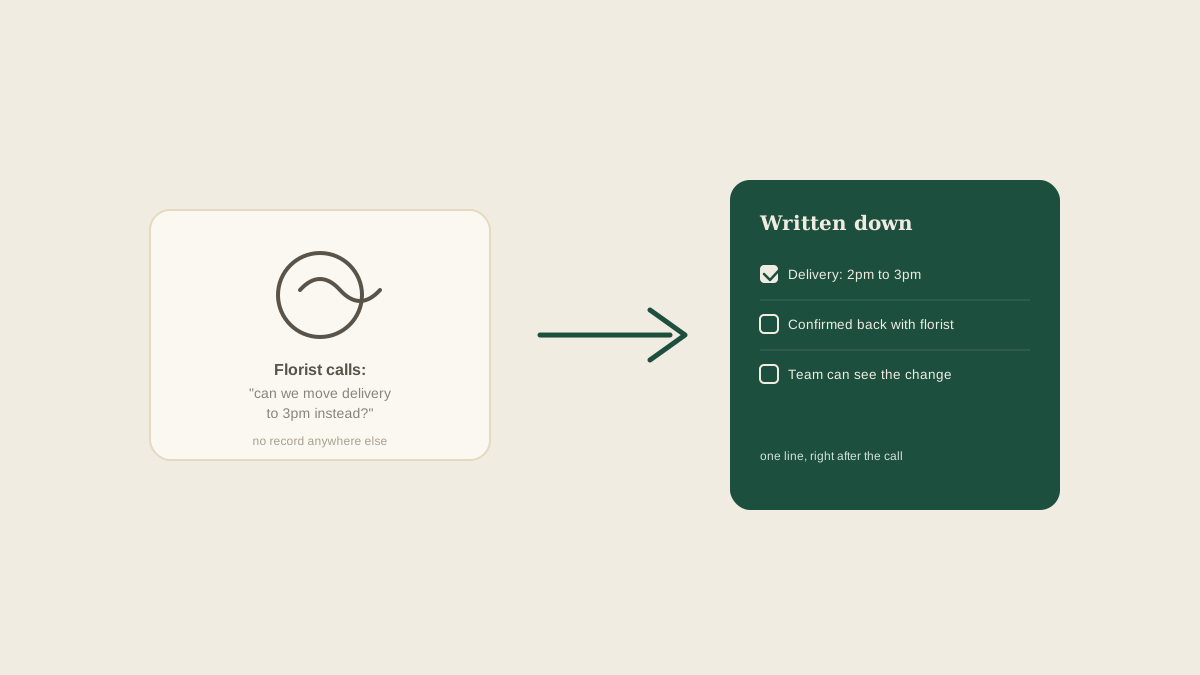
Some vendor conversations never happen in writing at all. A florist calls to ask if the delivery window can move up an hour, the studio says yes on the spot, and that's the entire paper trail: a five-minute call that solved a real problem and left nothing behind to prove it happened. Email and text at least generate a record by default. A phone call doesn't, and that gap is where a surprising number of agreements quietly disappear.
Why the phone still wins, even with a system in place
Plenty of studios run most of their coordination through email or a shared board, and vendors still pick up the phone anyway. It's faster for anything with back-and-forth: a caterer working out headcount logistics, a rental company confirming what fits on one truck, a DJ asking a quick question about the timeline that would take four email replies to sort out over text. None of that is a workflow failure. A call is often genuinely the right tool for a fast negotiation. The problem isn't that vendors call, it's what happens to the agreement once the call ends.
What actually gets lost when nothing follows the call
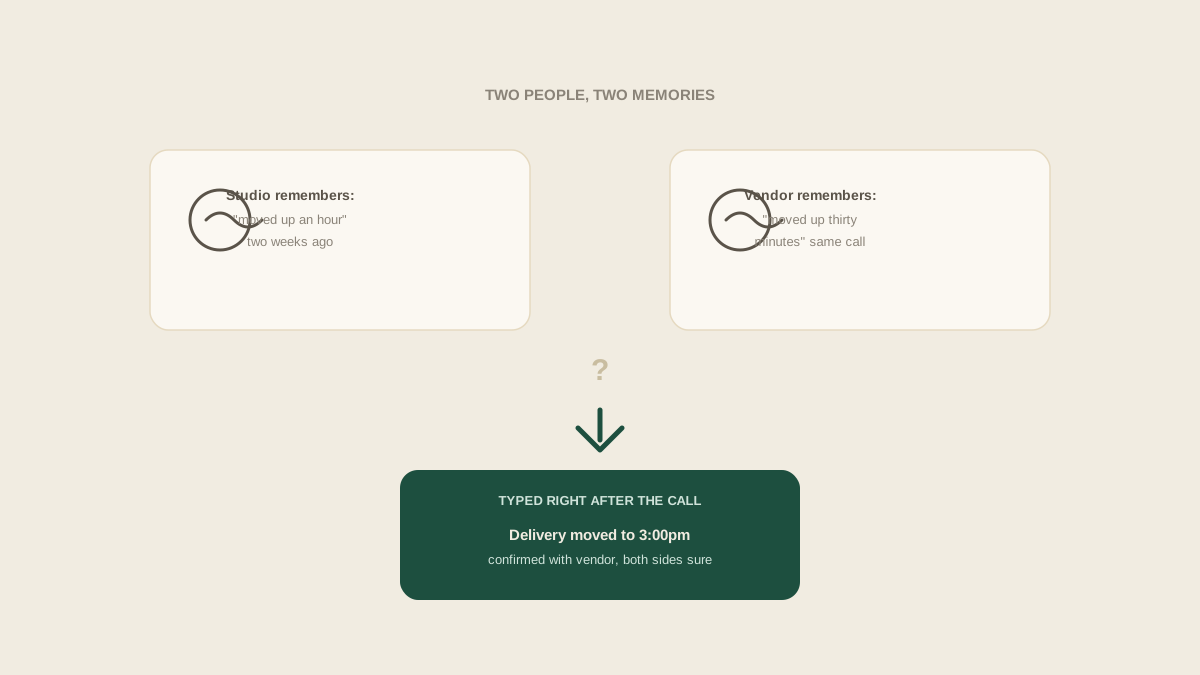
Immediately after hanging up, the studio and the vendor both remember roughly the same thing. Two weeks later, memory has already started drifting, and by the week of the event, two people can walk away from the same call with two different understandings of what was agreed. The delivery time moved up an hour, or was it thirty minutes. The vendor agreed to bring extra chairs, or was that for a different event this same busy weekend. Without something written down at the time, there's no way to settle the disagreement later, and it usually surfaces at the worst possible moment: mid-setup, with a vendor pointing to a conversation nobody else can verify.
The vendors most likely to make changes by phone
It's rarely the vendor with the most formal process who calls to change something last minute. It's usually the opposite: a small vendor running their own calendar, a subcontractor the studio doesn't deal with directly every week, or a longtime vendor who has known the lead planner for years and treats every update as a quick personal call rather than a formal amendment. Those are exactly the vendors whose agreements are easiest to lose track of, because there's no contract amendment process and no email thread to fall back on if the details get fuzzy later. A larger vendor with its own office staff tends to follow a call with a confirmation email as a matter of policy. A one-person florist driving between three deliveries that same Saturday is far less likely to, not out of carelessness, but because writing a follow-up email simply isn't part of how they run their day.
A verbal yes is not a task until someone writes it down
The fix isn't telling vendors to stop calling, since for a lot of fast decisions a call is genuinely faster and better than a chain of messages. The fix is treating the end of the call as the start of the task, not the end of it. A one-line recap sent right after, even just a text back to the vendor confirming what was agreed, turns a conversation only two people remember into something both sides can point back to. Without that step, the call was real, but nothing about it exists anywhere the rest of the team can see.
What a good recap actually looks like
It doesn't need to be a transcript. The useful version is short: what changed, when it takes effect, and who agreed to it. "Delivery window moved from 2pm to 3pm, confirmed with the florist" is enough to settle a disagreement two weeks later. What makes it work isn't the detail, it's where it lives. A note in a personal phone, a sticky note on a desk, or a memory of the call itself is still only accessible to whoever took it. The same line posted to a shared board, where a coordinator or assistant would already be looking for the day's updates, is the difference between the agreement existing for the studio and existing for one person.
Common mistakes
Assuming the vendor will send a follow-up email confirming the call, when in practice most never do because from their side the conversation already settled it. Only writing down changes that feel significant, while small logistics tweaks, a later drop-off time, an extra rental item, get treated as too minor to bother recording and are exactly the ones that get forgotten. Telling only the person who took the call, so the rest of the team is still working off the old plan because nothing changed anywhere they'd see it.
Where to start
The habit that actually holds is simple: whoever takes a vendor call ends it by writing one line, on the shared board, not in a personal notes app, capturing what changed and confirming it back to the vendor. It doesn't need to be a full write-up, just enough that the new delivery time or the extra item shows up where the rest of the team already looks, instead of living only in the memory of whoever happened to answer the phone.
Frequently asked questions
Should studios just stop letting vendors call and require everything in writing instead?
Not really. Plenty of vendor conversations genuinely move faster by phone, and refusing calls just pushes the same information into a slower channel. The fix is capturing what was agreed right after the call, not avoiding the call itself.
What counts as enough of a record after a vendor call?
A short recap written somewhere the whole team can see, plus a quick confirmation back to the vendor so both sides agree on what was decided. It doesn't need to be formal, it needs to exist outside the memory of whoever took the call.
What if the vendor and the studio remember the call differently later on?
This is exactly what a written recap prevents. Without one, there's no way to settle it other than whoever argues more confidently. A one-line note sent right after the call, confirmed by the vendor, becomes the reference point both sides can check instead of relying on memory weeks later.
Does this matter for small studios that only work with a handful of familiar vendors?
It matters most with vendors the studio trusts and calls often, since familiarity is exactly what makes a team skip writing anything down. A long-standing relationship makes the conversation feel informal, but the details still need to reach the rest of the team the same way a formal amendment would.
Get your studio address, free
Get your studio address