4 Ways Studios Re-Confirm Vendors After a Wedding Date Changes (And Where One Still Slips Through)
31 August 2026 · 7 min read
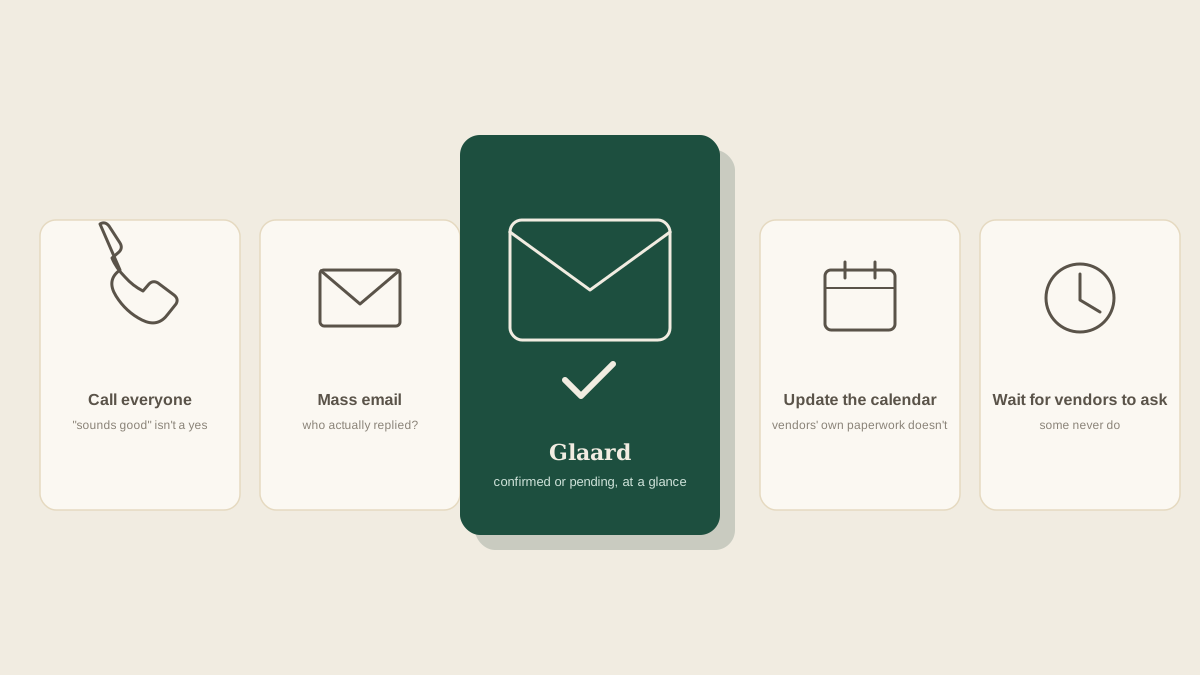
A wedding date doesn't move without dragging every locked-in vendor along with it. The venue is usually the first to know, sometimes before the change is even final. The caterer, the florist, the band, the rental company, the photographer, and everyone else on the vendor list still need to hear the news and confirm, in writing, that they can actually deliver on the new date. That confirmation step is where studios differ, and it's also where one vendor quietly slips through.
Calling everyone right away
The instinct when a date changes is to get on the phone immediately, starting with whoever feels most urgent, usually the caterer or the band. It's fast, and it feels thorough because you're the one handling it in real time. The gap shows up afterward: a call that ends in "sounds good, let me check and get back to you" can get marked done in your head the moment you hang up, even though the vendor never actually confirmed availability. Without a written reply, there's no record of who actually said yes to the new date and who just said they'd look into it.
Sending one mass email to the full vendor list
Sending one email to every vendor at once is efficient, and it does guarantee everyone received the news at the same moment. What it doesn't guarantee is who read it, who replied, and who's still sitting on it. A dozen vendors on one thread means a dozen separate replies landing over the next few days: some confirming outright, some asking a follow-up question, a few not replying at all. There's no single place to see at a glance which of those three groups each vendor actually falls into.
Updating the internal calendar and moving on
Some studios treat the internal fix as the whole fix: the date changes in the shared calendar or CRM, the signed amendment gets filed, and the assumption is that vendors will pick up the new date the next time anyone talks to them. The internal record being correct doesn't mean the vendor's own paperwork is. A florist's delivery window, a caterer's headcount deadline, a band's arrival time were all set against the old date, and none of that updates itself just because your calendar did.
Waiting for vendors to bring it up themselves
The most common approach, in practice, is closer to no approach at all: the studio tells whoever seems most urgent, and everyone else finds out whenever they happen to reach out with an unrelated question, or worse, whenever they show up asking about the original date. Some vendors are diligent enough to check in on their own a few weeks out. The ones who aren't are exactly the ones most likely to be surprised, and by the time they ask, the buffer that would have made the fix painless is already gone.
Why every approach still misses the same vendor
Look at all four and the shared gap is the same one: none of them produce an actual record of who has confirmed the new date and who hasn't. A phone call, a mass email, an internal calendar update, and simply waiting are all different ways of getting the news out, but getting the news out isn't the same as knowing who received it, understood it, and confirmed they can still deliver on it. Without that record, checking who's still outstanding means either trusting memory or re-reading every reply in a crowded inbox, which is exactly the kind of task that gets put off until the vendor list feels short enough to seem manageable, right before it turns out someone was missed.
What changes when confirmation happens on a shared board
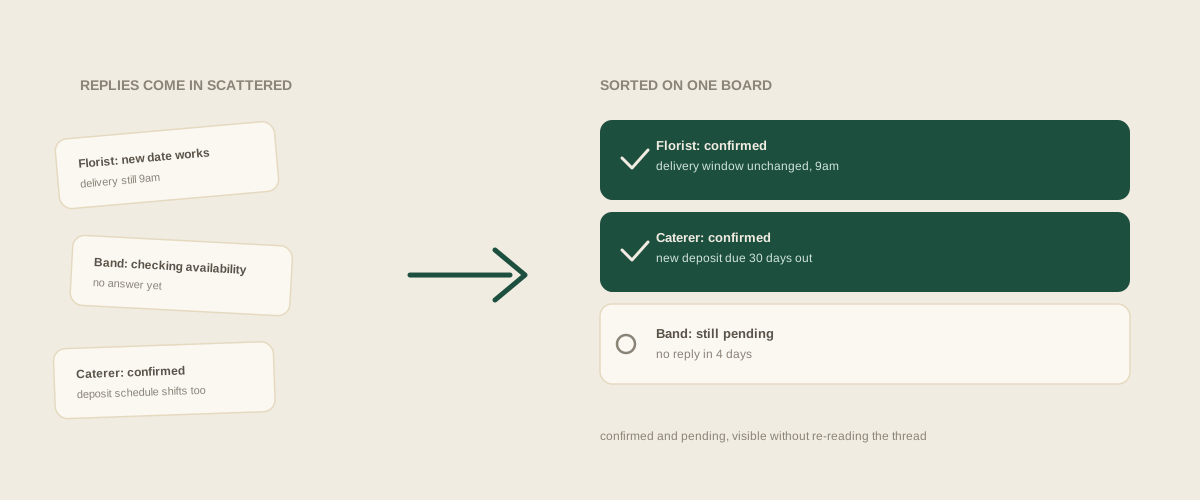
Forwarding each vendor's actual reply the moment it lands, rather than just noting that the update was sent, turns a date change into something trackable instead of something remembered. A florist's reply confirming the new delivery window becomes a task marked confirmed. A band that hasn't replied in four days shows up as still pending, visible to the whole team instead of sitting unread in one person's inbox. If a vendor's reply also mentions a new deposit schedule or a changed arrival time because the new date falls in a different season, that detail gets pulled out as its own task instead of staying buried inside a reply that only says "sounds good, see you then."
How to choose
If a date only shifts by a day or two and the vendor list is short, a round of phone calls followed by a quick note to yourself is probably enough; the volume never gets high enough for anything to hide in. It matters more the bigger the shift and the longer the vendor list, a full season change, or several vendors whose own scheduling and pricing depend on the time of year. At that point the risk isn't sending the news, it's losing track of who actually wrote back and what changed in their reply, and that's worth having an actual record of rather than trusting to memory.
Frequently asked questions
What if a vendor doesn't reply to the new date at all?
Follow up directly rather than assuming silence means agreement. A vendor who hasn't confirmed availability for the new date hasn't actually confirmed anything, no matter how long ago the news went out, and a booking that isn't re-confirmed in writing can still fall through even after everyone believes it's settled.
Does a date change automatically reset every vendor's deposit and payment schedule?
Not automatically. Some contracts tie payment dates to the event date and shift with it, others don't, and it varies by vendor. That's exactly the kind of detail that's easy to miss if a reply confirming the new date also mentions an updated payment schedule buried in the same message.
How do you tell which vendors have actually confirmed versus which are still pending after a mass email?
Without a shared record, usually by rereading the whole thread, which is the step that gets skipped on a busy week. Turning each vendor's reply into its own tracked item, confirmed or still pending, means that check takes a glance instead of a re-read of every message in the thread.
Is this different for a full postponement versus a smaller schedule shift, like moving the ceremony time by an hour?
The underlying need is the same: every vendor whose timing depends on the schedule needs to see the change and confirm it still works, just at a smaller scale. A full postponement touches more vendors and more of their own scheduling, but even a one-hour ceremony shift can throw off a delivery window or a load-in time for a vendor who wasn't expecting to check in again before the event.
Get your studio address, free
Get your studio address
