How to Track the Crew a Vendor Brings, Not Just the Vendor You Booked
28 September 2026 · 6 min read
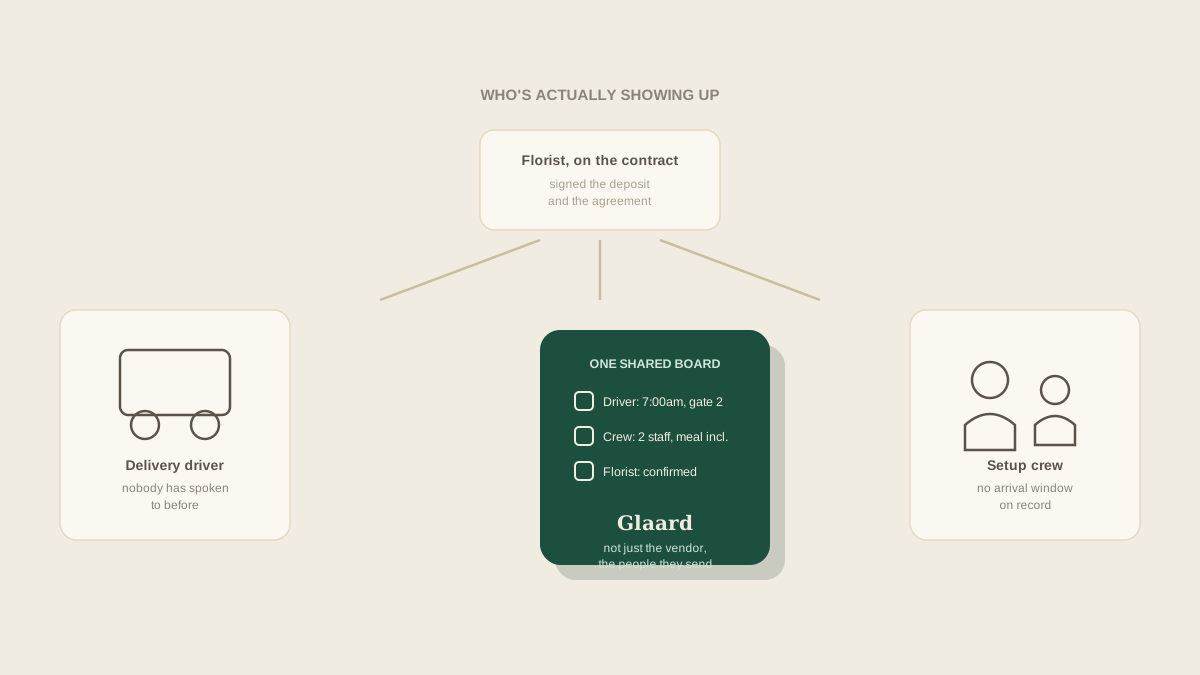
A studio books a florist, signs a contract with a florist, and negotiates a deposit schedule with a florist. On the wedding morning, the person backing a van up to the loading dock is very often not that florist at all, it is a delivery driver, an assistant, or a second employee the studio has never emailed, called, or met. The same pattern shows up with a band that subcontracts two session musicians, a DJ who brings an assistant to run lighting, or a caterer whose actual serving staff outnumbers the one contact the studio has been coordinating with all along. The vendor relationship is tracked closely. The people who actually execute it are often not tracked at all.
The name on the contract isn't the name at the loading dock
This gap rarely causes a problem for a vendor's very first booking with a studio, since everyone is paying close attention and asking extra questions. It becomes a problem once the relationship is established and comfortable, because that's exactly when a studio stops double-checking who is actually showing up. A florist a studio has booked a dozen times gets treated as a known quantity, right up until the twelfth event is the first time they've sent a driver instead of coming themselves, and nobody on the studio side has that driver's name, phone number, or arrival window written down anywhere.
Where this shows up most often
A few patterns repeat across vendor types. A florist or rental company sends a delivery driver who handles drop-off and pickup but has no authority to answer questions about the order itself. A band or DJ brings additional musicians or a lighting assistant who were never named in the original booking conversation. A caterer's actual event-day staff, servers, a kitchen lead, sometimes a bartender, is a completely different set of people from the sales contact who negotiated the menu. A photographer brings a second shooter for coverage the couple specifically paid for, but that second shooter's name surfaces, if it surfaces at all, in a one-line text the week of the wedding.
What the crew actually needs, that the vendor doesn't automatically pass along
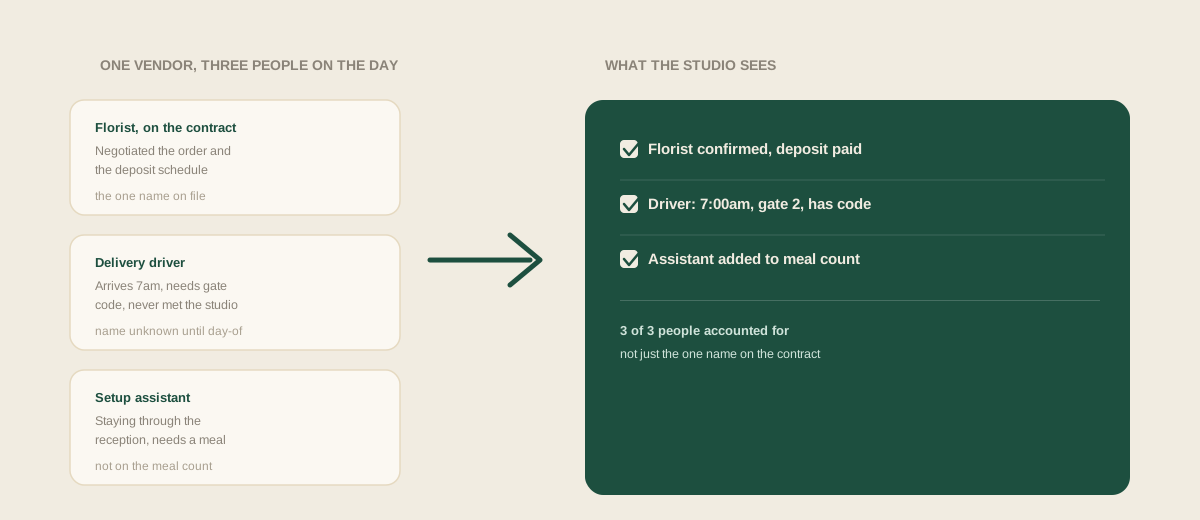
A subcontracted crew member needs almost everything the primary vendor already has, just handed to a different person. An arrival window that matches the loading dock schedule, not a vague estimate. Parking or gate instructions, since a delivery driver circling the block looking for an entrance is a common and avoidable delay. Inclusion in the vendor meal count if they're staying through service. And, critically, a point of contact on the studio side who isn't the same person the primary vendor has been emailing, because that primary vendor is often unreachable themselves on the day, off doing the actual work the studio hired them for.
Why this gets missed even by careful studios
A studio that is genuinely diligent about vendor coordination, chasing contracts, confirming deposits, reading every email closely, can still miss this entirely, because the crew list usually isn't part of any of those documents. It isn't in the contract, which names the business, not the individual employees who'll show up. It isn't in the deposit schedule. It arrives, when it arrives at all, as an offhand mention in a call or a last-minute text: "just so you know, I'm sending my assistant that day." A tracking system built around contracts and payments has nowhere obvious to put that sentence, so it tends to just get forgotten once the call ends.
Common mistakes
Assuming a vendor will fully brief their own crew on parking, timing, and access without the studio ever confirming it directly. Not finding out how many people a vendor is actually sending until the morning of the event, when the meal count and access list are already set. Having no name or phone number for the person who'll physically be onsite if the vendor who signed the contract isn't the one who shows up. Giving gate codes and load-in instructions only to the primary contact, then being surprised when the driver who actually arrives doesn't have them.
Where to start
The fix isn't a longer contract, it's a habit: when a vendor is confirmed, ask directly who is actually coming on the day, not just who signed the paperwork. Get a name and a phone number for anyone beyond the primary contact, and put that name next to the vendor's on the same board the studio already uses to track everything else, arrival window, parking instructions, meal count included or not. That way a delivery driver's name isn't a surprise that surfaces in a text the morning of, it's already sitting where the studio can hand it off to whoever's running that loading dock.
Frequently asked questions
Does every vendor bring a subcontracted crew, or is this only worth tracking for larger vendors?
It's most common with florists, rental companies, bands, and catering, since those all involve physical delivery or multiple staff on-site. A single photographer working alone or an officiant is less likely to send someone else in their place, but it's worth asking every vendor directly rather than assuming based on their size.
What's the minimum information needed for a crew member who isn't the primary contact?
A name, a phone number, and their arrival window at minimum. If they're handling delivery or setup, add parking or gate instructions. If they're staying through the event, they also need to be counted in the vendor meal number.
What if a vendor won't say ahead of time who they're actually sending?
Some vendors genuinely don't finalize their own staffing until close to the event, which is normal. The fix is asking again a week or two out rather than assuming the original contact is still the one coming, and getting a name as soon as the vendor has one instead of waiting for it to arrive on its own.
Does a subcontracted crew member need to sign anything themselves, like a certificate of insurance?
Usually not individually, the insurance certificate is tied to the vendor's business, not the specific employee showing up that day. What still needs tracking is operational, not contractual: who they are, when they arrive, and what they're there to do, since that's the information that goes missing even when the paperwork itself is in order.
Get your studio address, free
Get your studio address