How to Track Vendor Tips and Gratuities So Nobody Is Missed (or Tipped Twice)
1 October 2026 · 6 min read
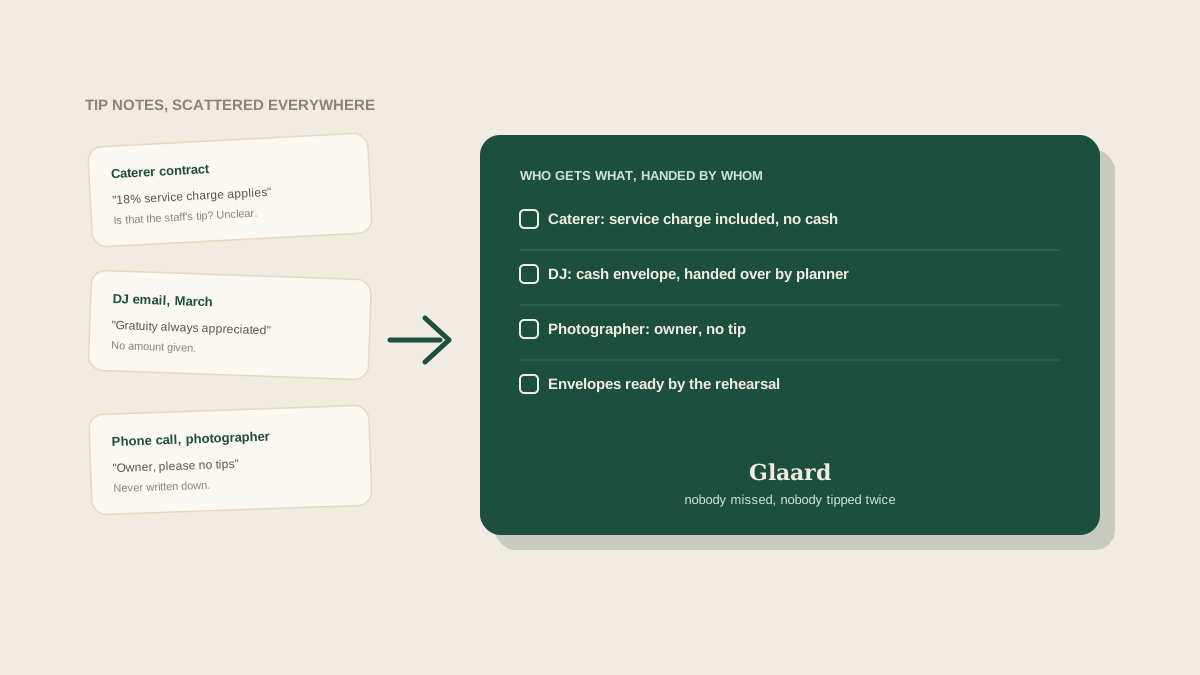
Tipping on a wedding day looks simple until you try to answer one question for a client at 4 PM on the Friday before: who gets tipped, how much, and in what form? The caterer's contract has an 18 percent service charge that the couple assumes is a tip and the caterer's staff assumes is not. The DJ's email says gratuity is appreciated but never named a figure. The photographer is the owner of the business and would rather not be handed anything. The valet team is paid hourly and has never once been mentioned in a single email. All of that information exists somewhere in the inbox, spread across months of messages, and none of it is in one place when the client asks.
Why tips go wrong more than they should
The problem is rarely generosity, it is information. A tip decision depends on three separate facts that arrive at three different times: what the contract says about service charges and gratuity, what the vendor said in an email or on a call about their own expectations, and what the client has decided they want to give. Those three facts almost never sit in the same message. A planner who is carrying all of it in their head is one busy week away from a bride tipping the caterer's captain twice, or from a bartender who worked a nine-hour shift getting nothing because nobody knew they were not covered by the service charge.
Sort every vendor into one of four buckets first
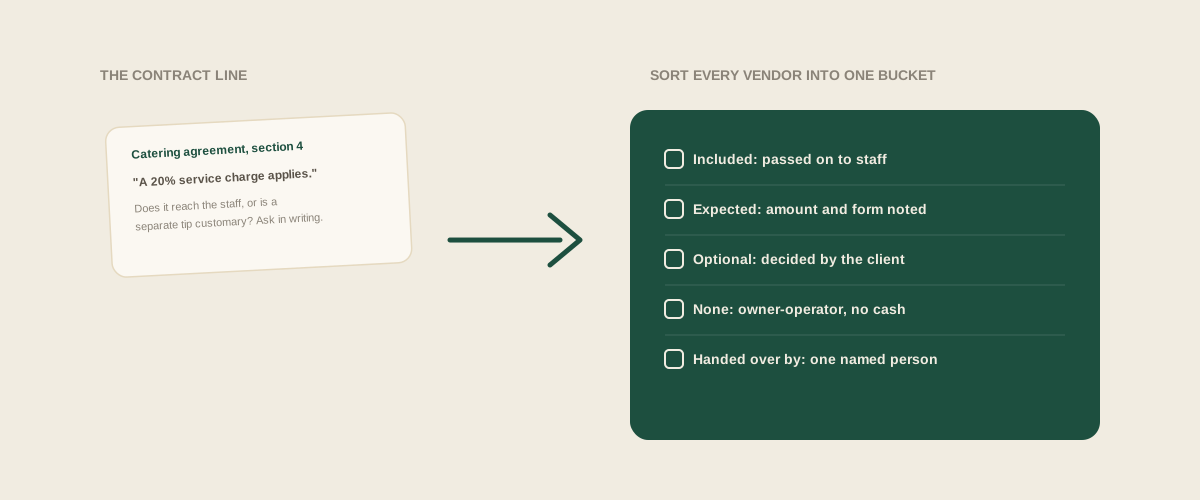
Before any money or envelope is involved, go through the vendor list and sort each one into a bucket. Gratuity already included, meaning a service charge or administrative fee in the contract that is passed on to staff. Tip expected, meaning the vendor's own paperwork or an email says so, usually with a suggested range. Tip optional, meaning it is a nice gesture but not part of how the vendor is paid. And no tip, meaning the vendor owns the business or has said they do not accept them. Doing this once, early, turns a vague worry into a short list with an obvious action next to each name.
Read the service charge line before assuming anything
The most common mistake is treating a service charge as a gratuity. Often it is neither: it can be the venue or caterer's own revenue, entirely separate from what the staff take home. The only reliable way to know is to ask the vendor in writing, "Does the service charge go to the staff, or is a separate gratuity customary?" and keep the answer where the rest of the team can see it. This one question prevents both the double tip and the missed one, and it takes about a minute to send.
Decide who hands it over, and when
Even once the amounts are settled, a tip that nobody is assigned to deliver is a tip that does not happen. Cash tips need envelopes labeled with the vendor and amount, prepared before the day, and handed off by a named person: the client, a parent, the lead planner, or the day-of coordinator. Some vendors are best tipped at the end of the night, others when they arrive or finish their part, and a few, like a band, are easiest to settle with the final payment. Write the handoff next to the vendor, not in a separate note, so the person standing in the room with the envelope knows exactly whose it is.
Put the list where the day-of team can see it
The tip list is a task like any other, with a deadline (envelopes ready by the rehearsal), an owner, and a vendor attached to it. The day-of coordinator should not have to scroll back through a season of email to learn that the string quartet gets paid in cash and the rental company does not take tips. If the figures are already extracted from the contracts and emails into the same shared board as the arrival times and the final payments, the list builds itself as the vendor details come in rather than being assembled in a panic.
Common mistakes
Assuming a service charge is a tip. Asking a vendor about gratuity by phone and never writing down the answer. Tipping from the client's cash without telling the lead planner, who then tips the same vendor from the studio's float. Forgetting the quieter roles: the second shooter, the venue's setup crew, the transport drivers, the person who stayed late to break down the rentals. And leaving the envelopes until the morning of the wedding, when there is no time to get the right bills.
Where to start
Open the vendor list for your next event and write one line next to each name: included, expected, optional, or none. Anything you cannot fill in is a question to send this week. By the time the final headcount is due, every vendor should have a line, an amount where one applies, and a person responsible for handing it over.
Frequently asked questions
Is a service charge on a contract the same as a tip?
Not necessarily. Sometimes a service charge is passed on to the staff, and sometimes it is the vendor's own revenue with nothing going to the people working the event. Ask the vendor directly whether it covers gratuity, and keep the answer in writing so the whole team can see it.
Who should be responsible for handing out tips on the day?
One named person per vendor, decided in advance. It is usually the client, a parent, the lead planner, or the day-of coordinator. What matters is that the person holding the envelope knows whose it is and the amount, so it does not depend on someone remembering at the end of a long night.
How do we handle vendors who say they do not accept tips?
Take them at their word and mark them as no tip on the list, so nobody tries to hand them cash later. A written thank-you note or a review is a better way to show appreciation to an owner-operator, and it is worth noting that on the list as well.
When should the tip amounts be settled?
Ideally by the rehearsal or the final headcount deadline, so the envelopes can be prepared with the right bills ahead of time. Amounts that are still undecided the morning of the wedding tend to be rushed, and are the ones most likely to be missed or doubled.
Get your studio address, free
Get your studio address