4 Ways Studios Make Sure Every Vendor Knows the Venue's Rules (And Where One Still Gets Missed)
1 October 2026 · 7 min read
The venue's rules are usually reasonable. No open flames, music off by ten, tape only on approved surfaces, deliveries through the service entrance, the freight elevator reserved in half-hour blocks. The trouble is that those rules live in a venue packet the planner read once, and the vendors who actually have to follow them are never in that conversation. A florist arrives with a confetti installation the venue prohibits. A band loads in through the front lobby while a ceremony rehearsal is underway. Here are four common ways studios try to pass the rules along, and where each one still lets a vendor miss one.
Forwarding the venue packet to every vendor
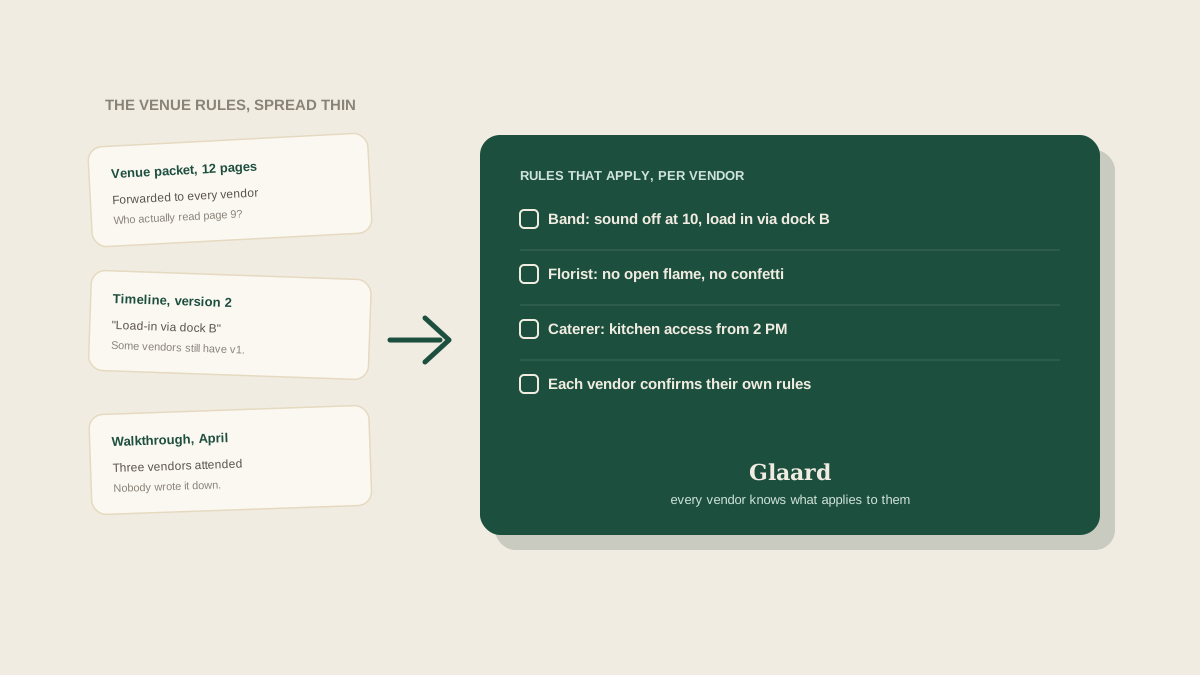
The most common approach is also the most direct: attach the venue's PDF to an email and send it to everyone. It does get the information out, and it leaves a paper trail. What it does not do is make anyone read it. A twelve-page packet contains perhaps four rules that matter to a given vendor, buried among parking maps and billing terms. The caterer needs the kitchen access hours, the DJ needs the sound limit, and neither is likely to find those lines on a skim. When something goes wrong, the vendor is technically informed and practically unaware.
Repeating the rules on the day-of timeline
Putting the key restrictions on the day-of timeline is a smarter move, because the timeline is the one document vendors actually open. A line like "Load-in via dock B, 8 to 10 AM only" sits right next to the vendor's arrival time. The weakness is that the timeline is built late, often a week out, and it tends to list the rules the planner remembers rather than all of them. It also gets forwarded in different versions, so a vendor may be reading a copy from before a rule changed.
Briefing vendors on a call or at the walkthrough
A walkthrough with the venue manager is where rules become real, because a vendor can see the dock, the elevator and the sound limiter for themselves. It works well for the vendors who attend. The catch is that not every vendor comes, and the ones who do not are usually the ones who arrive on the day knowing least. The call-based version has the same flaw as any verbal briefing: nobody wrote down who was told what, so a vendor who says "nobody told me" cannot be easily contradicted, and the studio cannot prove otherwise.
Hearing a rule once is also very different from remembering it three months later. A walkthrough in spring does not protect a vendor who is booked for an October wedding and has done forty events since.
A shared rules checklist the planner keeps
Some studios build a master checklist of venue rules and tick them off as vendors are told. It is the most organized of the four, and it is genuinely useful for the planner. Its limits are practical: the checklist usually sits in the planner's own files, it is organized by rule rather than by vendor, and it records that the planner told someone, not that the vendor read and understood it. If the planner is away on the day, the checklist goes with them.
Why all four still miss the same thing
Each of these approaches treats the venue's rules as one body of information to be broadcast. But a rule only matters to the vendor it affects, and the real risk is a vendor who has not seen the three rules relevant to them. None of the four methods shows, for a specific vendor, which rules apply and whether that vendor has acknowledged them. A rule that was sent but never confirmed looks exactly like a rule that was understood.
What actually holds up
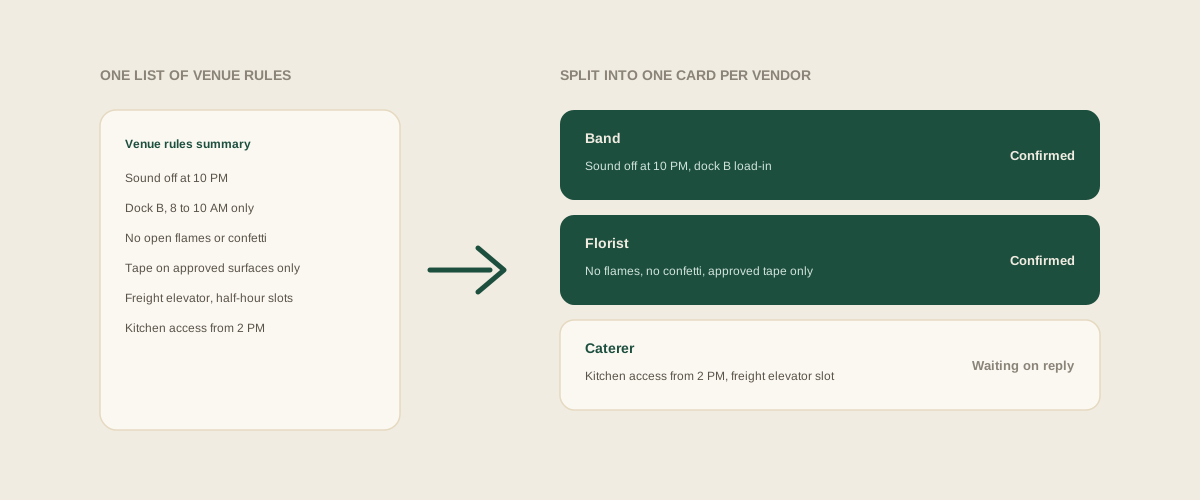
What holds up is splitting the venue's rules into the lines that apply to each vendor and attaching them to that vendor's own task, with a request to confirm. The caterer's card carries the kitchen hours and the waste policy. The band's card carries the sound limit and the load-in route. The florist's card carries the flame, tape and confetti rules. Each vendor sees a short list of what affects them, the acknowledgment is recorded, and anyone on the team can open the board and see who has confirmed and who has not.
How to choose
A studio that works in one or two familiar venues with a stable vendor team can get by with a forwarded packet and a good timeline, since the vendors have heard the rules before. A studio that rotates through many venues, or brings in new vendors regularly, benefits from per-vendor rule lists with confirmation, because the cost of a missed rule is highest exactly where the vendor and venue are both unfamiliar.
Frequently asked questions
Whose job is it to tell vendors the venue rules?
Usually the planner or the lead coordinator, since the venue typically deals with the studio rather than with every vendor. It helps to ask the venue for a rules summary early and to decide who will pass each rule along, so nothing falls between the venue and the vendor.
Should we ask vendors to confirm they have read the rules?
Yes. A short reply such as "confirmed, we will load in through dock B between 8 and 10" is enough, and it turns a one-way broadcast into a recorded acknowledgment. It also surfaces conflicts early, such as a vendor whose equipment cannot fit the freight elevator.
What kinds of venue rules most often cause problems on the day?
Load-in windows and routes, sound and music curfews, open flames and candles, decor attachment methods, elevator or dock reservations, and restrictions on outside food or alcohol. These are the ones that tend to be discovered at the venue, when there is no time to adapt.
What if a vendor breaks a venue rule anyway?
Having the rule and the vendor's confirmation in writing helps everyone resolve it calmly, and it protects the studio's relationship with the venue. It is also worth noting the incident on the vendor's record, so the studio can brief that vendor more carefully the next time they are booked at the same venue.
Get your studio address, free
Get your studio address